
Tom Hiddleston leads new Pompeii docuseries for National Geographic
The three-part series follows possible victims and survivors of Vesuvius with archaeology, geology and scripted drama.
By Maya Lindqvist · Senior Technology Correspondent
3 min read
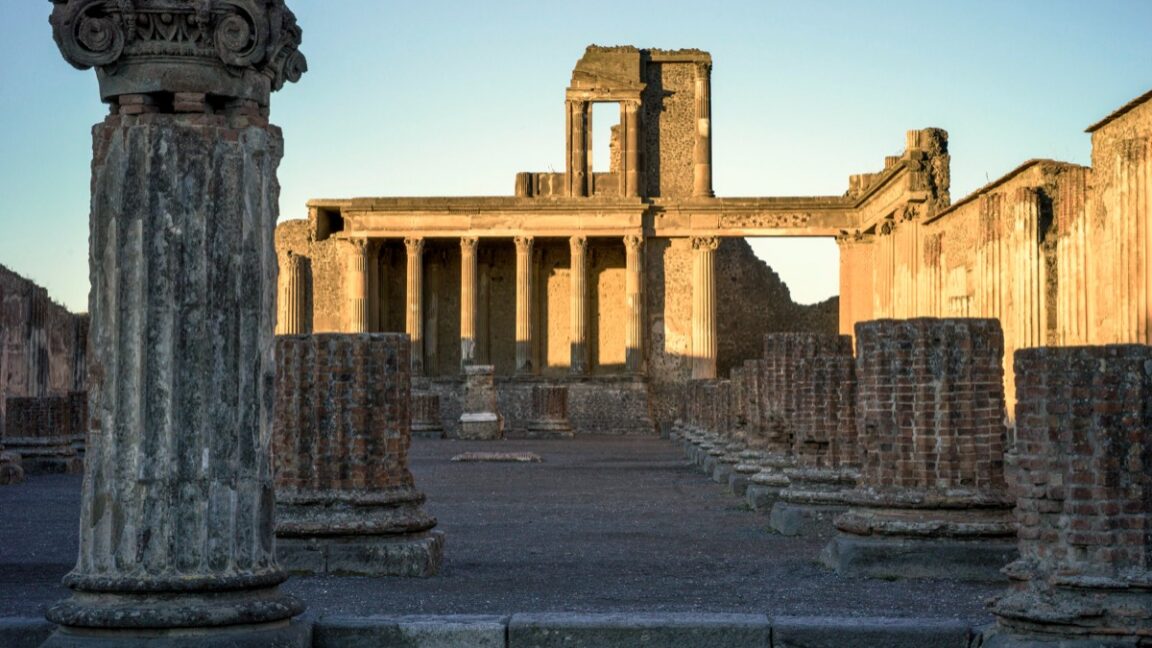
National Geographic is putting Tom Hiddleston at the center of a new three-part series about Pompeii’s last day. Pompeii: Out of Time, which premieres July 21, uses science, archaeology and scripted scenes to follow people caught in the 79 CE eruption of Mount Vesuvius.
The series will stream on Disney+ and Hulu the day after its National Geographic debut, according to Ars Technica. Hiddleston serves as an on-screen guide, tracing clues tied to three figures: a teenage boy, a local businesswoman and a Praetorian guard.
A Marvel link behind the project
Executive producer Kevin Wright told Ars Technica that the idea grew partly out of his work on the Disney+ series Loki. That show included a sequence in which Hiddleston’s character visits Pompeii through time travel.
Wright said Hiddleston brought unusual enthusiasm to the subject. Ars Technica reported that Hiddleston studied classics at Cambridge University and visited Pompeii as a teenager, an experience he has connected to his later interest in acting.
The production presents Hiddleston as a “time detective,” according to National Geographic material cited by Ars Technica. Instead of relying only on conventional documentary interviews and reenactments, the series uses dramatic scenes with professional actors alongside expert commentary and archaeological evidence.
Wright told Ars Technica that the team wanted to combine historical fact with imagination while remaining tied to what scholars consider plausible. He said Hiddleston helped frame the approach through the Latin idea of historia, linking storytelling and history.
Science behind the eruption
Geologist and science communicator Chris Jackson appears in the series to explain what happened when Vesuvius erupted, Ars Technica reported. Jackson told the outlet that a common public misunderstanding is that lava killed the people of Pompeii and Herculaneum.
Jackson said the greater danger came from pyroclastic flows, fast-moving surges of hot gas, ash and volcanic material. Based on reconstructions, he told Ars Technica those flows may have traveled at 100 to 200 kilometers per hour, or about 60 to 120 mph.
Jackson also said the eruption changed the geography around the Bay of Naples. According to his account to Ars Technica, pyroclastic deposits pushed the shoreline outward near Pompeii, and the eruption also generated a small tsunami.
He added that another volcano, Campi Flegrei northwest of Vesuvius, helps explain the shape of the bay. Jackson told Ars Technica that past eruptions from Campi Flegrei are believed to have formed the large indentation in the Bay of Naples.
Drama shaped around evidence
Wright told Ars Technica that showrunner Tom Barbor-Might helped the production create a cinematic look without the scale of a Marvel budget. The series used visual effects, drone shots and practical effects, including safe falling ash created with help from an Italian special effects team.
The scripted portions include actors portraying figures linked to the archaeological record, according to Ars Technica. Lubna Azabal plays Julia Felix, and the production also depicts a Praetorian guard whose sword and belt were excavated on the beach at Herculaneum, National Geographic materials cited by Ars Technica show.
Wright said the filmmakers held back the famous plaster casts of Pompeii’s victims until the end of the series. He told Ars Technica the choice was meant to restore a sense of respect for the dead and remind viewers that the casts represent people with individual lives.
This story draws on original reporting from Ars Technica.