
Swift rescue mission hits attitude-control trouble in orbit
NASA says Katalyst's Link satellite is spinning after two reaction wheels failed, complicating a bid to raise Swift's orbit.
By Hana Yoshida · Markets Reporter
3 min read
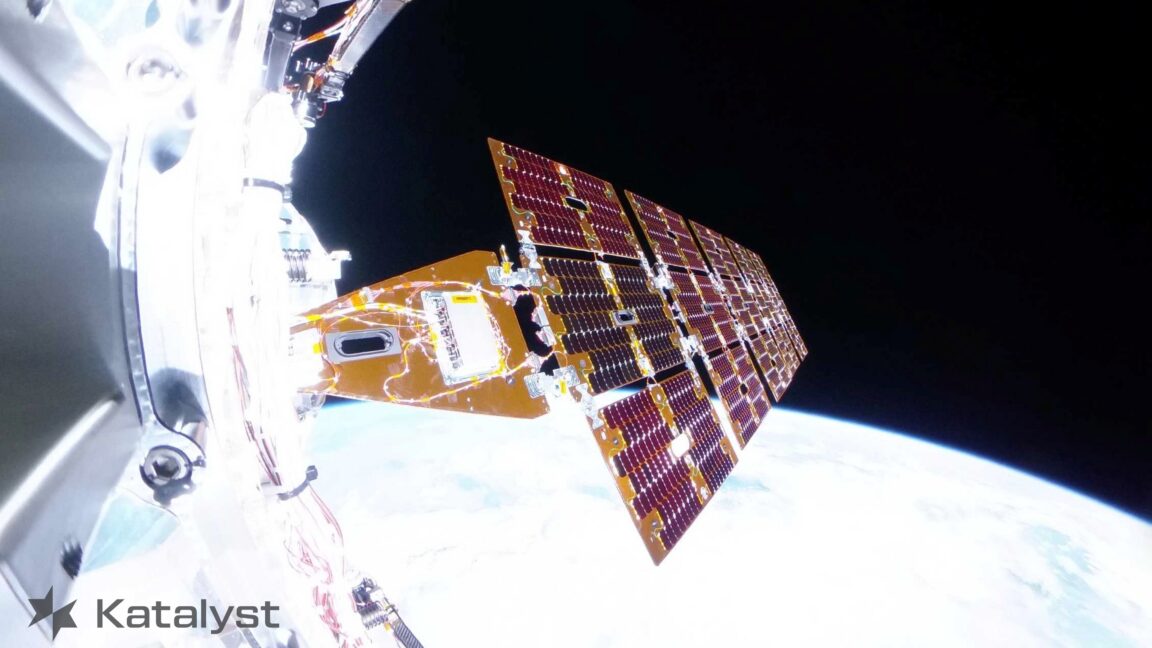
The Swift rescue mission has run into trouble in orbit, with NASA saying Tuesday that Katalyst Space Technologies’ Link satellite is spinning after attitude-control failures. The problem matters because Link is supposed to reach NASA’s aging Neil Gehrels Swift Observatory, attach to it and raise its orbit before it reenters the atmosphere.
NASA said Link had attitude-control problems over the weekend, leading to intermittent communications with ground teams. An early review found that two of the spacecraft’s three reaction wheels are not working and that its cold-gas thruster system has lost some capability, the agency said.
Link remains in contact with controllers and is producing enough electrical power, according to NASA. That gives Katalyst engineers time to work on a recovery plan before deciding whether the spacecraft can still approach Swift safely.
Why is the Swift rescue mission in trouble?
Reaction wheels help a spacecraft control where it points by managing momentum, a basic function for many satellites. Link also carries cold-gas thrusters for more precise control, especially for operations close to Swift, NASA said.
Katalyst is now using Link’s xenon electric thrusters to help steady the satellite, according to NASA. Those thrusters were built for raising Link’s orbit and later boosting Swift, rather than serving as the main system for attitude control.
The Link spacecraft launched July 3 on a Northrop Grumman Pegasus XL rocket that was released from an aircraft. NASA and Katalyst had reported early mission progress, including deployed solar arrays, stable communications with Katalyst’s operations center and initial in-orbit firings of the electric thrusters.
If the mission can be recovered, Link is intended to rendezvous with Swift about 200 miles above Earth. Katalyst’s plan calls for Link to use three robotic arms to attach to the observatory, then use its electric propulsion to push Swift into a higher orbit.
Why does NASA want to save Swift?
NASA officials say Swift is expected to reenter and burn up in the coming months without help. The observatory is nearly 22 years old, has exceeded its planned operating life and cannot raise its own orbit because it has no propulsion system, according to NASA.
The agency wants to keep Swift operating because it is among the few NASA missions designed to detect gamma-ray bursts, the most powerful explosions known in the universe. NASA is paying Katalyst $30 million for the rescue service.
The mission is also a test of commercial satellite servicing. NASA gave Katalyst nine months to build and launch Link as Swift’s orbit declined, a compressed schedule for a mission that requires rendezvous and capture of another spacecraft.
NASA said Katalyst plans to restore stable pointing, assess Link’s condition and adjust the spacecraft’s guidance, navigation and control software for its changed state. After that, Katalyst and NASA will review whether a revised approach and capture attempt can be made based on Link’s health and the safety of getting close to Swift.
This story draws on original reporting from Ars Technica.