
Samsung’s Galaxy Z Flip 8 makes the cover screen more useful
The new flip phone keeps many core specs from last year while adding native app access, a thinner build and a higher starting price.
By Maya Lindqvist · Senior Technology Correspondent
3 min read
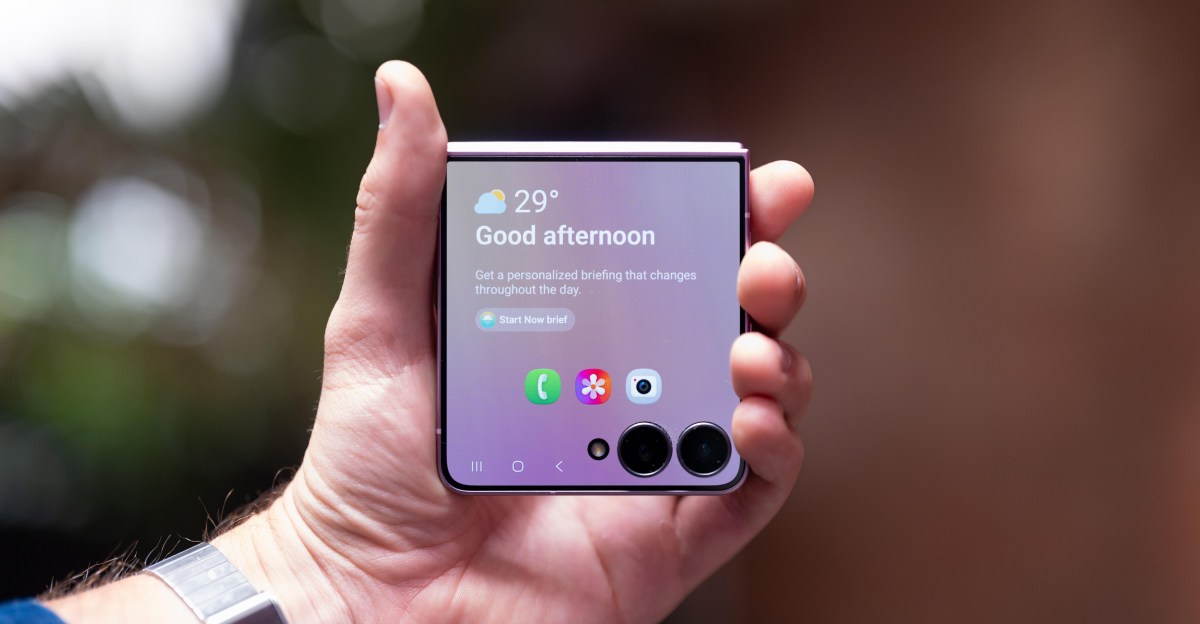
Samsung’s Galaxy Z Flip 8 pushes more of the phone experience onto its outside display, reducing how often users need to open the foldable. The shift matters because the Flip line’s cover screen is becoming less of a shortcut panel and more of a compact phone interface.
The Verge’s David Imel, who spent three hours with the device, reported that the Flip 8 looks close to last year’s Galaxy Z Flip 7 but changes how the front screen works. Samsung kept the 6.9-inch FHD+ AMOLED inner display and the 4.1-inch Super AMOLED cover display, according to The Verge.
The base configuration also remains familiar. The phone starts with 12GB of RAM and 256GB of storage, and it carries a 4,300mAh battery, The Verge reported.
Cover screen gets native app controls
Samsung added three gestures for the outer display, according to The Verge. A swipe down from the upper left opens notifications, a swipe down from the upper right opens quick settings, and a swipe up from the bottom brings up an app drawer.
That app access is now built into the phone’s software, The Verge reported. Earlier models required Samsung’s Good Lock app to launch apps from the cover screen, which The Verge described as a workaround rather than a native part of the experience.
The change makes the Flip 8 more capable while closed. Imel wrote that this may also reduce one of the traditional appeals of a flip phone: the limits that come from having to open it for fuller use.
Thinner body, new display stack
Samsung says the Galaxy Z Flip 8 is the thinnest and lightest flip phone on the market, according to The Verge. The phone measures 13.1mm thick when folded, 6.1mm when unfolded and weighs 180 grams.
The Verge noted that the Flip 8 is still thicker than a conventional slab phone when shut and thicker unfolded than Samsung’s Galaxy Z Fold 8 Ultra, which measures 4.1mm unfolded. Within the flip-phone category, Samsung is presenting the slimmer design as a central upgrade.
Samsung attributes part of the reduction to its Flex Titanium display technology, The Verge reported. The company says the design uses a thinner titanium film beneath the OLED panel and tighter bonding between the base plate and display module.
Samsung also says the new display is 20 times more durable, according to The Verge. The technology is also used in Samsung’s new Z Fold 8 and Z Fold 8 Ultra.
Battery design contributed to the thinner build as well. Samsung has moved to silicon-carbon battery technology, which can pack more energy into a given space than standard lithium-ion cells, The Verge reported. Samsung said it uses less silicon than some competitors for safety and longevity, and the Flip 8 keeps the same battery capacity and charging speed as the Flip 7 while using a smaller physical cell.
Cameras carry over, software adds a widget feature
The Flip 8 does not bring new camera hardware compared with the Flip 7, according to The Verge. It has a 50-megapixel main camera and a 12-megapixel ultrawide, rather than the 200-megapixel main camera found on the Z Fold 8 Ultra or the 50-megapixel ultrawide used on the Z Fold 8.
Samsung has added its Super Steady Horizontal Lock feature to the Flip 8, The Verge reported. The phone also includes a new “Now Brief” widget generator that can create custom widgets for the cover screen.
In a demonstration seen by The Verge, Samsung asked the phone to show pollen levels each morning, and the Flip 8 created a widget showing that information. The Verge said the feature resembles a recently announced Android 17 capability from Google, tuned for Samsung’s front display.
The Galaxy Z Flip 8 starts at $1,199.99, according to The Verge. That is $100 more than the Flip 7’s $1,099.99 starting price for the same RAM and storage baseline.
This story draws on original reporting from The Verge.