
Orchid synth puts a modern spin on the old chord organ
The $649 Telepathic Instruments device, made with Tame Impala’s Kevin Parker, aims to make rich chord progressions easy to sketch.
By Maya Lindqvist · Senior Technology Correspondent
3 min read
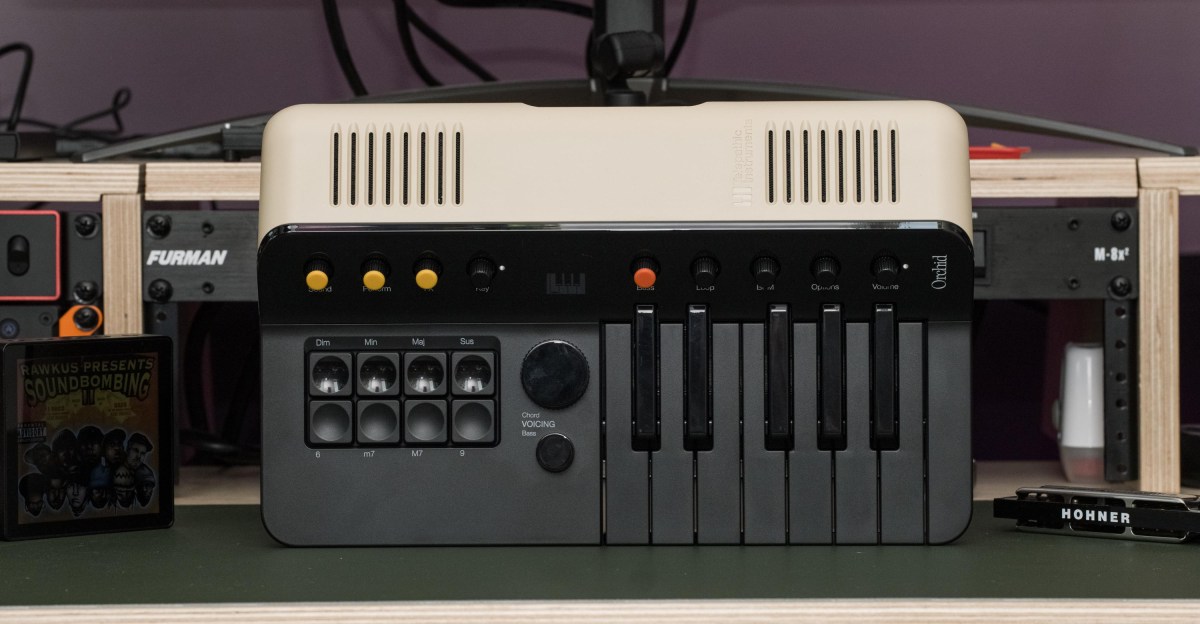
Telepathic Instruments’ Orchid is a $649 digital synth built to revive the ease of vintage chord organs for modern songwriters. In a review published by The Verge, Terrence O’Brien said the Kevin Parker-backed instrument makes it simple to build rich chord progressions, though its limits and price keep it from being a general-purpose synth.
The Orchid was designed in collaboration with Parker, best known for Tame Impala, according to The Verge. Its look draws on brown-and-tan electric chord organs from brands such as Magnus and Bontempi, with a speaker grille that nods to the fan vents on those older instruments.
Those vintage chord organs let players trigger full chords with one button, making them accessible to beginners and home musicians. O’Brien wrote that the Orchid carries that idea into a digital device that can play chords in many voicings and scales rather than being constrained by physical reeds.
Built around one-key chords
The Orchid has a one-octave keyboard and a set of chord-type buttons for major, minor, diminished, major seventh and other chord shapes, according to The Verge. Pressing a note and a chord button produces the corresponding chord, such as C major or F-sharp 9.
The device can also lock playing to a chosen key, which O’Brien said helps users with limited theory knowledge stay within a scale while trying out progressions. He described the chord engine as useful for finding the backbone of a track during studio jamming.
The Orchid is not limited to block chords. The Verge said it includes strum, harp and arpeggiator modes, plus 13 preset performance patterns. One mode, called “slop,” adds small timing variations so notes do not land with machine-like precision.
Sounds, drums and limits
Inside the Orchid are three synth engines: a virtual analog engine, an FM engine suited to electric piano and bell-like sounds, and a reed piano engine for Wurlitzer-style tones and gentler Rhodes-like sounds, according to The Verge. The unit includes 70 presets, not counting its bass section.
The bass section is separate from the main synth and has 12 sounds, including low electric piano tones, Moog-style bass, tuned 808s and aggressive dance-music drones, O’Brien reported. The Orchid also includes a built-in audio looper that can record chord progressions, basslines and melodies separately.
O’Brien praised the built-in drum machine despite its restrictions. The Verge said users cannot program custom beats or adjust the drum sounds, but the feature takes inspiration from 1970s rhythm machines such as the Korg Mini Pops, which supplied preset accompaniments for home organs.
The review also points to several trade-offs. Sound editing on the hardware is limited mostly to filter cutoff and effect intensity, and users who want to create custom patches need Telepathic Instruments’ Pistil virtual synth software, which costs $99 or $50 when bundled with the Orchid, according to The Verge. O’Brien said he found Pistil buggy, with freezes after transferring patches.
The keyboard is another constraint. The Verge said the Orchid can play only one key at a time, and chords must come from the chord buttons rather than from conventional keyboard fingering. That means experienced players cannot use the keyboard itself to voice their own complex chords.
O’Brien concluded that buyers seeking deeper synthesis in the same price range may be better served by instruments such as the Korg Minilogue or Arturia MiniFreak. For singer-songwriters who want an approachable electronic writing tool rather than a sound-design workstation, The Verge found the Orchid charming, fun and easy to use.
This story draws on original reporting from The Verge.