
Orcas filmed ramming dead sunfish apart in Gulf of California
Researchers say two filmed encounters show orcas using high-speed impacts to break up sunfish carcasses, possibly to feed juveniles or play.
By Hana Yoshida · Markets Reporter
3 min read
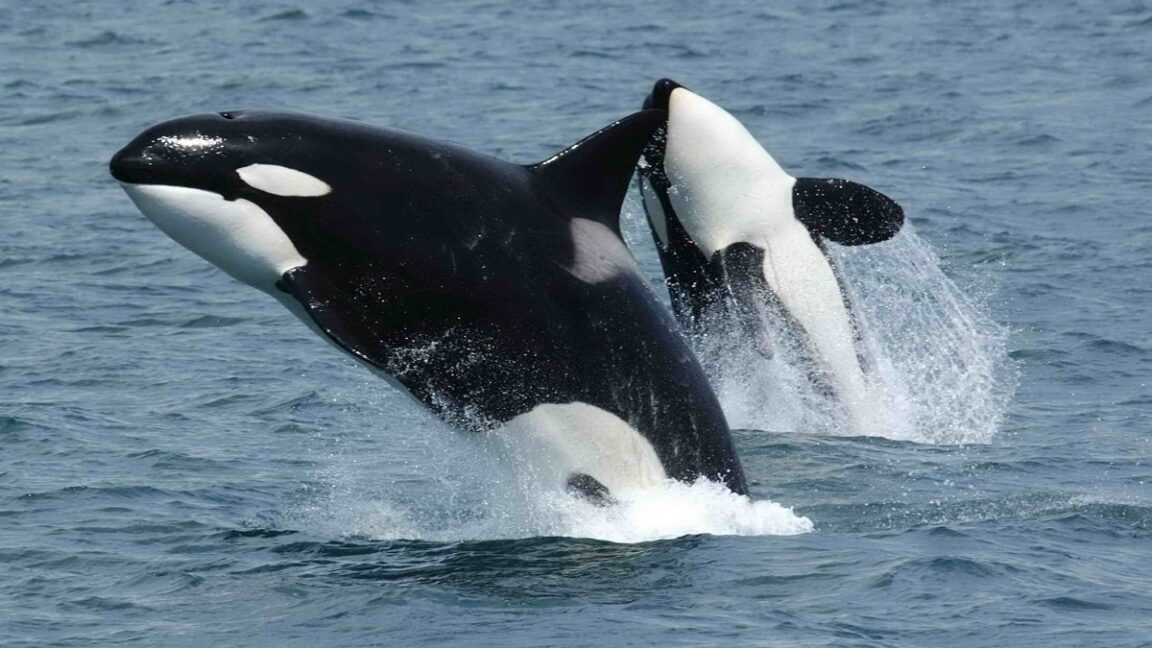
Orcas in Mexico’s Gulf of California have been filmed working together to smash dead sunfish into smaller pieces, a behavior researchers say has not been documented in this form before. A paper published in Frontiers in Ethology describes the conduct as a possible food-processing technique, social learning exercise or play behavior.
The observations add to a growing record of complex orca hunting and handling methods. The researchers said orcas are known to coordinate attacks on prey, strike animals with force and sometimes kill without feeding, but the two Gulf of California cases stood out because the impacts broke the sunfish carcasses into fragments.
Kathryn Ayres of the nonprofit Beneath The Waves, a co-author of the paper, said the behavior could make feeding easier for young orcas or could be play. “Orcas are known for playing with their food,” Ayres said in a statement released by Frontiers.
Two filmed encounters
The first case occurred in July 2024 near San Jose del Cabo, Mexico, according to the study. A tourism operator recorded three adult female orcas, one male and one juvenile catching and eating a spine-tail devil ray, then filmed one adult female holding a sunfish carcass with a large wound along its side.
The researchers said the sunfish’s viscera had probably already been removed before the recorded ramming. In the video, the male orca rushed toward the carcass while the female let go shortly before impact, causing the body to break apart and scatter tissue in the water, according to the paper. The juvenile then ate smaller pieces while the adults fed from the split carcass.
The second event was recorded in September 2025 in the channel of Isla Cerralvo, also in the Gulf of California, the researchers said. In that case, one adult orca held a dead sunfish while another struck it at speed, fragmenting the body. The study said the holding orca then moved through the pieces and handled them with its mouth as other orcas, including a juvenile, fed.
The same group of orcas had been seen feeding on a mako shark earlier that day, according to the paper.
Researchers weigh possible reasons
The authors described the behavior as “ram-to-fragment” foraging. They said it appears different from previously known forceful feeding techniques because the impact caused broad disintegration of tissue rather than just loosening flesh from prey.
Orcas that hunt sunfish generally target the pectoral fins, cut into the body to remove internal organs and then use the mouth to reach remaining tissue, according to the study. The researchers suggested the newly described behavior may be a more elaborate version of that process.
The authors said the behavior may be specific to sharp-tail sunfish, whose body structure may break apart in a distinctive way when struck. They also noted that the species’ rudder-like tail may give an orca an effective place to grip the body while another individual rams it.
Because both sunfish were already dead and had apparently been processed before the impacts, the researchers said the ramming looked more like carcass handling than a killing method. The presence of juveniles and their access to smaller pieces led the authors to suggest the behavior could represent adult investment in young animals’ feeding.
The researchers also left open a playful explanation, noting that the orcas had already fed on other prey before the sunfish impacts in both recorded episodes. Scientists have also suggested that some recent cases of orcas ramming boats may reflect learned or playful behavior rather than attempts to feed, according to the study’s discussion of prior research.
Ayres said in the Frontiers statement that good identification photos remain valuable because researchers are still documenting new ways orcas hunt and handle prey. The paper was published in Frontiers in Ethology in 2026.
This story draws on original reporting from Ars Technica.