
Manx shearwaters show jet-lag-like navigation errors on flights home
GPS tracking found that fast east-west flights were associated with predictable Sun-compass errors in Manx shearwaters.
By Hana Yoshida · Markets Reporter
3 min read
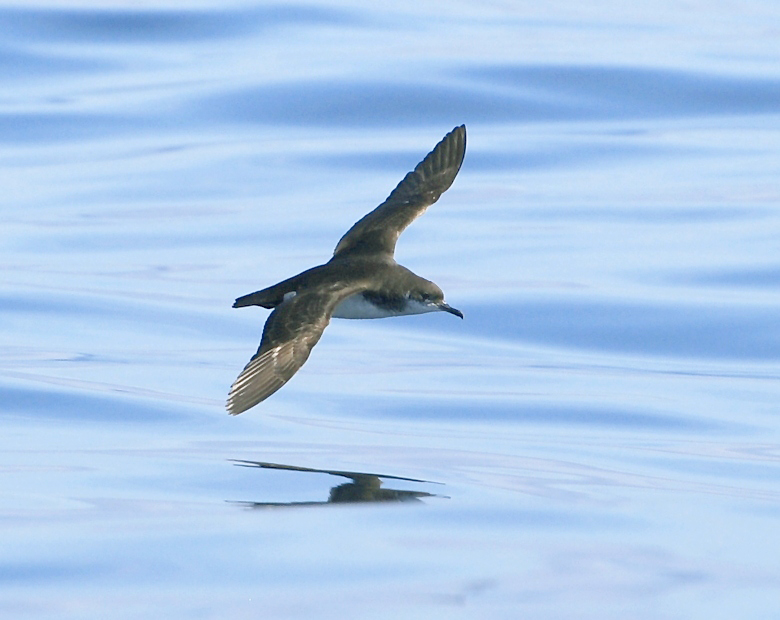
Manx shearwaters can develop a jet-lag-like mismatch between their body clocks and local solar time while racing home across the Atlantic, a new study suggests. The Manx shearwater jet lag effect was associated with small, predictable changes in flight direction, although the observational research cannot by itself prove that the clock shifts caused those biases.
The Oxford-led research, published October 29 in Science, analyzed two decades of GPS records from 1,045 birds. Researchers found patterns in homeward routes that matched predictions for a Sun compass affected by rapid east-west travel.
How can jet lag affect a shearwater's route home?
Birds that use the Sun to set a heading need an internal clock. Since the Sun's position changes during the day, the clock helps a bird interpret where the Sun should be at a particular local time and adjust its direction accordingly.
Manx shearwaters normally reset their clocks using sunrise and sunset, according to Oxford University. When a bird moves quickly east or west during daylight, its clock can temporarily differ from the solar time at its new longitude. The researchers found that eastbound birds tended to shift clockwise from their expected route, the pattern predicted when their internal time trails local solar time.
What did the tracking data show?
The wider dataset covered 3,688 foraging trips from breeding colonies on the western coasts of the UK and Ireland. The researchers isolated 1,837 continuous homeward flights, while reporting by Ars Technica said 335 flights made beyond sight of land showed directional biases that matched the Sun-compass predictions.
The estimated clock differences were usually about 10 to 15 minutes and reached roughly an hour at the upper end, Ars Technica reported. Course deviations reached about 15 degrees, according to Oxford and Science News.
Researchers also saw the pattern when birds traveled along coastlines. Birds flew somewhat closer to shore or farther out depending on the direction of the predicted compass error, a result consistent with continued use of the Sun compass even when coastal features were available.
Did the errors keep the birds from getting home?
The reported navigational cost was limited because the birds appear able to check their position and correct their route. Oxford gave an example of a bird returning from 1,000 kilometers away: with an average seven-degree error and continued corrections, it would travel about 5 kilometers farther to get within 5 kilometers of its colony.
The team compared the observed pattern with alternatives involving crosswinds, the Coriolis effect and a magnetic compass. Those explanations fit the data less well than the predicted Sun-compass pattern, Ars Technica reported. A separate 2026 study indexed by PubMed found magnetic disruption did not affect adult Manx shearwaters' navigation on long foraging trips, but that result does not establish that the birds never use magnetic cues.
Were the birds shown to have human jet-lag symptoms?
No. In this study, “jet lag” refers specifically to a mismatch between internal time and local solar time after rapid travel across longitudes. The researchers did not test whether the birds' sleep, feeding, breeding, health or survival changed as a result.
The paper was published in Science with DOI 10.1126/science.adz2542. The findings show an association between rapid longitudinal flight and course biases consistent with a time-shifted Sun compass; further work is needed to establish broader effects on the birds.
This story draws on original reporting from Ars Technica.