
Rivian and Ford expand 3D printing for factory tools and select parts
Rivian, Ford and GM are widening use of additive manufacturing, aiming to speed factory work while limiting costs for some jobs.
By Sofia Marchetti · World Affairs Correspondent
3 min read
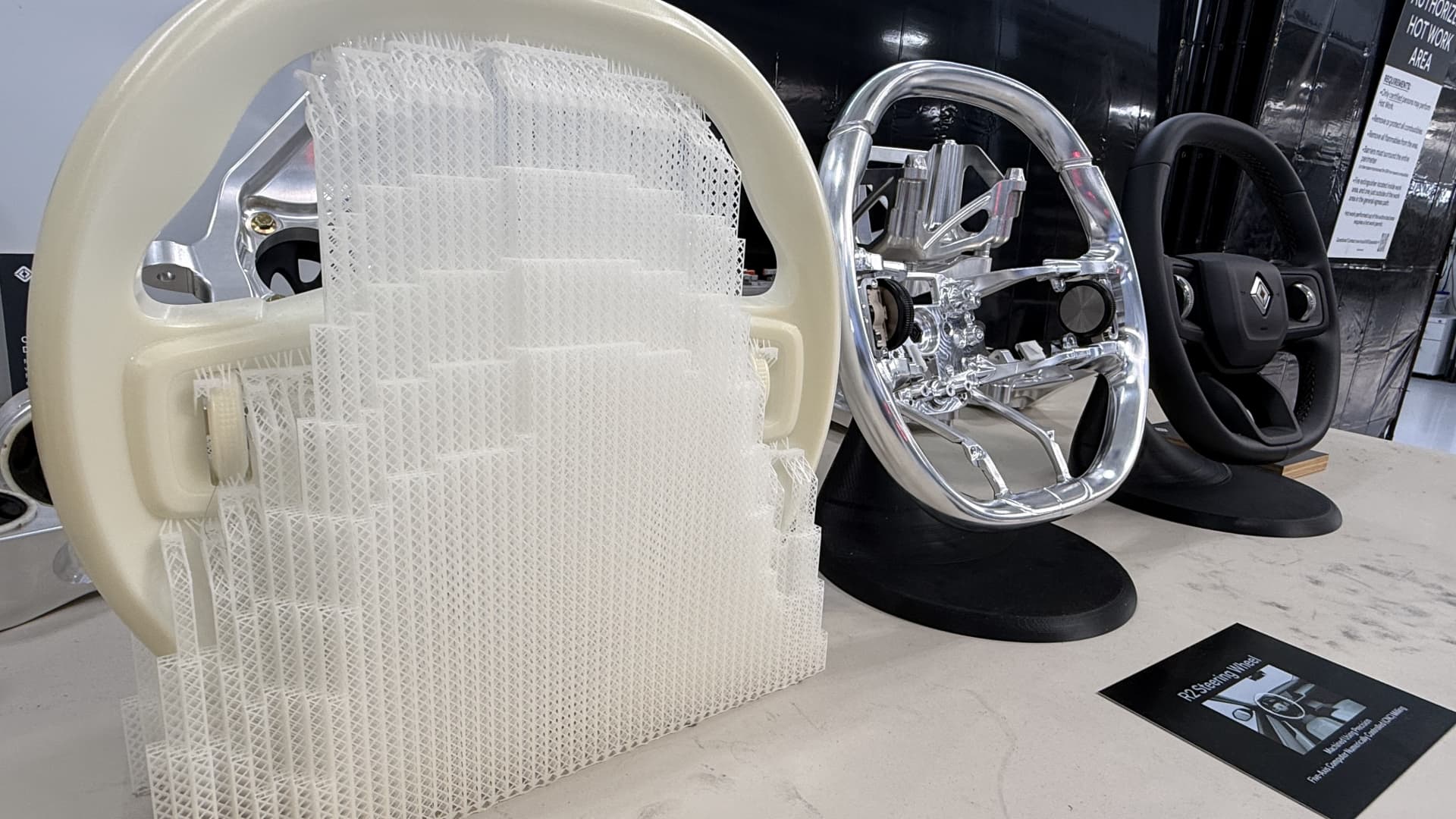
Rivian and Ford are expanding their use of 3D printing for factory tools, testing equipment and selected parts, according to CNBC. The Rivian Ford 3D printing push moves the technology beyond prototypes, with the companies seeking faster turnaround for particular manufacturing needs; GM has also used printed parts for some low-volume products and research and development.
The reported applications are mainly tools, test models and limited-run or temporary components rather than a replacement for conventional automotive production. Rivian and Ford say the systems can reduce time and some costs, though the reported savings and performance figures are company claims rather than independently audited results.
How are Rivian and Ford using 3D printing?
Also called additive manufacturing, 3D printing builds an object from a digital design one layer at a time. CNBC reported that industrial machines can use materials including plastics, composites, ceramics and metals.
Rivian said it has invested more than $5 million in 3D-printing machines and spends about $1.7 million a year on materials. Jared Beck, Rivian’s head of additive manufacturing, told CNBC that the company is adding machines that can make flexible silicone components and is installing a bank of printers at its Normal, Illinois, plant so employees can make parts on demand.
Beck said Rivian wants the equipment available across the company, especially to engineers who need a physical part quickly. He said the machines generally recover their cost within a year, reduce supplier-tooling and logistics expenses, and can cut the time to make some parts from weeks to days or hours. Beck said the company’s savings total millions of dollars, while identifying speed as Rivian’s primary benefit.
CNBC reported that Rivian has used the process to make electric-motor models for fluid testing, screw guides for tooling, stamping-press inserts and trim pieces that filled gaps in some early vehicle builds.
Ford has taken a more distributed approach, with additive-manufacturing departments at many plants rather than a single centralized printing area, CNBC reported. At Ford’s River Rouge factory in Dearborn, Michigan, roughly two dozen machines have made thousands of tools, including torque-bit sockets, hood jackers and hand tools for smoothing adhesive.
Workers can request parts or tools through an app, while Ford’s printing teams help develop designs or decide which items to make. A vending machine near Ford’s Dearborn headquarters stores printed items for F-150 production and gives team leaders access to stocked tools, according to a Ford engineer interviewed by CNBC.
Where does 3D printing fall short in auto factories?
Ford used a printed machining wheel as a temporary measure while it waited for a supplier’s replacement part, CNBC reported. The company’s engineer said the printed wheel kept the assembly line running but did not perform as well as the purchased component.
Ford said its official program has more than 200 machines and that it expected to have 3D-printing labs at more than 23 plants by the end of the year. The temporary-wheel example shows the reported role of the technology: it can support production in specific cases, but it does not make every printed part equivalent to a conventional replacement.
This story draws on original reporting from CNBC.