
Klebsiella brain abscess traced to evolved UTI bacteria in case report
Doctors say a woman’s UTI bacteria evolved inside her body, forming a hypervirulent strain that spread to her brain and eye.
By Hana Yoshida · Markets Reporter
3 min read
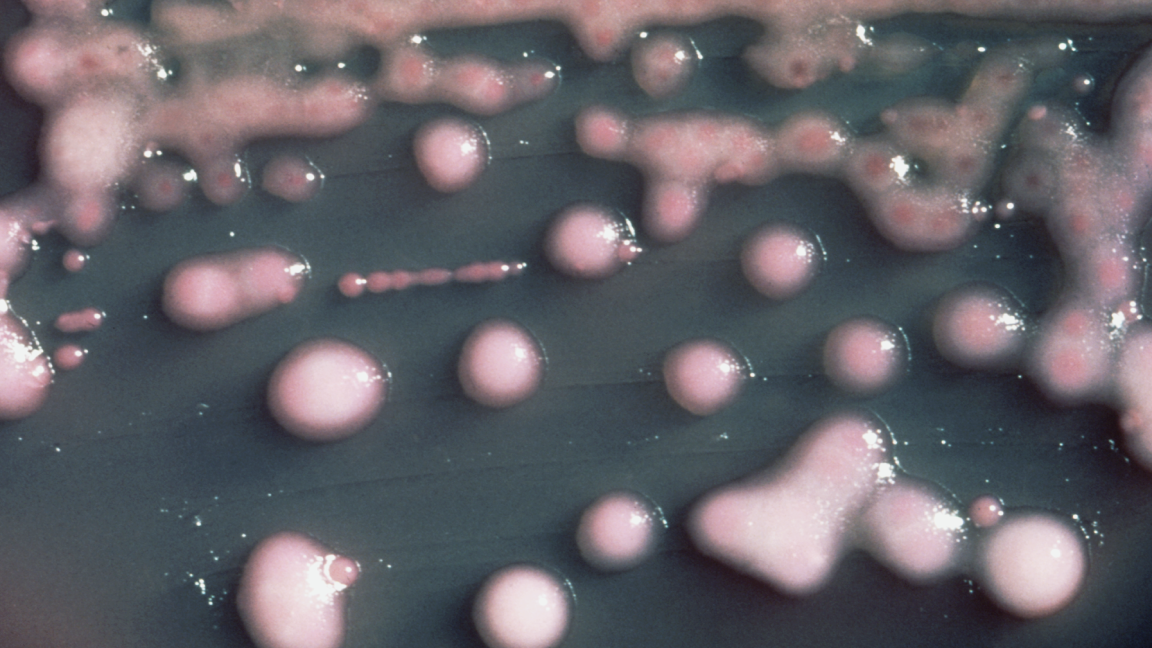
A klebsiella brain abscess in a 63-year-old woman was traced to bacteria that appear to have evolved from an earlier urinary tract infection, according to doctors reporting the case in the New England Journal of Medicine. The case matters because it shows how an infection can split into strains with different strengths inside one patient.
The woman went to a hospital after sudden vision loss in her right eye and pain, her doctors reported. MRI scans showed inflammation in the eye and lesions in the brain, including in the parietal lobe, an area involved in processing sensory information.
Doctors suspected a brain abscess. Blood and urine tests pointed to infection and kidney problems, and a brain biopsy found pus, according to the case report.
How did UTI bacteria reach the brain?
Samples from two urine tests and the brain biopsy all grew Klebsiella pneumoniae, the doctors said. The bacterium can live in the gastrointestinal tract and is a known cause of hospital-associated infections, pneumonia and urinary tract infections.
Some forms of K. pneumoniae can spread through the bloodstream to other organs. Doctors and researchers said the woman’s case showed that a urinary reservoir could seed distant sites, including the brain and eye.
The three bacterial samples were closely related, but they did not behave the same way. The first urine sample looked like ordinary K. pneumoniae, while the second urine sample and the brain sample had a thick, sticky capsule around the bacteria, the researchers reported.
Further testing showed the capsule made the bacteria more dangerous. Immune cells called macrophages could engulf the ordinary-looking bacteria more effectively than the sticky version, and in mouse tests the capsule-heavy bacteria were lethal while the ordinary version was not, according to the report.
The hypervirulent bacteria also paid a price for that advantage. Researchers found they grew more slowly and were worse at infecting bladder cells, which may explain how both forms could persist rather than one fully replacing the other.
What genome sequencing showed
Genome sequencing found that all three samples were highly related, but they lacked the usual genetic markers tied to hypervirulent K. pneumoniae, the researchers said. The two urine samples differed by 66 small mutations, while the two hypervirulent samples differed by four.
The key changes were in genes involved in making the bacterial capsule. Researchers confirmed the link by engineering ordinary K. pneumoniae with those mutations, which reproduced the sticky capsule trait.
Using the genetic data, the researchers estimated that the bacteria in the urine samples split from a common ancestor one to two years before the woman’s brain infection. Her doctors noted that she had been hospitalized for a urinary tract infection two years before the abscess.
What is heterovirulence?
The researchers described the case as an example of heterovirulence: a mixed bacterial population in which one subgroup is more damaging even though it may be less fit in the original infection site. The idea resembles heteroresistance, where an antibiotic-resistant subgroup survives treatment but carries costs such as slower growth.
In this case, the samples were susceptible to antibiotics, and doctors were able to treat the infection, according to the report. The doctors did not provide follow-up details on the woman’s vision or neurologic recovery, though they noted that most patients with K. pneumoniae brain abscesses recover.
This story draws on original reporting from Ars Technica.