
Gundle e-reader case tests gun-blocking rules for 3D printers
A pistol-shaped e-reader case has become an example of how 3D printer gun-detection software could misread harmless objects.
By Maya Lindqvist · Senior Technology Correspondent
3 min read
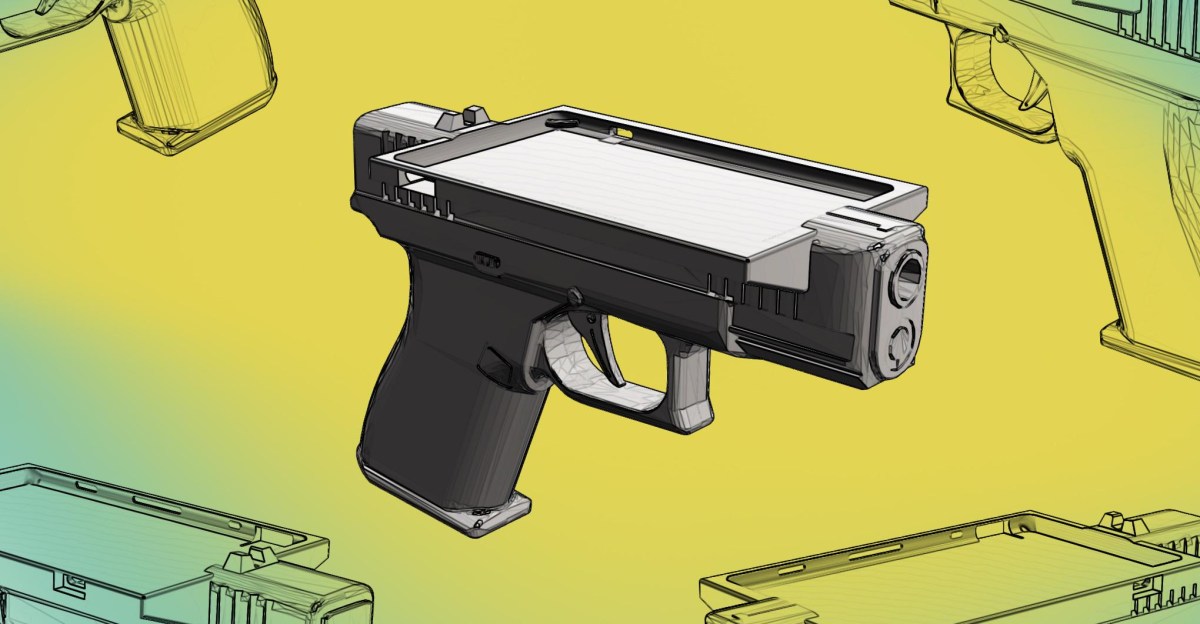
A 3D-printed Gundle e-reader case made to resemble a handgun is drawing attention to a hard problem for proposed gun-blocking software in consumer printers. The accessory cannot fire and its trigger does nothing, but its shape raises the question of how automated systems would distinguish a prop-like object from a weapon part.
Louisville, Kentucky, creator Luke Blackford, who works under the name Luke The Maker, recently showed the case for the Xteink X4 e-reader on Instagram and on his website. According to Blackford, the device holds the e-reader above a plastic pistol-style frame, with an opening for the reader’s buttons.
Blackford calls the project the “Gundle.” He told The Verge he did not build it specifically as a test of proposed printer laws, but said he is skeptical of mandated scanning systems because of his interest in open software.
What is the Gundle e-reader case?
The Gundle is a 3D-printed case for the Xteink X4 e-reader that uses the outline of a handgun as its body. Blackford said it is a reading accessory and art project, not a firearm, though he acknowledged that it could be dangerous if mistaken for a real gun in public.
Blackford said he found a free gun model online, modified it in Fusion 360, added the e-reader mount and printed it on a Bambu Lab H2D printer. He told The Verge the work from idea to finished print took less than 24 hours.
The case arrives as lawmakers in New York and California pursue rules aimed at stopping 3D printers from producing untraceable guns. New York Gov. Kathy Hochul has signed a law requiring expert review of technology that could block firearm prints, and California’s Assembly has passed a similar proposal, according to state records cited by The Verge.
Jess D’Amelia, a spokesperson for Hochul’s office, told The Verge the governor is focused on public safety and reducing gun violence. D’Amelia said the law depends on subject-matter experts to assess emerging technology while addressing ghost guns and illegally made weapons.
Critics say the Gundle shows why the technical job is difficult. Cliff Braun, associate director of technology policy and research at the Electronic Frontier Foundation, told The Verge that the law is not meant to stop prints like Blackford’s, but that this type of design shows why errors are hard to avoid.
One possible approach would compare print files against known prohibited files. Braun said critics argue that method could be evaded through small design changes. Another approach could use AI or computer vision to judge whether a shape resembles a gun, but that could catch harmless objects that share similar outlines.
Dartmouth engineering associate professor Solomon Diamond told The Verge that the outcome would depend on the kind of detection system used. He said software based on visual resemblance might mistake a gun-shaped e-reader case for a firearm, while a more exact geometric-identification method would be less likely to do so.
The legal definition of firearm parts adds another complication. The Bureau of Alcohol, Tobacco, Firearms and Explosives has said the regulated part is the component housing the main fire-control mechanism; for many handguns, that is the frame. Braun told The Verge handgun frames can be visually ambiguous because many non-gun objects share similar shapes.
Blackford has posted the Gundle files on his own site, but told The Verge he avoided larger 3D-printing marketplaces because he did not want the design to spread too widely. He said that if he ever took one outside, he would print it in a different color to make clear it was not meant to look like a real weapon.
This story draws on original reporting from The Verge.