
Geekbench 7 adds tougher CPU and GPU tests for modern devices
Primate Labs says Geekbench 7 uses larger datasets, new media workloads and revised multi-core testing for more demanding benchmarks.
By Maya Lindqvist · Senior Technology Correspondent
2 min read
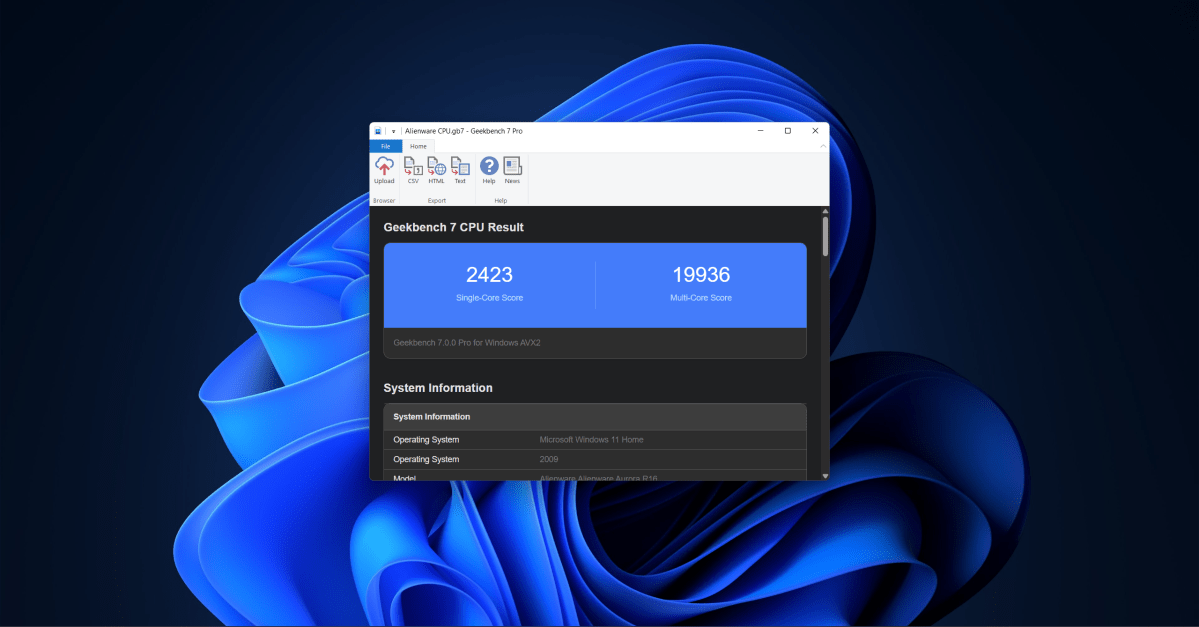
Primate Labs is releasing Geekbench 7, the latest version of its widely used benchmarking software for measuring device performance. The update matters for reviewers and hardware buyers because Geekbench 6 scores cannot be compared directly with Geekbench 7 results.
The new version keeps the same general look and feel as Geekbench 6, according to Primate Labs, but changes several of the workloads that produce its scores. The company says the test now uses larger datasets for CPUs and GPUs, adds new media tasks, and revises how it measures multi-core performance.
What is new in Geekbench 7?
Primate Labs says Geekbench 7 is designed around more demanding datasets meant to better reflect the needs of current software. A benchmark is a standardized test that runs the same tasks on different machines, producing scores that can be used to compare performance across hardware.
The update adds audio and video encoding and decoding tests. Primate Labs lists AV1 and Opus among the new media workloads, along with modeled tasks for video conferencing, streaming and content consumption.
The multi-core benchmark has also been redesigned. According to Primate Labs, Geekbench 7 will run workloads across multiple threads only when the tasks being modeled would behave that way in real software.
- Larger CPU and GPU datasets
- New audio and video encode/decode tests
- AV1 and Opus workloads
- Modeled video conferencing, streaming and content consumption tasks
- A revised multi-core test tied more closely to real application behavior
Those changes are aimed at making the benchmark more demanding while keeping the test quick to run. The Verge’s Antonio G. Di Benedetto notes that Geekbench has been useful in laptop reviews because it is simple and fast, while its short runs tend to measure burst performance more than long sustained workloads that can expose CPU or GPU throttling.
How much does Geekbench 7 Pro cost?
A Geekbench 7 Pro license costs $99, the same price listed for the prior professional license tier, according to Primate Labs. The company is offering it for $79 until August 6.
The Pro license allows offline benchmark runs that are not uploaded to the Geekbench Browser. Primate Labs says that license covers compatible desktop platforms, including Windows, macOS and Linux.
For people who compare hardware over time, the version change will require fresh testing. Primate Labs and The Verge both note that Geekbench 6 and Geekbench 7 scores are separate and should not be treated as interchangeable.
This story draws on original reporting from The Verge.