
College lab meningitis exposure scare put 32 people on antibiotics
A microbiology class mix-up led 33 people to fear exposure to a meningitis bacterium, but public health testing found a harmless relative.
By Maya Lindqvist · Senior Technology Correspondent
3 min read
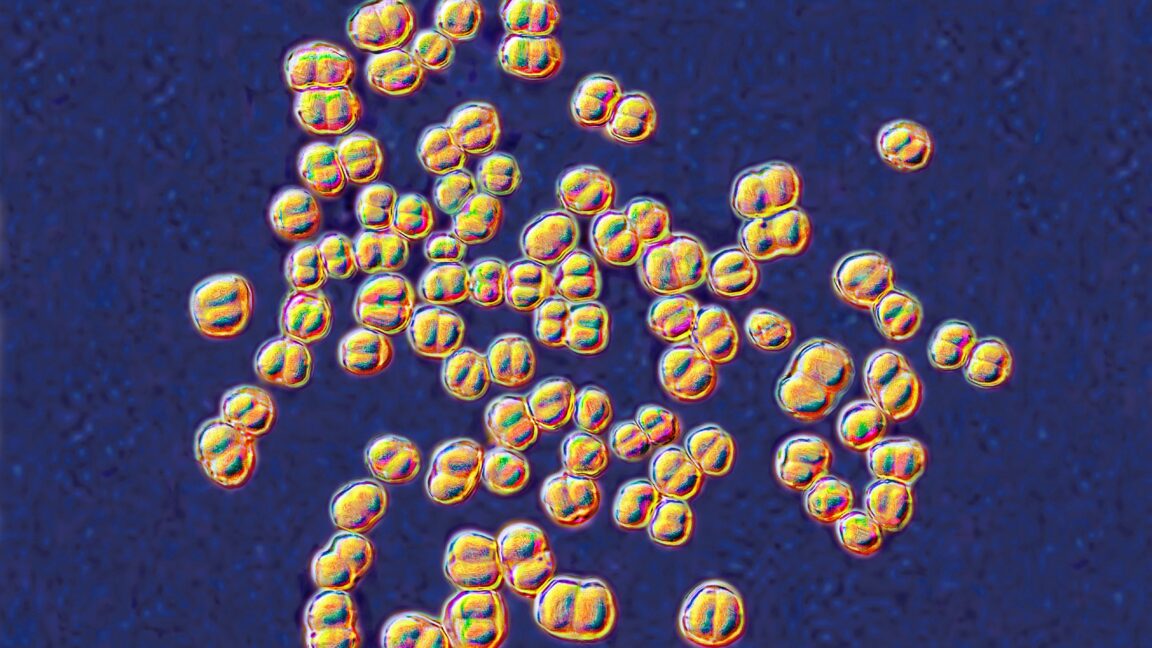
A college lab meningitis exposure scare sent 32 people onto precautionary antibiotics after a microbiology class believed it had handled Neisseria meningitidis, a bacterium that can cause life-threatening disease. Public health testing later found the class had not been exposed to the dangerous pathogen, according to a report in the CDC’s Morbidity and Mortality Weekly Report.
The incident involved 33 people connected to a college microbiology lab, including students, instructors and lab staff, health officials reported. Thirty-two began a 10-day course of post-exposure prophylactic antibiotics, and two people who developed headaches went to emergency departments and received lumbar punctures to rule out infection.
State and federal health officials said the episode exposed gaps in how the university stored, labeled and tracked biological materials. The university changed its procedures and protocols after the investigation, according to the report.
What happened in the college lab meningitis exposure scare?
The class assignment was routine: students received an unknown bacterium and were asked to identify it using biochemical tests and morphology. Instructors expected the sample to be Plesiomonas shigelloides, a common bacterium found in the environment and in some animals that can cause diarrhea in people.
Instead, every student group identified the organism as N. meningitidis, according to health officials. The instructors reviewed the work and found that the students’ results matched that conclusion: the organism appeared to be a gram-negative, oxidase- and catalase-positive diplococcus with carbohydrate fermentation results consistent with N. meningitidis.
N. meningitidis can cause meningitis, an inflammation of the brain and spinal cord coverings, and bloodstream infections. In laboratories, officials said, the organism requires controls such as respiratory protection and a biosafety cabinet because it can spread through aerosols.
The class had used gloves and lab coats, not the higher-level protections needed for that pathogen, according to the report. University officials also found a vial labeled N. meningitidis in the same stockroom freezer that held the expected P. shigelloides material.
What did public health testing find?
After the university contacted public health authorities, state officials helped assess risk, test samples and guide the response. They recommended antibiotics for all 33 people considered exposed; one person did not start the medication, the report said.
Health officials noted that 15 of the 33 people, or 45%, had previously received at least one meningococcal vaccination. Vaccination status did not stop officials from recommending precautionary treatment after the suspected lab exposure.
Several days later, the state public health laboratory tested two samples from the exercise using mass spectrometry and whole-genome sequencing. Those tests identified the organism as Neisseria sicca, which officials described as a nonpathogenic relative of N. meningitidis.
The state lab then repeated the carbohydrate fermentation tests used in the class and got the same misleading pattern. Officials concluded that the N. sicca isolate had atypical fermentation behavior, which caused the classroom identification error and likely contributed to the vial being mislabeled in the freezer.
What did investigators say went wrong?
The investigation found problems with inventory controls for identifying, labeling, storing and separating biological materials based on handling requirements and containment conditions, health officials reported. They also cited limited supervision of stockroom employees, problems with the availability and use of personal protective equipment, and weak documentation of sample inventory, disposition and chain of custody.
No dangerous pathogen exposure was ultimately confirmed, according to the report. Even so, the episode led to unnecessary medical treatment and emergency evaluations, and health officials framed it as a warning about laboratory inventory and biosafety practices.
This story draws on original reporting from Ars Technica.