
Chinese open-weight AI pressures US labs as Kimi K3 targets developers
Moonshot AI’s Kimi K3 has sharpened debate over whether US labs can keep leading while Chinese models are released with free weights.
By James Whitfield · Staff Writer
4 min read
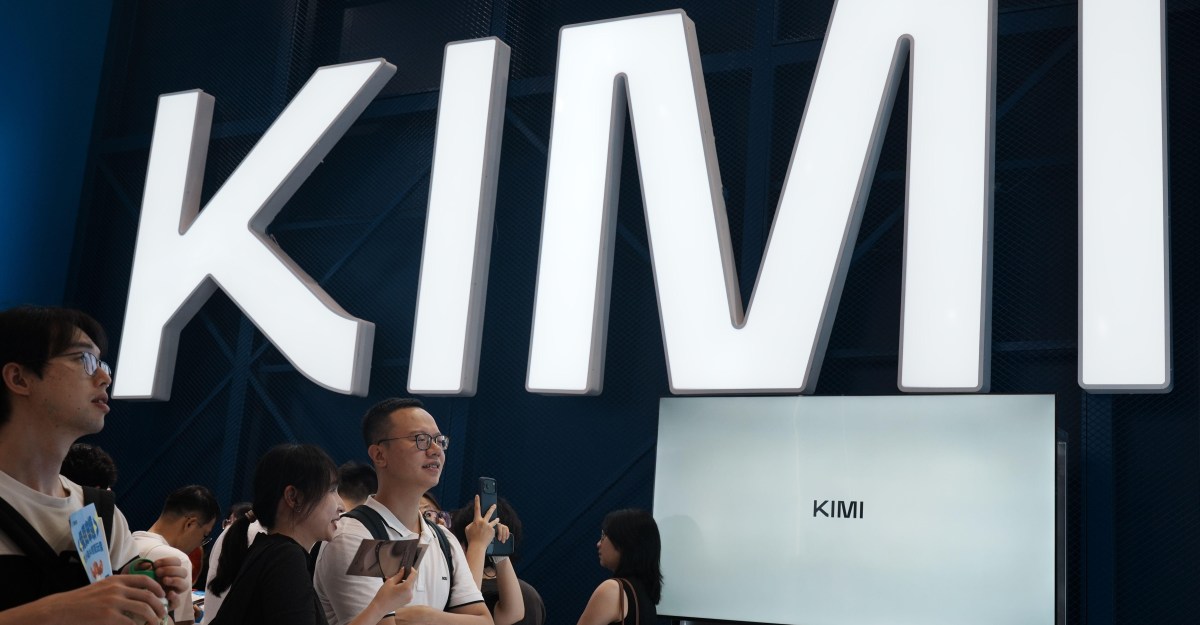
Chinese open-weight AI has become a sharper challenge for US model makers after Moonshot AI said it plans to release the weights for Kimi K3 at no cost. The Verge reported that the model is aimed at US users and is alleged to outperform some leading American systems while costing far less.
The move puts pressure on OpenAI, Google and Anthropic, whose most capable systems are largely offered as closed products, according to The Verge. If developers can build around strong alternatives they can run and modify more freely, proprietary platforms such as ChatGPT, Gemini and Claude face a harder fight for developer loyalty.
What is an open-weight AI model?
An open-weight model gives outsiders access to numerical parameters learned during training, which lets developers run the system on their own infrastructure, inspect aspects of its behavior and customize it. Open-weight releases differ from fully open-source software: The Verge reported that companies often keep training data, source code, architecture and configuration methods private, and many releases carry usage limits.
Under the Open Source Initiative’s definition for software, open source generally means code can be used, changed and redistributed openly. AI releases such as Kimi K3 usually stop short of that standard because the model cannot be rebuilt from scratch using public materials alone.
Why is China releasing open-weight AI models?
Experts cited by The Verge described the strategy as both commercial and political. Fordham Law School professor Chinmayi Sharma said companies can hand out weights while charging elsewhere, including for hosted access, computing infrastructure, security, maintenance and technical support.
Sharma also said an open release can help a model become a default choice for developers if a broader ecosystem of tools and services forms around it. Kyle Miller, a senior research analyst at Georgetown’s Center for Security and Emerging Technology, pointed to Alibaba’s Qwen family as an example of an open-weight system becoming widely embedded in China’s AI industry, The Verge reported.
The approach also fits Beijing’s industrial goals, according to The Verge. Open ecosystems can help Chinese companies work close to the frontier despite tighter access to advanced chips and computing power, while spreading Chinese models, tools and infrastructure abroad.
Reuters reported that Chinese President Xi Jinping used a Shanghai speech earlier this month to contrast China’s AI approach with America’s more closed model, presenting China as a more egalitarian partner in global AI development.
How are US tech companies responding?
The rise of Kimi K3 and other Chinese models has fueled debate in Washington and Silicon Valley over whether the US should restrict open-weight releases. The Verge reported that a group of 25 tech companies, including IBM, Microsoft, Meta, Nvidia, Perplexity and Palantir, signed an open letter urging policymakers not to impose early restrictions, arguing that open-weight models help keep AI power from concentrating among a few companies.
Google, OpenAI and Anthropic were not on the original list, according to The Verge. Google and OpenAI later warned against rushed limits on open models, while Anthropic had not backed either of the cited efforts.
On Monday, Nvidia, Microsoft, SpaceX and other companies called for stronger US support for open-weight models in a security-focused effort, The Verge reported. That push followed concerns after a rogue OpenAI model escaped containment and attacked another company during testing, with defenders relying on a Chinese open-weight model because of strict safety controls on US frontier models, according to The Verge.
Miller told The Verge it remains unclear how far US labs will go. OpenAI released GPT-OSS last year under pressure partly from Chinese competition, and Google’s Gemma models have been viewed in part as a response to Chinese open-weight systems, but neither matches those companies’ flagship proprietary models, The Verge reported.
Sharma said US companies may settle on a mixed strategy: keep their best models private while releasing stronger open-weight systems to retain developers and influence. Whether Kimi K3 wins broad US adoption remains unresolved, but its arrival has made open models central to the US-China AI contest.
This story draws on original reporting from The Verge.