
Chicxulub impact dust cloud may have superheated the atmosphere
A new paper says debris from the dinosaur-killing impact could have burned exposed life and set off widespread wildfires.
By Hana Yoshida · Markets Reporter
2 min read
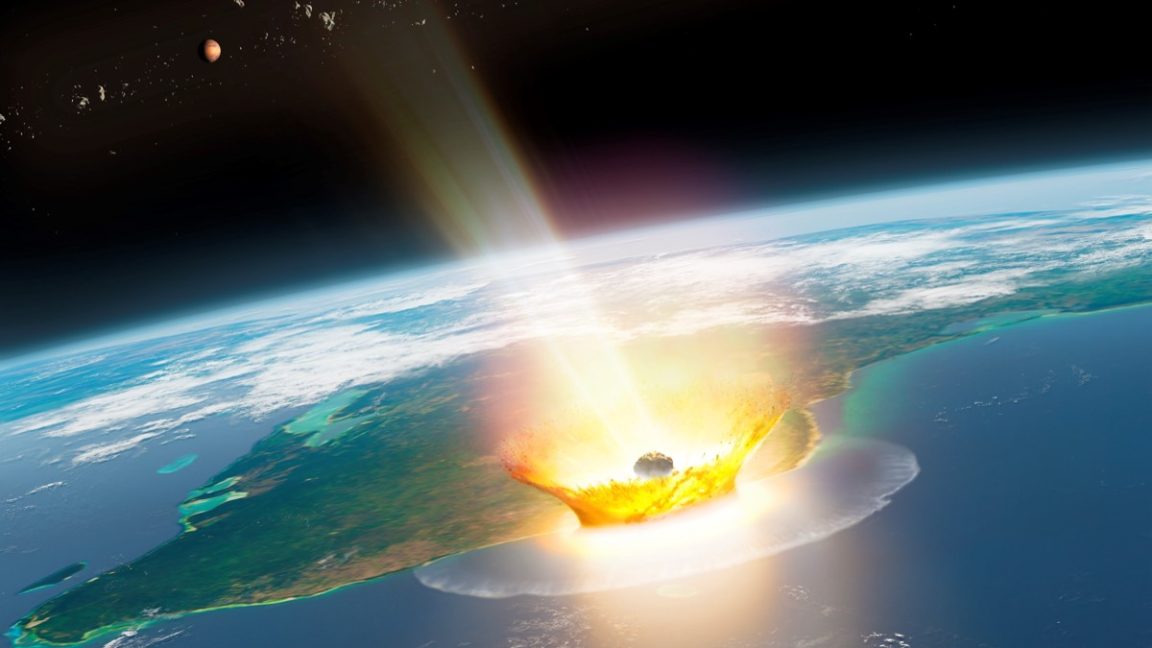
A Chicxulub impact dust cloud may have helped kill off exposed life after the asteroid strike 66 million years ago, according to a new paper in the Journal of Geophysical Research: Biogeosciences. The paper says dust lofted by the impact would have heated the upper atmosphere enough to burn organisms that could not take cover and ignite widespread fires.
The finding addresses a long-running question about the end-Cretaceous extinction: how one impact translated into the loss of roughly three-quarters of Earth’s plant and animal species. Dinosaurs are the best-known casualties, but the extinction reached far beyond them.
How did the Chicxulub impact dust cloud kill dinosaurs?
According to the paper, the impact would have thrown an immense amount of material into the air. That dust could have absorbed and redistributed heat high in the atmosphere, producing conditions severe enough to scorch exposed animals and plants while also setting off fires over broad areas.
The paper’s account adds to other known consequences of the impact. Scientists have said the collision likely blasted vaporized rock and sulfates into the atmosphere, generated a megatsunami and melted, shocked and ejected granite from deep beneath Earth’s surface.
The Chicxulub crater, on Mexico’s Yucatan Peninsula, is widely identified as the impact site. Geophysicists first found the large crater in the late 1970s, and later work tied it to the global layer of debris that marks the boundary between the Cretaceous and Paleogene periods.
What is the Alvarez hypothesis?
The Alvarez hypothesis is the leading explanation that an asteroid or comet triggered the mass extinction at the Cretaceous-Paleogene boundary. Physicist Luis Alvarez and geologist Walter Alvarez proposed it in 1980 after studying sediment layers around the world that contained unusually high levels of iridium, a metal more common in asteroids than in Earth’s crust.
Dutch geophysicist Jan Smit reached a similar conclusion independently in the same year, according to published research. The iridium evidence helped shift scientific attention toward a sudden extraterrestrial impact rather than slower extinction causes alone.
The object that formed Chicxulub has been estimated at between 11 and 81 kilometers wide, or about 7 to 50 miles. Estimates cited in prior research put the energy released at more than a billion times that of the atomic bombs dropped on Hiroshima and Nagasaki in 1945.
Scientists have continued to debate the exact chain of events that made the impact so deadly. The new paper points to an immediate heat mechanism: a dust-filled upper atmosphere that could have burned living things in the open before longer-term effects played out.
This story draws on original reporting from Ars Technica.