
Antonelli wins at Spa as drivers fault 2026 F1 energy limits
Kimi Antonelli took another Belgian Grand Prix win while drivers raised concerns over how the 2026 hybrid cars perform at Spa-Francorchamps.
By Hana Yoshida · Markets Reporter
3 min read
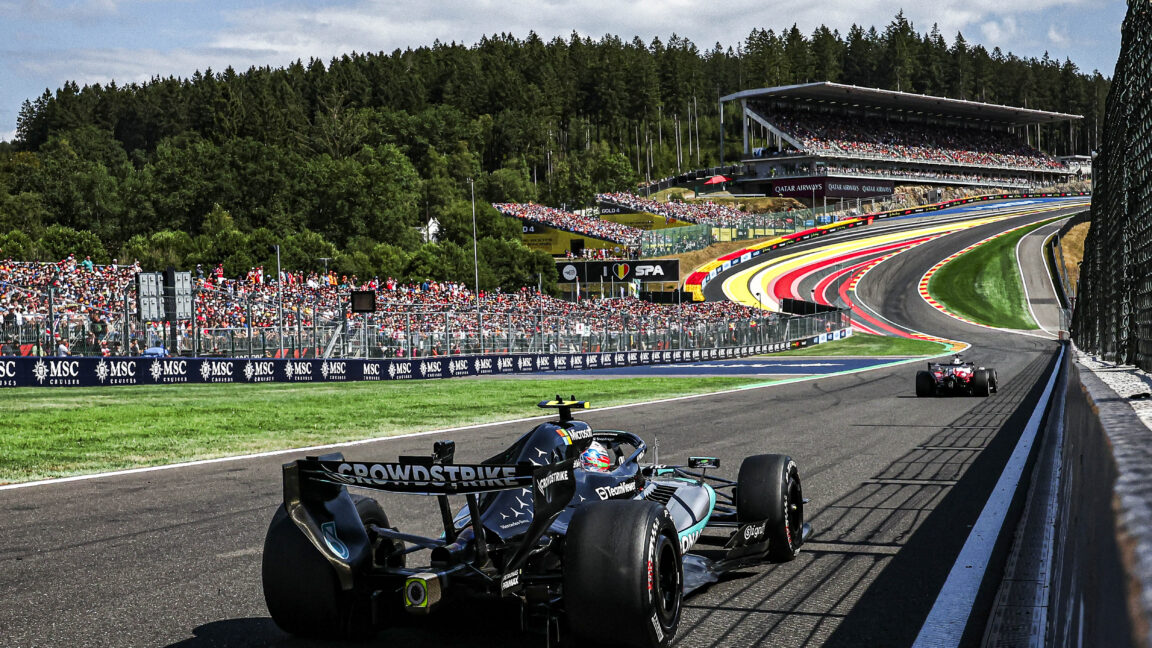
Kimi Antonelli won the Belgian Grand Prix at Spa-Francorchamps, extending a strong 2026 Formula 1 season while renewed criticism fell on the sport’s current hybrid cars. Ars Technica reported that the race highlighted how the 2026 rules package is struggling on fast, historic circuits where energy use now shapes driving as much as cornering speed.
According to Ars Technica, Formula 1 returned to one of its oldest venues at Spa, a circuit that hosted its first race in 1922 and was part of the inaugural F1 world championship season in 1950. The modern Spa layout, reconfigured in 1979, remains the longest track on the calendar at 4.3 miles, and its high-speed sections have long made it a benchmark for car and driver.
Ars Technica reported that the 2026 power units have exposed a problem at tracks such as Spa and Suzuka: the battery can supply the electric motor for only brief periods each lap. For stretches of a lap, the report said, the cars can have less rear-wheel power than Formula 2 machinery, forcing drivers to lift and coast so the engine can recharge the battery.
Red Bull driver Max Verstappen said much of Spa’s second sector was run mainly on the combustion engine. “So what is that? 450 bhp, 500 bhp? Something like that, which is, I guess, more or less what a Formula 3 car has but with F1 downforce,” Verstappen told reporters, according to Ars Technica. “So you can imagine, of course, that that is not very exciting to drive.”
Verstappen qualified second after receiving a tow from his teammate, who had a grid penalty for an engine change, Ars Technica reported. Antonelli took pole for Mercedes by three tenths of a second over the Red Bull driver.
George Russell’s weekend was more troubled, according to the report. Ars Technica said the Mercedes driver was losing speed on flat-out sections compared with Antonelli, with attention turning to the car’s energy deployment systems and the self-learning AI tools teams use to manage them.
Russell said after qualifying that his focus had shifted almost entirely to straight-line speed rather than setup or tires. “You feel powerless. We don’t know what’s going on. I don’t think it’s the power unit, to be honest. My team are really, really on it now, to try and solve it,” he told reporters, according to Ars Technica.
The issue carried into the race, Ars Technica reported. Russell regenerated enough energy while approaching Les Combes to try a move on Lewis Hamilton’s Ferrari, but he clipped Hamilton and spun into the gravel, ending his race. The stewards gave Hamilton a five-second penalty, though Ars Technica reported that Russell later said Hamilton was not to blame.
Antonelli’s race was cleaner. Verstappen briefly moved ahead at the start, but Ars Technica reported that Antonelli had reclaimed the lead by Les Combes and stayed in front to take his sixth win of the season. Charles Leclerc and Verstappen joined him on the podium, according to the report’s photo caption.
Ars Technica also noted a points finish for Audi’s Gabriel Bortoleto, who placed eighth at Spa. The report described the race as another example of how the 2026 cars’ energy limits are changing the character of laps at high-speed circuits.
This story draws on original reporting from Ars Technica.