
AI’s GPU boom faces scrutiny over power, water and pollution
Researchers say the chips behind generative AI carry costs from mining and manufacturing to data center electricity, water demand and local air pollution.
By Hana Yoshida · Markets Reporter
4 min read
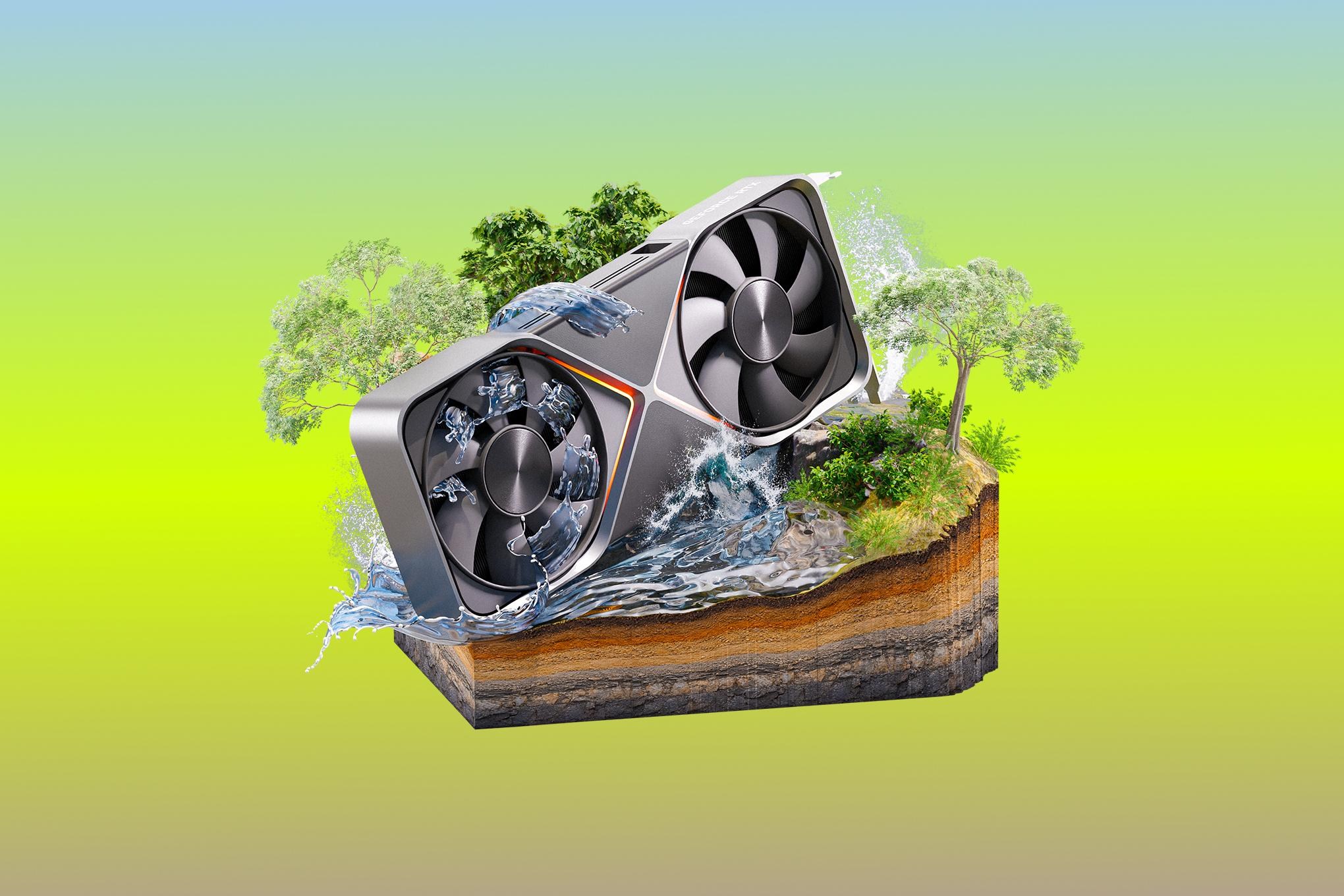
The buildout of AI data centers is putting new attention on the environmental cost of graphics processing units, the chips that run many generative AI systems. Researchers cited by The Verge say those costs extend from mining and semiconductor manufacturing to electricity use, water demand, air pollution and electronic waste.
GPUs long predate the current AI rush. Nvidia describes its 1999 chip as “the world’s first GPU,” while some histories trace graphics hardware back to arcade games in the 1970s, according to The Verge. The chips now appear in phones, cars, gaming computers and data centers, where companies are installing them in large numbers to train and run AI models.
Catherine Flick, a professor of ethics and games technology at the University of Staffordshire, told The Verge that games have often served as an early testing ground for hardware that later raises broader ethical questions. She said graphics processors, virtual reality and AI all have links to gaming history.
Local fights over data centers
The United States has more data centers than any other country and plans for many more, according to The Verge. As tech companies expand AI facilities, communities are raising concerns over power demand, water use, utility bills, noise and pollution.
The NAACP has sued xAI, now doing business as SpaceXAI, over air pollution from gas generators installed to power data centers, according to the civil rights group and The Verge. The NAACP has also warned technology companies that it is helping local groups oppose projects they view as harmful.
Some venture capitalists have blamed criticism of AI’s environmental footprint for slow consumer adoption, according to The Verge. Flick rejected that argument, and Ashley Striblet, who works in product strategy and consumer AI, told The Verge that many consumers accept environmental tradeoffs when they see clear value, such as low prices from fast-fashion retailers. Flick and Striblet said many people have not seen comparable benefits from AI tools.
Power and water demand
Shaolei Ren, an associate professor of electrical and computer engineering at the University of California, Riverside, studies the local air and water effects of data centers. Ren told The Verge he sees potential benefits from AI, including for scientific discovery, but said those gains should not come at the expense of nearby communities.
A 2024 preprint study by Ren and colleagues at UC Riverside and Caltech estimated that training a model the size of Meta’s Llama 3.1 could produce air pollution comparable to 10,000 round trips by car between Los Angeles and New York City. The study also estimated that wider AI adoption could bring more than $20 billion in public health costs by 2028 and 1,300 premature deaths a year from air pollution by 2030.
Lawrence Berkeley National Laboratory researchers estimated in 2024 that U.S. electricity use by GPU-accelerated AI servers rose from 2 terawatt-hours in 2017 to more than 40 terawatt-hours in 2023. The study projected annual use could reach 165 to 326 terawatt-hours by 2028.
Alex de Vries-Gao, a PhD candidate at Vrije Universiteit Amsterdam, estimated that AI in 2025 likely used nearly half of all global data center electricity and produced 32.6 million to 79.7 million tons of carbon emissions a year. He also estimated AI water use in 2025 at 312.5 billion to 764.6 billion liters.
Ren has warned that peak water demand can strain local systems. He said homes may use 1.5 to 2.5 times more water during high-demand periods, while data centers may use 6 to 10 times more, and some projects could require 30 times more. A recent preprint he coauthored estimated U.S. data centers could need up to 1,451 million gallons per day in new peak water capacity by 2030, at a cost of up to $10 billion.
Mining and manufacturing risks
Sophia Falk of Bonn University and David Ekchajzer of Université Paris-Saclay are studying GPU materials by breaking down donated graphics cards, according to The Verge. Falk’s research on Nvidia’s A100 found it was about 90 percent heavy metals and silicon, with copper as the largest component.
Falk’s work estimated one A100 contains about 1.4 kilograms of copper. Wood Mackenzie estimates copper demand could rise 24 percent over the next decade, while new mines would need to open twice as fast as they did a decade ago to keep up.
A preprint by Falk and other researchers estimated that training GPT-4 may have required 1,174 to 8,800 A100 GPUs, representing up to 7 tons of toxic elements that would eventually be discarded. Another study coauthored by Falk and Ekchajzer found that the GPU chip itself dominated 10 of 16 environmental impact categories assessed for training GPT-4 with A100 chips, with manufacturing accounting for most toxic-chemical public health risks and nearly all cancer risk.
This story draws on original reporting from The Verge.