
Artificial light fish study finds altered predator response in VR tank
Researchers used a virtual reef tank to show nighttime coastal lighting changed how clownfish reacted metabolically to a predator.
By Priya Raghavan · Science Reporter
3 min read
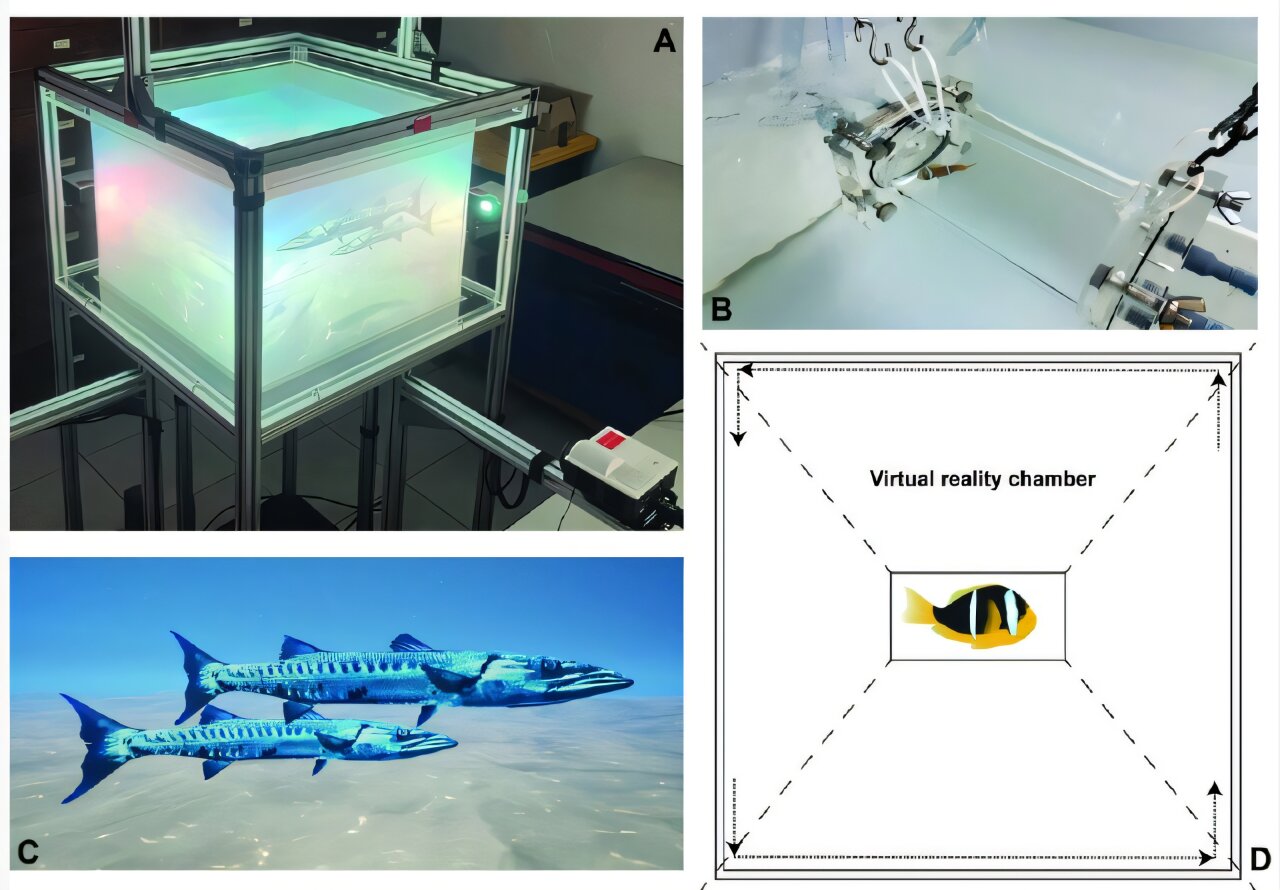
An artificial light fish study has found that nighttime coastal lighting can change how coral reef fish respond when a predator appears. Researchers reported in Conservation Physiology that clownfish exposed to artificial light at night reacted differently from fish kept under more natural light conditions, a finding that could matter for reef survival and coastal management.
The work combined metabolic research from the University of Glasgow with an immersive virtual reality aquarium designed at the Institut de Neurosciences de la Timone and used at CRIOBE, the Center de Recherches Insulaires et Observatoire de l'Environnement. The University of Glasgow said the platform let scientists test predator encounters in a controlled setting that still resembled a reef environment.
How does artificial light affect fish?
Artificial light at night is human-made illumination after dark, including light from coastal hotels that reaches marine habitats. The University of Glasgow said prior research has linked this form of pollution to changes in animal behavior, reproduction and survival, while its effects on predator-prey encounters have been harder to study.
In the new experiment, researchers placed clownfish in a specially designed tank where 3D underwater scenes were projected onto all four walls and the floor. The fish then faced a simulated attack by Heller's barracuda, one of their natural large predators, while the team measured oxygen use to estimate metabolic rate.
Before the virtual predator test, the clownfish had been divided into two groups. One group had experienced ambient lighting, described by the researchers as natural daylight and nightlight, while the other had been exposed to artificial nighttime light associated with coastal hotels.
The researchers found that fish from the ambient-light group lowered their metabolic rate when the virtual barracuda appeared to approach. The study team interpreted that response as an anti-predator reaction that could help small fish reduce breathing movements and stay less visible while hiding.
Fish with a history of artificial light exposure did not show the same metabolic suppression. According to the study, those fish increased their metabolic rate when confronted with the same virtual predator stimulus.
Shaun Killen, a University of Glasgow professor of ecophysiology and senior author of the study, said the findings show artificial light at night can alter fish physiology during encounters with larger predators. He said expanding light pollution could disrupt predator-prey dynamics and affect survival and fish population numbers in coastal ecosystems if it is not addressed.
Why use virtual reality for reef fish?
Researchers said the VR tank offered a way to study dangerous predator-prey interactions that are difficult to observe in the wild and unrealistic to recreate with large predators in a laboratory. The platform also allowed the same predator scenario to be repeated while physiological data were collected at the same time.
Suzanne Mills, a professor at École Pratique des Hautes Études at CRIOBE in Moorea, said the combined VR and physiology approach helps explain higher predation rates on juvenile reef fish that researchers had previously observed in the wild. Isabelle Tiddy, the study's first author from the University of Glasgow's School of Biodiversity, One Health and Veterinary Medicine, said the platform made it possible to observe the effect of artificial light on a critical aspect of fish physiology for the first time.
Manuel Vidal of INT, Center National de la Recherche Scientifique-Aix Marseille University, who designed the platform, said the system could also be used to examine collective behavior, decision-making and sensory ecology in aquatic animals. The researchers said the same kind of immersive setup may help simulate future ecosystems and test how wildlife responds to environmental change.
This story draws on original reporting from Phys.org.