
Ukraine Caspian Sea attack raises pressure on Iran-Russia route
Zelensky said Ukraine hit an Iranian cargo ship carrying military supplies, widening concern over links between the Iran and Russia wars.
By Hana Yoshida · Markets Reporter
4 min read
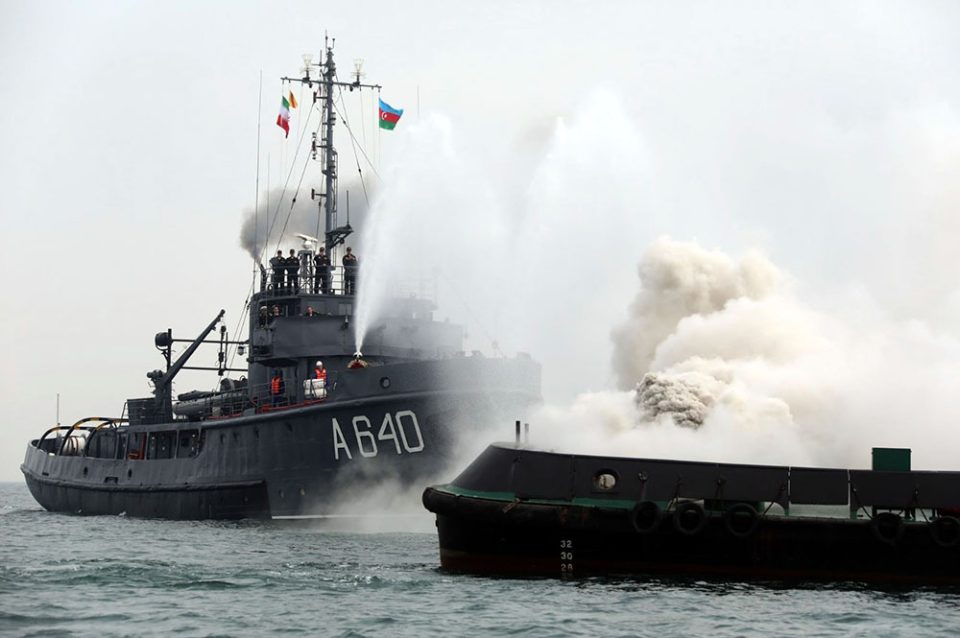
Ukraine’s Caspian Sea attack on an Iranian cargo ship has put new attention on a supply route between Tehran and Moscow at a time when U.S.-Iran fighting has paused. President Volodymyr Zelensky said Saturday that Ukraine struck a vessel moving military supplies between Iran and Russia, a claim that points to a widening set of linked conflicts.
Zelensky also said he had ordered Ukraine’s intelligence service to share information on Russian assistance to Iran. In a post on X, he said Russian satellite images of Gulf states and U.S. bases later appeared in Iranian hands and that there was a correlation between those images and Iranian strikes before and after attacks.
Iran has denied taking part in Russia’s war against Ukraine, while Kyiv has accused Tehran of supplying drones to Russia. Iran also called on European governments to hold Ukraine accountable, according to the account of the dispute.
Why did Ukraine attack an Iranian ship?
The stated Ukrainian reason was to disrupt military supplies moving between Iran and Russia. The Caspian Sea matters because it can serve as a route for cargo between the two countries, far from the main battlefields in Ukraine.
The Financial Times reported that the strike prompted speculation in Tehran that Kyiv wanted to show Iran’s Caspian coast could be threatened and used as leverage in talks involving the United States. The attack came as U.S.-Iran diplomacy continued after a memorandum of understanding collapsed and nearly two weeks of daily attacks ended Friday, according to Fortune.
The Associated Press reported separately that Oman and Iran are discussing the Strait of Hormuz, with a potential deal focused on Iran running vessel transit with fewer restrictions on ships. The Strait of Hormuz is one of the world’s most important oil shipping chokepoints, connecting the Persian Gulf with open sea routes.
Hamidreza Azizi, an Iran expert at SWP Berlin, outlined several possible readings of Ukraine’s move on X. One was that Kyiv wanted to show its usefulness to Washington, which supplies key weapons to Ukraine, including Patriot air-defense interceptors.
Azizi also wrote that Israel and the United States may have wanted Ukraine to add pressure on Iran because direct attacks by either country could risk retaliation against regional economic targets. Another possibility he cited was that the strike was connected to Houthi threats against shipping in the Bab el-Mandeb Strait.
The Bab el-Mandeb Strait links the Red Sea and the Gulf of Aden at the southern end of the Arabian Peninsula. According to the account, Iran-backed Houthis hit two Saudi oil tankers in the Red Sea last week, after which Saudi Arabia struck Hodeida, a port city in Yemen.
Azizi said the Caspian front, along with the Indian Ocean, where he said the United States has imposed a maritime blockade on Iran, was intended to form “a ring of economic and military pressure” around Iran. He also said Tehran may worry that Ukrainian intelligence could aid ethnic insurgent groups against Iran.
Possible Iranian responses, according to Azizi, include direct attacks on Ukraine-linked vessels in other sea lanes or strikes on Ukrainian infrastructure. He also said Tehran could recognize Crimea and the Donbas as Russian territory.
The Caspian Sea had already figured in the wider conflict. The Wall Street Journal reported that Israel attacked Iran’s Bandar-e Anzali port on the Caspian Sea amid reports that Russia was providing Iran with ammunition, drones and other weapons.
Ukraine has also sought a role in Middle East defense cooperation. Fortune reported that Kyiv signed a security agreement with Saudi Arabia in March to provide expertise on defending against Iranian-designed drones used by Russia, and that Zelensky visited the United Arab Emirates and Qatar seeking similar arrangements.
William Spaniel, a University of Pittsburgh political science professor, said in March that the overlap had “effectively merged the Russia-Ukraine war and the Iran war into a single conflict.” In a YouTube video, he added that the situation had not become a true world war, but said the battlefields were becoming more connected.
This story draws on original reporting from Fortune.