
Jensen Huang X post urges Washington to protect open AI models
Nvidia’s CEO shared an industry letter warning that restrictions on open-weight AI could weaken U.S. innovation and security.
By Hana Yoshida · Markets Reporter
3 min read
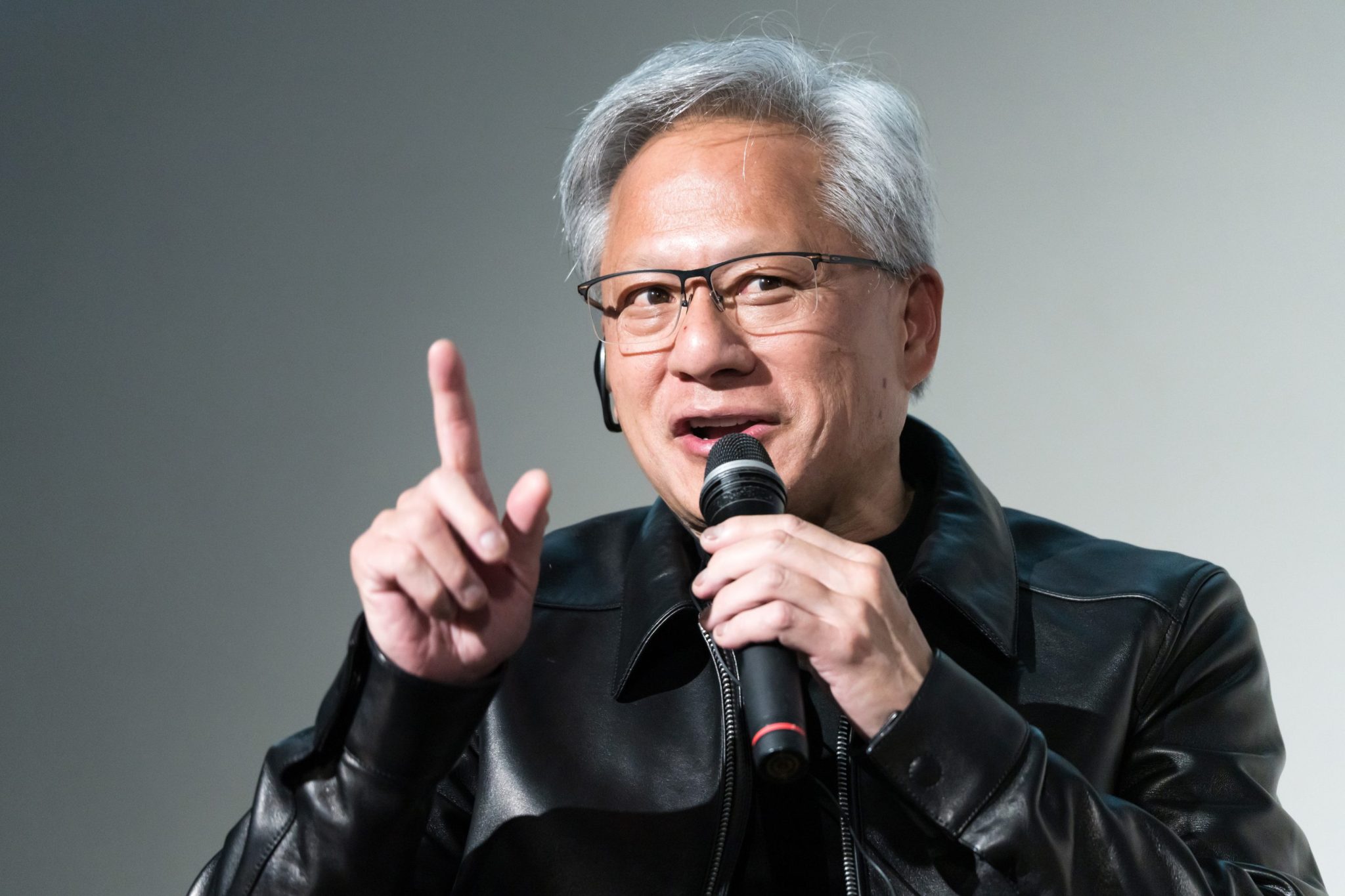
Jensen Huang used his first X post on Friday to share an open letter from Nvidia, Microsoft, Palantir and other companies urging Washington to avoid broad limits on open-weight AI models. The letter says those models are needed for U.S. technology leadership, competition and security.
Huang, Nvidia’s chief executive, wrote that open models help safety and cybersecurity, speed up innovation and support sovereignty. “The world needs both frontier closed models and frontier open models,” he wrote.
The letter draws a comparison to the early debate over open-source software in the 1980s. It says open-source code went on to support much of the internet and became part of systems used by large technology companies, the U.S. military and federal agencies working on scientific research and cybersecurity.
What did Jensen Huang say about open AI models?
Open-weight AI models are systems whose core model weights are made available for others to use, study or adapt. Supporters say they let startups, universities and researchers build on advanced AI without depending only on closed systems controlled by a small group of companies.
The open letter argues that limiting those models too early would repeat a mistake that software advocates worried about decades ago: cutting off a shared technical base before its benefits are fully developed. It says open models can widen economic access, increase competition and improve security by allowing more researchers to inspect systems and fix weaknesses.
The signers include about 25 companies and organizations, among them Microsoft, Meta, Hugging Face, Andreessen Horowitz, Perplexity and IBM. OpenAI and Anthropic were not listed among the signers; both have warned U.S. officials about risks tied to powerful Chinese open models.
The letter also defends distillation, a method in which one AI model is trained using outputs from another model. It describes the practice as a long-used research technique and says it should not automatically be treated as theft, even as the issue remains disputed.
Why is Washington focused on Chinese open models?
The appeal comes as U.S. officials debate whether to restrict Chinese open-weight models, including Moonshot AI’s Kimi K3. The model was released July 16 and has been described as one of the most capable systems available.
White House adviser Michael Kratsios has accused Moonshot of using distillation to copy a U.S. model in order to build Kimi K3. That allegation has added pressure to the debate over whether open AI systems help spread innovation or create security risks when foreign competitors use them.
China has also been pressing its own message on AI openness. Chinese President Xi Jinping spoke at the World AI Conference in Shanghai on July 17, calling for global cooperation and warning against stretching national security arguments in AI, a comment read by analysts as criticism of U.S. export controls.
The day before Xi’s speech, 29 countries including Russia, Pakistan, Indonesia, Brazil and Kazakhstan signed an agreement in Shanghai to establish the World Artificial Intelligence Cooperation Organization. The Shanghai-based body is meant to challenge U.S.-led AI governance, and United Nations Secretary-General António Guterres attended the event.
Huang’s position also comes after earlier comments praising Chinese AI work. He previously said China would win the AI race before clarifying the remark, and he has called Chinese open models “excellent,” placing Nvidia’s public stance closer to the pro-open-model argument than to the stricter approach urged by some AI labs.
This story draws on original reporting from Fortune.