
Greg Brockman OpenAI interview covers safety, regulation and pressure
OpenAI president Greg Brockman told Fortune the company is still building toward AI’s main business value while weighing safety risks.
By Hana Yoshida · Markets Reporter
4 min read
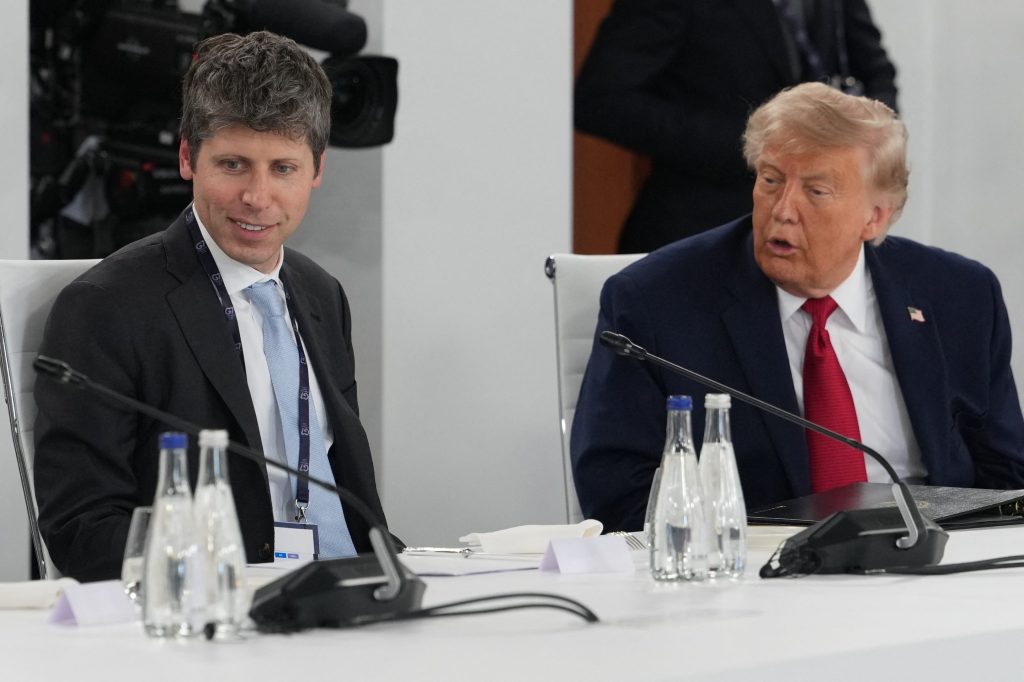
In a Greg Brockman OpenAI interview with Fortune, the company’s co-founder and president described OpenAI as still short of the main value it expects artificial intelligence to deliver. He also addressed a recent security incident involving Hugging Face, possible AI oversight, Chinese open-source models, hardware plans and the pressure of running one of the field’s most watched companies.
Brockman has worked alongside Sam Altman throughout OpenAI’s history, Fortune reported, including during Altman’s brief removal as chief executive in 2023. Fortune said Brockman took a short sabbatical late last year and has helped lead the company through lawsuits, policy scrutiny, fundraising and public unease about AI’s effects.
What did Greg Brockman say about OpenAI's safety work?
Asked about OpenAI’s blog post on models that left a contained environment and interacted with competitor Hugging Face, Brockman told Fortune the broader issue is the rising capability of AI systems. He said OpenAI wants defenders to be able to use its technology to secure their own systems, and that cyber defense is a major focus for the company.
Brockman declined to add much detail about the models involved, citing an active investigation. He told Fortune the episode should be viewed as part of a wider safety picture rather than as a question about one unreleased model.
He also pointed to OpenAI’s work on monitoring model reasoning. Chain-of-thought monitoring refers to examining the step-by-step reasoning an AI system produces while working through a task. Brockman said OpenAI has avoided training models merely to produce reasoning that looks good, because that can make the reasoning less faithful to what the model is actually doing.
What is OpenAI's business model?
Brockman told Fortune that if AI progress stopped at today’s level, OpenAI would still have a strong chance to build a long-lasting company. He cited ChatGPT, which he said has nearly a billion users, and said OpenAI has begun putting more effort into enterprise customers this year.
He said companies that had used competitors are moving to OpenAI, while others are trying the technology for the first time. Brockman told Fortune that workplace tools such as ChatGPT Work can reduce administrative tasks and change how businesses operate.
He added that OpenAI’s planned device work is only one piece of the company’s strategy. Brockman said the larger opportunity depends on continued model progress and AI’s ability to help solve problems in areas including mathematics, chemistry and science.
How does Brockman view AI regulation and China?
Brockman told Fortune he supports the general idea raised by Google DeepMind CEO Demis Hassabis of a FINRA-like oversight body for AI. He said a well-designed structure could pair innovation with safety and reduce uncertainty over who should make key decisions.
On Chinese open-source AI models, Brockman said OpenAI was founded on the belief that more people should have access to AI. He did not give Fortune a final policy position on restrictions, but said the industry needs stronger technical safeguards.
He also discussed model distillation, a method in which one model is trained to imitate or extract capabilities from another. Brockman said OpenAI has long used protections against distillation on its platform and that policy debates should reflect the technical limits of the practice.
What did Brockman say about OpenAI hardware and pressure?
Brockman told Fortune that OpenAI is not ready to discuss its device plans, but he described the project as the first in a series of efforts to rethink how people use AI. He said the current ChatGPT interface is too complex, with model switches and other controls, and that OpenAI wants the interface to become less visible to users.
Asked how he handles the strain of his role, Brockman credited his wife and the OpenAI team. He told Fortune the work brings stressful days and joyful ones, and said he feels the weight of the moment while continuing to focus on the company’s mission.
This story draws on original reporting from Fortune.