
Google faces weaker employee pushback over Pentagon AI deal
Fortune reports staff opposition is growing after Google agreed to provide Gemini models for classified U.S. military networks.
By Hana Yoshida · Markets Reporter
3 min read
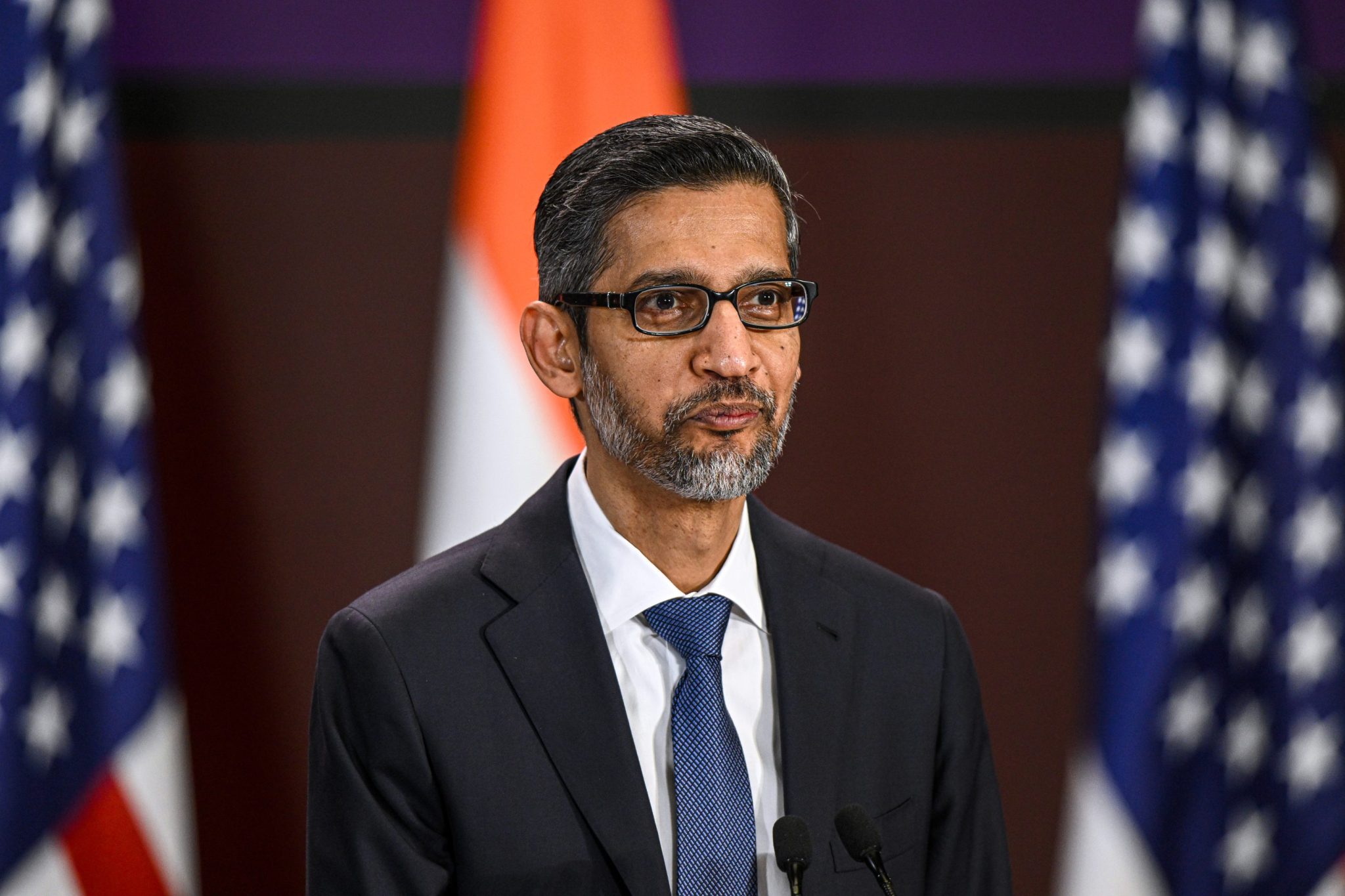
Google has agreed to let its Gemini AI models be used inside classified U.S. military networks, renewing a fight over whether tech companies should supply general-purpose AI to the Pentagon. Fortune reported that employee critics see the deal as a test of staff power that has faded since Google workers helped end the company’s Project Maven work in 2018.
The Information first reported the classified AI contract last week, according to Fortune. The agreement allows use of Google’s models for “any lawful purpose,” language similar to terms accepted by OpenAI, xAI, Nvidia, Microsoft and Amazon, Fortune reported.
Google faced a major internal revolt in 2018 over Project Maven, a Pentagon program that used AI to process drone surveillance video for targeting workflows. After petitions, resignations and public pressure, Google chose not to renew that military relationship and later published AI principles that included pledges against building AI for weapons or surveillance that violated international norms, Fortune reported.
The company changed those public principles in February 2025, removing the explicit language, according to Fortune. Current and former employees told the outlet that today’s workers have less leverage because layoffs, cost cuts and tighter internal communications have made organizing harder.
Laura Nolan, a former Google employee who resigned over Project Maven, told Fortune that workers building broad AI systems may be alarmed if their work is redirected toward military targeting. She said tech employees have historically been less organized than other workforces and that recent industry cuts have made staff pressure less effective.
Fortune reported that nearly 600 Google employees signed an open letter when news of the likely deal emerged, and that the letter has since drawn about 1,000 signatures, according to an anonymous Google DeepMind researcher. Google’s management has not backed away; Fortune said an internal memo told staff the company “proudly” works with the U.S. military and intends to keep doing so.
Alex Turner, a research scientist at Google DeepMind, criticized the agreement in a post on X, saying he had spent two months trying to stop it. Turner wrote that Google cannot block uses, has agreed to adjust safety filters when the government asks, and relies on language that he described as lacking binding limits.
The DeepMind researcher told Fortune that some staff fear Gemini could be used in ways they cannot inspect, including applications they consider harmful. The researcher also said many employees were unaware of the contract because Google had not clearly told staff it was negotiating or had signed it.
Concerns over surveillance and weapons
Critics cited by Fortune focused on two possible uses: autonomous weapons and mass surveillance. Legal experts told Fortune that U.S. agencies can buy commercially available data and use AI systems to analyze it, creating surveillance capabilities that may be lawful under current rules despite laws meant to protect Americans from improper searches.
Fortune reported that Google’s agreement says the technology is not intended for domestic mass surveillance or autonomous weapons without appropriate human oversight. Experts told the outlet that the wording does not appear to impose enforceable limits on the Pentagon.
Charlie Bullock, a senior research fellow on LawAI’s U.S. Law and Policy team, told Fortune that Google’s contract appears more permissive than OpenAI’s based on available language. Bullock said Google’s terms seem to require the company to change model safeguards if they block a lawful government use, while OpenAI’s published contract language appeared to include stronger limits on some surveillance uses.
Seán Ó hÉigeartaigh, a research professor at the Centre for the Future of Intelligence, told Fortune that Google’s agreement looked weaker than OpenAI’s on the public evidence. Google representatives did not respond to Fortune’s request for comment by publication time.
This story draws on original reporting from Fortune.