
AI future of work puts more pressure on human judgment at Yahoo
Yahoo executives and Princeton’s Arvind Narayanan say AI is speeding execution while expanding decisions, review and accountability.
By Hana Yoshida · Markets Reporter
4 min read
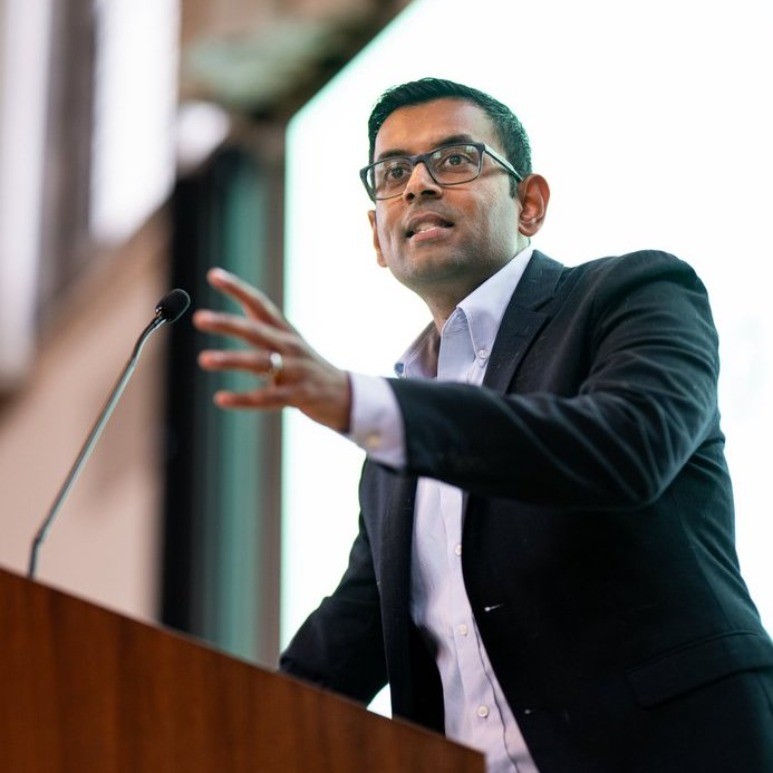
The AI future of work is taking shape at Yahoo as teams ship software faster while spending more time deciding what should be built and checking what AI helps produce. George Leimer, Yahoo Finance’s product chief, told Fortune that AI has compressed the hands-on building phase but increased the burden on planning and delivery.
The idea echoes a framework from Arvind Narayanan, a Princeton computer scientist who recently spoke at the International Conference on Machine Learning in Seoul. Narayanan described knowledge work as a “decide-execute-deliver sandwich”: people decide what matters, execute the task, then deliver it responsibly through testing, integration and accountability.
How is AI changing the future of work?
Narayanan said AI agents are shrinking the execution layer, especially in work such as coding and debugging. He argued that the decision and delivery layers are expanding because cheaper building makes it easier to start projects and harder to choose, verify and maintain them.
Leimer said Yahoo’s experience with AlphaSpace, a new investing product, shows that shift. The product has been live for about two months, Fortune reported, and Leimer said the team has released more than 100 new features in that period.
AlphaSpace users are spending three times as much time in the product as the average Yahoo Finance user, Leimer told Fortune. The team also added real-time options data through a partnership with Unusual Whales after responding to user feedback, according to Yahoo.
Leimer said product cycles that once ran for two weeks can now run in a day, with planning in the morning, release by the end of the day and review at night. In one case, he told Fortune, feedback that came in late on a Friday afternoon was fixed, reviewed and live by that evening.
Why are job roles blurring at Yahoo?
Yahoo teams say AI is reducing some of the old boundaries among designers, engineers, product managers and analysts. On Yahoo Scout, the company’s AI answer engine, principal product designer Nick Lockington used Google’s Vertex AI to generate structured JSON logic for features, according to Yahoo’s blog.
David Grandinetti, a distinguished software apps engineer on the project, said on Yahoo’s blog that Lockington had become highly effective by working at a higher level of abstraction. Yahoo said other employees began crossing traditional role lines, including designers contributing code and engineers doing more design-oriented work.
Yahoo executives said titles are not disappearing. Their point is that people are increasingly defined by the decisions they own: designers still guide user behavior and visual choices, while engineers remain responsible for architecture and safety.
Stephane Koenig, a Yahoo vice president, said AI is lowering the cost of experiments and letting teams test many more ideas while saving human judgment for decisions that require context AI lacks. Leimer said the risk is that teams can now build things so quickly that they may produce work they do not need.
What is workslop?
“Workslop” refers to AI-generated work sent for review without enough human checking. Harvard Business Review experts have argued that it damages productivity, and the Stanford Social Media Lab estimated the cost at $9 million a year for a company with 10,000 workers.
Narayanan has said AI is currently more of a collaboration technology than a full automation engine because agents can struggle with reliability in high-stakes settings. At Yahoo, leaders told Fortune the pressure shows up less as job loss than as decision fatigue, since teams can build and test more than people can thoughtfully approve and support.
Narayanan cautioned that jobs may still change over decades as companies reorganize around AI, comparing the shift to factories adapting after electricity enabled assembly lines. Fortune reported that he sees demand for human work shifting in fields including software, law, medicine and translation as AI spreads.
Leimer told Fortune the hardest part may be delivery: review, security, deployment and other safeguards remain demanding even when AI makes the work look ready to release. Asked about whether work could become more like a pizza or flatbread, with tasks reduced and delivery smoothed out, Leimer said, “Something like that.”
This story draws on original reporting from Fortune.