
Rubio meets Gulf leaders as US-Iran ceasefire deal faces doubts
The US secretary of state met UAE leaders after a ceasefire accord left Gulf states seeking answers on Iran’s missiles, Hormuz shipping and sanctions relief.
By Lucas Ferreira · Science & Environment Writer
3 min read
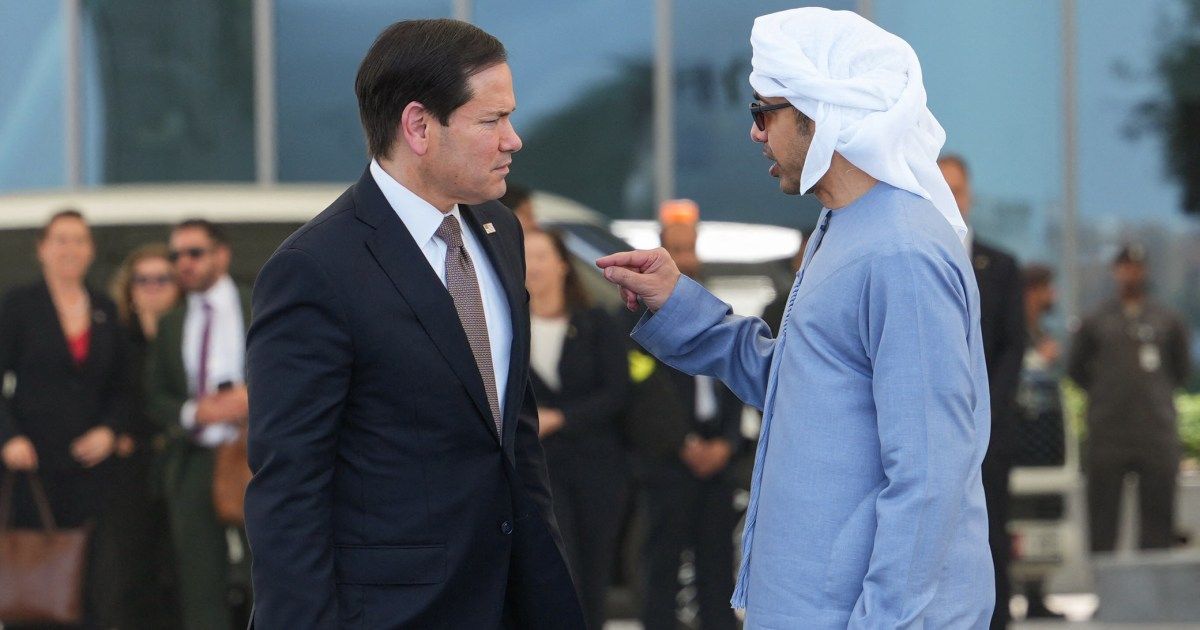
United States Secretary of State Marco Rubio met senior United Arab Emirates leaders on Wednesday as Washington sought to calm Gulf concerns over a developing deal with Iran. Al Jazeera reported that the talks follow a ceasefire framework intended to end more than 100 days of war between the US and Iran.
Rubio held a working lunch with UAE President Sheikh Mohamed bin Zayed Al Nahyan, National Security Advisor Sheikh Tahnoun bin Zayed Al Nahyan and Foreign Minister Sheikh Abdullah bin Zayed Al Nahyan, according to Al Jazeera. The trip was in its second day, with stops in Kuwait and Bahrain expected later in the week.
Rubio told reporters on arrival in Abu Dhabi on Tuesday that Washington wanted input from its regional partners. “We want to hear from our partners,” he said, according to Al Jazeera. “We want to make sure that their views are taken into account, and we understand their security concerns, their regional economic concerns as well.”
Ceasefire talks move into a 60-day phase
Al Jazeera reported that the US and Iran signed a memorandum of understanding last week to prolong a fragile ceasefire and continue talks on a permanent settlement. Those negotiations are expected to run for 60 days and include disputes over Iran’s nuclear programme.
The war began on February 28, when the US and Israel launched strikes on Iran, killing Supreme Leader Ali Khamenei in the first wave, according to Al Jazeera. Tehran responded by attacking all six Gulf Cooperation Council countries with varying intensity.
Al Jazeera reported that the UAE was hit by about 2,800 missiles and drones. In Kuwait, attacks struck the airport, commercial ports and desalination facilities. Qatar’s Ras Laffan Industrial City, the country’s main gas facility, sustained what Al Jazeera described as significant damage from missile attacks.
Iran also attacked and threatened ships moving through the Strait of Hormuz, the narrow route used by Gulf states for most of their oil and gas exports, according to Al Jazeera. The outlet reported that Iran’s de facto blockade of the waterway cost billions of dollars in lost revenue.
Hormuz, sanctions and unresolved concerns
Al Jazeera reported that the US-Iran accord provides for shipping to resume through the strait and for a US blockade on Iranian ports to be lifted. The deal also includes a waiver on US sanctions and the unfreezing of Iranian assets, according to the report.
One disputed issue is whether Iran will seek a charge on ships using the Strait of Hormuz. Al Jazeera said senior Iranian officials had previously raised that idea, while President Donald Trump rejected it Wednesday in an all-capital post on Truth Social, saying ships should face no tolls, insurance costs or other charges.
The accord leaves two major Gulf concerns outside its current terms, Al Jazeera reported: Iran’s ballistic missile programme and Tehran’s ties with regional allies. Those issues have become more urgent for Gulf governments after cities and energy facilities across the region proved vulnerable to missiles, rockets and drones during the war.
This story draws on original reporting from Al Jazeera.