
Iran strikes Bahrain and Kuwait after U.S. attacks on coastal targets
U.S. forces hit Iranian sites after attacks on ships in the Strait of Hormuz, putting an interim war agreement under fresh pressure.
By Sofia Marchetti · World Affairs Correspondent
3 min read
The United States struck Iranian military targets early Wednesday after accusing Tehran of attacking three ships in the Strait of Hormuz, and Iran responded by targeting U.S. installations in Bahrain and Kuwait, according to The Associated Press and statements from the militaries. The exchange put new pressure on an interim agreement to pause the war and clouded planned negotiations on shipping access and Iran’s nuclear program.
U.S. Central Command said American forces attacked Iranian air defense systems, radar sites and more than 60 small boats used by Iran’s paramilitary Revolutionary Guard. The command said the action was meant to impose costs for attacks on commercial vessels carrying civilian crews in an international waterway.
Iran acknowledged the U.S. strikes but did not report losses, AP said. Iranian state media reported explosions in Bandar Abbas, Qeshm and Sirik.
Missile alerts in Gulf states
Later Wednesday morning, Bahrain and Kuwait issued missile alerts, AP reported. Bahrain hosts the U.S. Navy’s 5th Fleet, while Kuwait hosts U.S. Army forces.
The Revolutionary Guard said it had targeted U.S. military installations in both countries. In its statement, the Guard accused the U.S. military of violating the ceasefire and the Islamabad understanding by attacking sites on the coasts of Hormozgan and Mahshahr provinces, but it did not address the ship attacks in the Strait of Hormuz.
Bahrain sounded another alert later in the morning, according to AP. A similar pattern of ship attacks, U.S. strikes and Iranian attacks on Bahrain and Kuwait occurred late last month, AP reported.
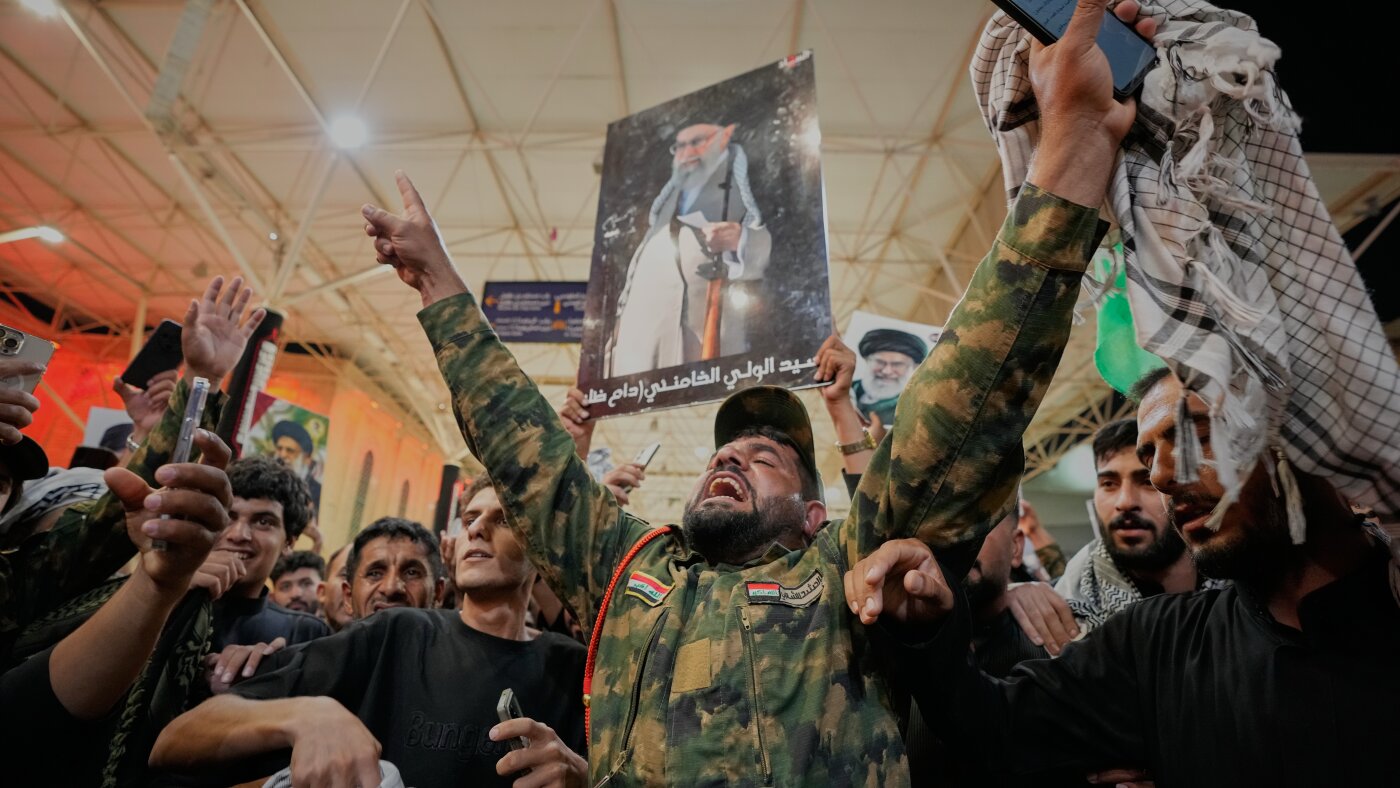
The latest strikes came while President Donald Trump was in Turkey for a NATO summit. They also unfolded during funeral events for Iran’s Supreme Leader Ayatollah Ali Khamenei, who AP reported was killed Feb. 28 at the start of the war at age 86. The funeral is scheduled to end Thursday.
Shipping and oil sanctions
The U.S. also revoked a license that had allowed Iran to sell oil openly on the world market in U.S. dollars under the interim agreement, AP reported. Before that license, Iran had long been suspected of selling sanctioned crude at discounted prices to China.
The decision followed attacks on three ships. The United Kingdom Maritime Trade Operations center said one tanker off Oman was hit and caught fire. Iranian state television said a liquefied natural gas tanker was attacked after ignoring warnings, though it did not directly claim responsibility.
The U.K. maritime agency said two other vessels were damaged but reported no injuries, and both continued through the Strait of Hormuz. AP reported that the ships appeared to be using a route near Oman’s coast rather than a route ordered by Tehran.
Qatari Foreign Ministry spokesperson Majed al-Ansari said the Qatari tanker Al Rekayyat was targeted in an unacceptable attack on international navigation and global energy security. He said Qatar holds Iran fully legally responsible.
Iran has disrupted traffic through the Strait of Hormuz since the war began, AP reported. In peacetime, about one-fifth of globally traded oil and natural gas moved through the waterway.
Under the interim deal, Iran and the United States agreed to allow vessels to pass without fees for 60 days, AP reported. Tehran has said it must control ship routes and later charge passage fees, while the U.S. and many Gulf Arab states say they oppose Iranian fees in the strait.
Negotiations on a final agreement had been expected after Khamenei’s burial. AP reported that the agenda included fully reopening the strait and limiting Tehran’s disputed nuclear program, but the latest attacks have left those talks uncertain.
This story draws on original reporting from NPR.