
Grantham warns SpaceX’s Nasdaq 100 rise may end in a crash
The GMO co-founder said SpaceX’s public-market valuation could become a historic cautionary tale despite index-driven demand.
By Hana Yoshida · Markets Reporter
3 min read
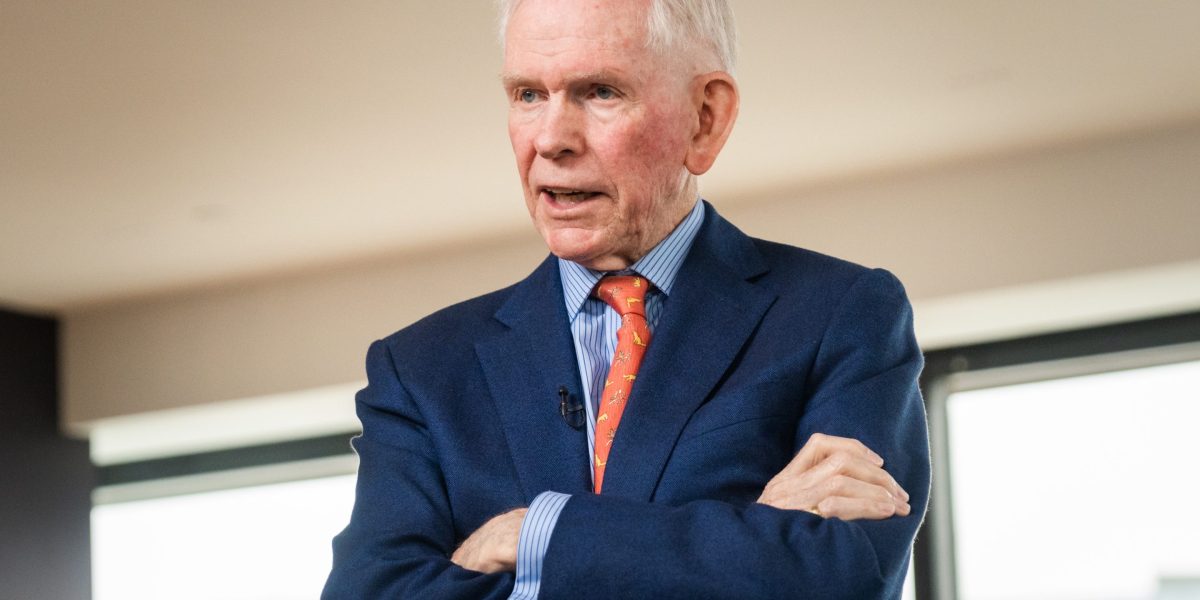
Jeremy Grantham is warning that SpaceX’s move into the Nasdaq 100 may pull many investors into a stock he expects history to judge harshly. The GMO co-founder told Morningstar’s The Long View podcast that the rocket company’s IPO could become one of the market’s most memorable excesses.
According to Fortune, SpaceX’s inclusion in the Nasdaq 100 means exposure to the company can now reach investors through funds that track or benchmark against the index. Fortune reported that the company’s prospectus described its mission as building technology to make human life multiplanetary, understand the universe and extend consciousness beyond Earth.
Grantham, who co-founded GMO and serves as its chief investment strategist, dismissed that language in the Morningstar interview. He said investors decades from now would read parts of the prospectus and laugh, and he described the SpaceX offering as “the craziest IPO in the history of man.”
Analysts remain more optimistic
Fortune reported that SpaceX shares were down 7% over the prior month at the time of publication, trading near $150. That price remained above the $135 level CNBC reported SpaceX had targeted at launch.
Several Wall Street targets cited by Fortune remained well above the current share price. MarketWatch reported that Morgan Stanley set a $300 target, while Goldman Sachs analyst Eric Sheridan and his team estimated a value closer to $205 in a note seen by Fortune.
J.P. Morgan set a $225 target, according to Fortune, and said Elon Musk’s ambition of reaching $1 trillion in revenue by 2031 was possible if the company executed well on a demanding schedule. The J.P. Morgan note, authored by Doug Anmuth, Seth Seifman, Sebastiano Petti and Richard Choe, also flagged governance and succession issues tied to Musk’s role.
The J.P. Morgan analysts wrote that Musk holds 82% voting power and has had a defining influence on SpaceX’s culture, strategy and performance, according to Fortune. They also said that concentration raises questions about governance and exposes the company to risk if leadership changes.
Index rules add demand
Nasdaq said last month that it had introduced fast-track rules for older companies coming public, arguing that indexes can miss part of the market when large businesses remain private for many years before listing. Nasdaq said faster additions help its indexes better reflect public companies that matter to the economy and the stock market.
Grantham told Morningstar that SpaceX’s index inclusion could create buying pressure from funds connected to Nasdaq benchmarks. He said that demand may exceed available sellers and could push the stock higher, perhaps by a large amount.
He still argued that the company’s valuation depends on extraordinary technological progress, including in artificial intelligence. Grantham said a collapse would be historically notable, while a world in which the valuation is justified would also be strange and unsettling.
Fortune reported that it contacted SpaceX for comment.
This story draws on original reporting from Fortune.