
European courts scrutinize Israeli evidence in Palestinian financing cases
Cases in Italy and the Netherlands have raised questions about Israeli intelligence used in prosecutions of Palestinian activists accused of aiding Hamas.
By Lucas Ferreira · Science & Environment Writer
4 min read
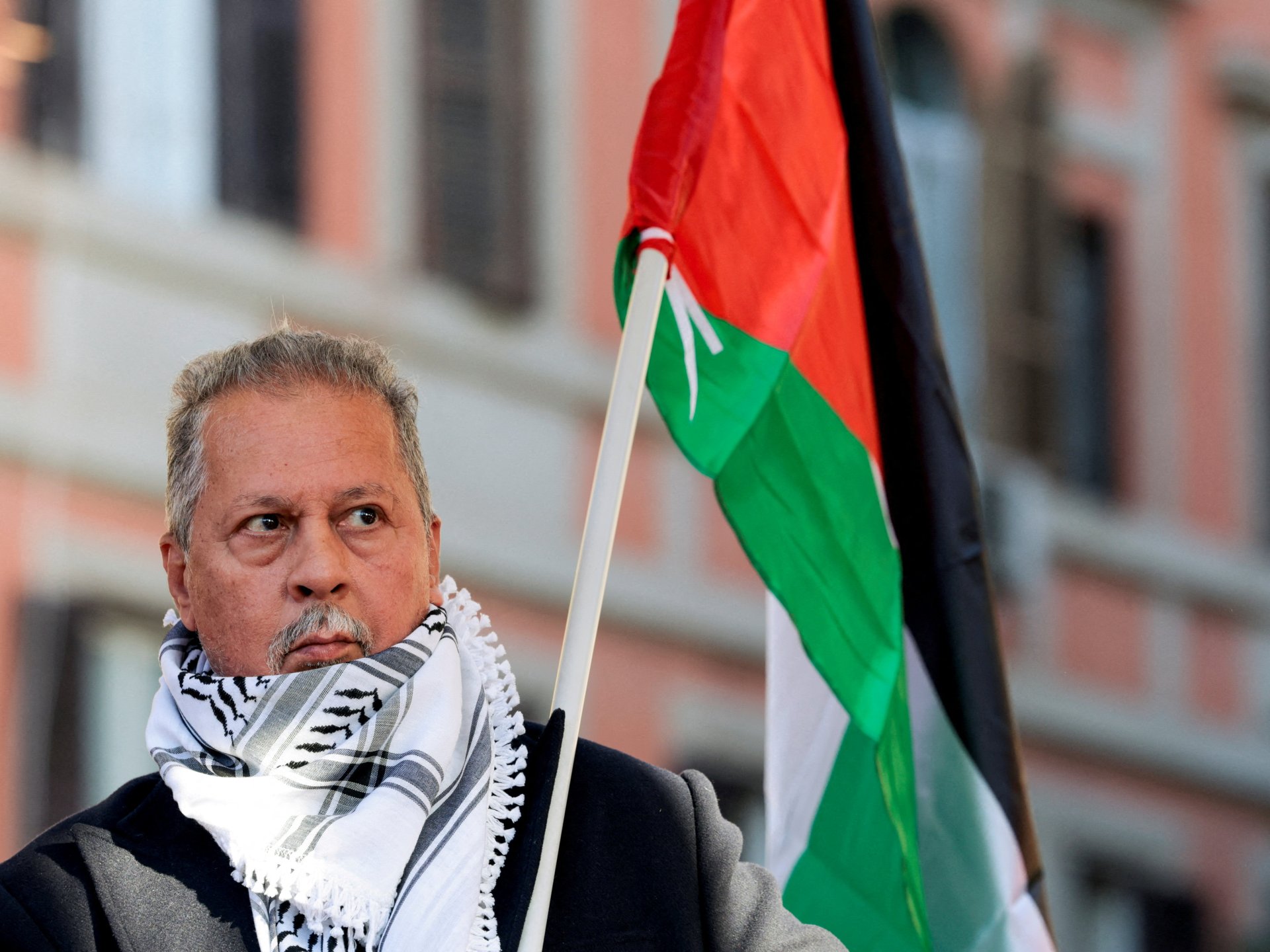
European courts are testing how far prosecutors can rely on Israeli intelligence in cases against Palestinian activists accused of supporting Hamas. Recent rulings in Italy and the Netherlands have put the handling and reliability of that material under scrutiny.
In Italy, Palestinian activist Mohammad Hannoun was arrested in December during an investigation known as “Operation Domino,” which led to nine arrests. Italian investigators described Hannoun as the head of an Italian Hamas cell, according to Al Jazeera, while prosecutors accused him of raising about 7 million euros, or $8.1m, through the Association of Solidarity with the Palestinian People, with funds allegedly reaching Hamas.
Hannoun, 63, is a Jordanian national who lives in Genoa and works as an architect. He heads the Palestinian Association in Italy and has been a visible speaker at pro-Palestinian demonstrations since Israel’s latest war in Gaza began, according to Al Jazeera.
Italian Prime Minister Giorgia Meloni welcomed the arrests at the time, expressing “appreciation and satisfaction,” according to Al Jazeera. But Italy’s Supreme Court of Cassation last month ordered a full review of the evidence, calling it too “generic,” according to a ruling reviewed by Al Jazeera.
The court materials included Israeli intelligence passed to Italian authorities and online material whose origins and reliability had not been established, Al Jazeera reported. Hannoun’s lawyers argued that the documents did not meet European standards for evidence gathered in conflict zones.
Dispute over evidence from Gaza
Nicola Canestrini, one of the lawyers for the nine defendants, told Al Jazeera that the case turned on so-called “battlefield evidence,” a term used for material collected by military forces during combat. Under European requirements, such evidence must be supported by a chain of custody showing how it was seized, transferred, examined and stored.
In Hannoun’s case, court documents cited by Al Jazeera said files alleging links between the charity and Hamas’s armed wing were sent by an Israeli official whose personal details were kept confidential. Canestrini said the only identifying mark was “Avi,” later understood to refer to Israeli intelligence official Avi Abramson.
The documents were said to come from hard drives found in Gaza locations taken by Israeli forces, including al-Shifa, al-Rantisi and Jabalia hospitals, the Maghazi refugee camp and other sites, according to Al Jazeera. United Nations experts and Human Rights Watch have said Israeli military actions in Gaza, including the forced removal of patients from hospitals, amount to war crimes.
Canestrini told Al Jazeera that evidence from a state facing proceedings at the International Criminal Court and International Court of Justice should not be accepted without verification. He also said Israel sent the material through a “spontaneous information exchange” rather than established international cooperation channels, which he argued avoided oversight by Eurojust and UN military evidence guidelines.
Italian officials Riccardo Perisi and District Attorney Marco Zocco declined to comment to Al Jazeera because proceedings are continuing. Abramson did not respond to Al Jazeera’s request for comment.
Dutch acquittal adds pressure
The Italian case follows a similar outcome in the Netherlands. Amin Abu Rashid, a Dutch citizen of Palestinian origin, was acquitted last month by the Rotterdam District Court of financing Hamas after a years-long case in which he spent one year in jail, according to Al Jazeera.
That prosecution also relied on Israeli government reports and unverified news articles, Al Jazeera reported. CAGE International, a UK-based advocacy group, called the acquittal a rebuke to the use of Israeli intelligence in prosecutions of Palestinian humanitarian organisers in Europe.
Anas Mustapha, CAGE’s head of public advocacy, told Al Jazeera that using Israeli material in such cases threatened the rule of law in Europe. He said Israeli intelligence was being used through European courts to restrict Palestinian civil society.
Rights and legal groups cited by Al Jazeera said the cases fit a broader pattern of pressure on Palestine solidarity activity in Europe since Hamas’s October 7, 2023, attack on Israel. The European Legal Support Center said European states have used counterterrorism and public order measures against Palestine advocacy in several countries, while Italy’s Osservatorio Repressione said activists there have faced lawsuits, searches and administrative penalties.
Italo Di Sabato, the observatory’s national coordinator, told Al Jazeera that treating opaque evidence as sufficient in Hannoun’s case would have set a dangerous precedent. He said the Italian court’s ruling signaled that legal safeguards cannot be suspended in cases involving Palestine.
This story draws on original reporting from Al Jazeera.