
Jury duty tied to higher court trust as service opportunities decline
Annenberg researchers found recent jurors view courts more favorably, while fewer Americans are serving as jury trials become less common.
By Tom Brennan · Health & Medicine Correspondent
3 min read
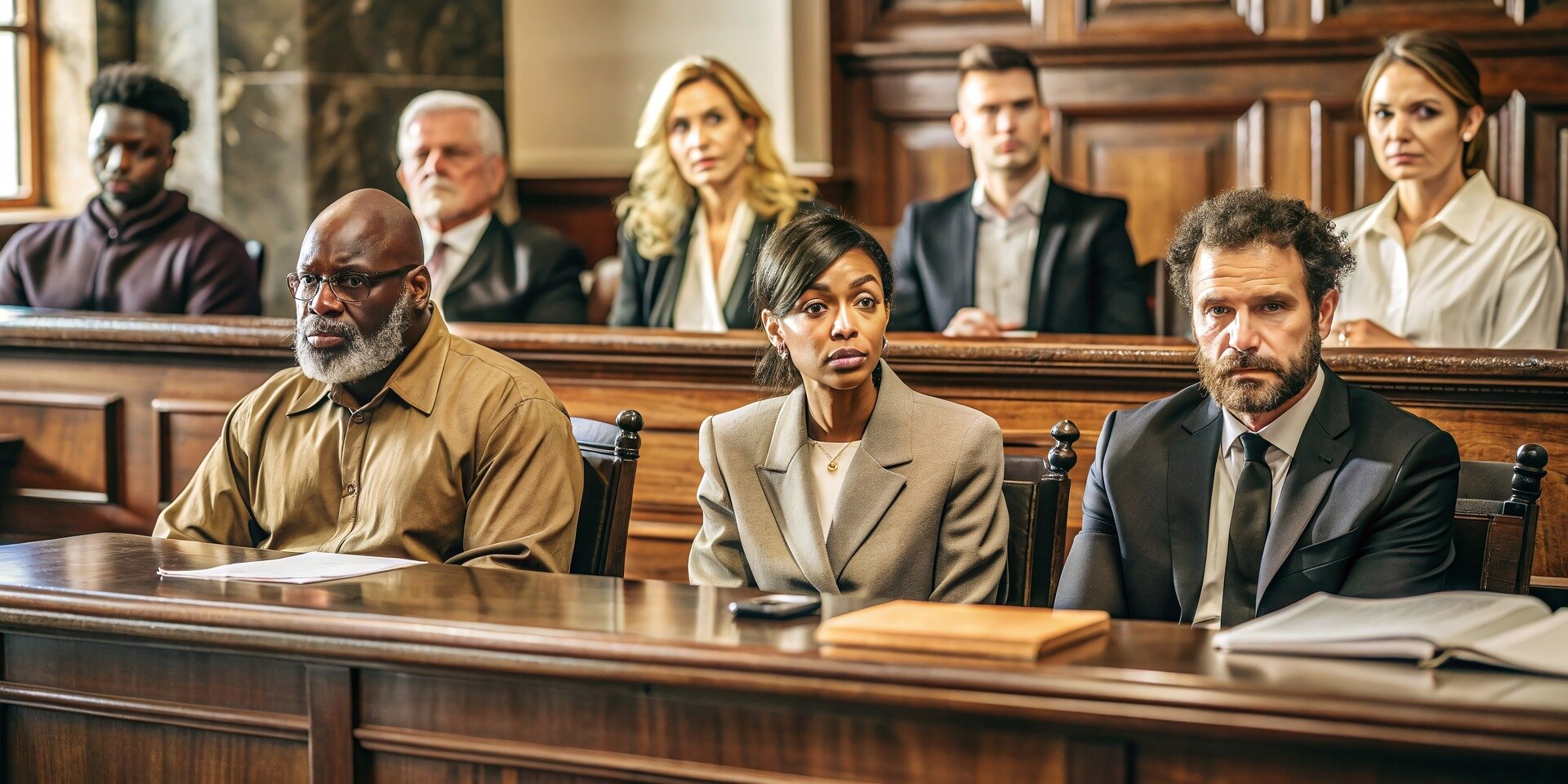
Americans who recently served on juries report more confidence in courts and judges, according to new research from the Annenberg Public Policy Center of the University of Pennsylvania. The finding lands as trust in the U.S. Supreme Court has fallen and jury trials have become less common, reducing a direct form of public contact with the justice system.
The study, published in Judicature, the scholarly journal of Duke University School of Law, draws on nationally representative surveys conducted by APPC’s Institutions of Democracy division. The authors are Shawn Patterson Jr., Abby Murray, Matthew Levendusky, R. Lance Holbert and Kathleen Hall Jamieson.
APPC said respondents who had served on a jury during the previous five years gave courts higher marks than those who had not. Those respondents saw courts as more legitimate, expressed more trust in courts overall and were more likely to describe judges in positive terms, according to the researchers.
The association held after the authors accounted for age, education, gender, income, political party identification and race, APPC said. The researchers did not present the finding as proof that jury service alone causes higher trust, but said firsthand exposure to courts is linked with more favorable views.
Trust falls as jury trials become rarer
APPC reported that public trust in the Supreme Court has dropped sharply in recent years. In a March 2025 survey of U.S. adults, 41% said they had high or moderate trust in the court, down from 68% in 2019. The share reporting low or no trust rose to 59%, according to APPC.
At the same time, fewer cases are reaching juries, according to figures cited by the researchers. In federal civil cases, the share going to trial fell from 5.5% in 1962 to 0.8% in 2013. Federal criminal jury trials declined from 8.2% to 3.6% over the same period.
The number of people summoned for federal jury duty also dropped, falling 37% between 2006 and 2016, according to the study. In APPC surveys, the share of adults who said they had served on a jury in the prior five years averaged 9% before 2020 and fell to 4% in 2025.
Patterson, an APPC research analyst, said the decline in civil and criminal jury trials is a concern because it means fewer people experience court proceedings directly. Levendusky, who directs APPC’s Institutions of Democracy division, said seeing courts operate in person appears to be connected with greater trust.
Civic education showed a stronger link
The authors also found that civic knowledge had an even larger association with perceived court legitimacy than jury service. APPC said higher civic knowledge corresponded to an increase of roughly 14 percentage points in perceived legitimacy, compared with about 9 percentage points for jury duty.
Because jury service is reaching fewer people, the researchers argued that civic education could help strengthen public understanding of courts. They called for civic learning that connects K-12 instruction with adult education through workplaces, community groups and court-based centers.
The examples cited by the authors include the Stephen G. Breyer Community Learning Center on Courts and the Constitution in Boston and the Justice & Democracy Centers of Minnesota. Holbert, director of APPC’s Leonore Annenberg Institute for Civics, said the goal should be to raise civic literacy and help people take part in democratic life.
This story draws on original reporting from Phys.org.