
Researchers grow wheat with starch granules twice the usual size
A John Innes Centre team says larger wheat starch granules could slow digestion and aid starch-based manufacturing, though food effects still need testing.
By Priya Raghavan · Science Reporter
3 min read
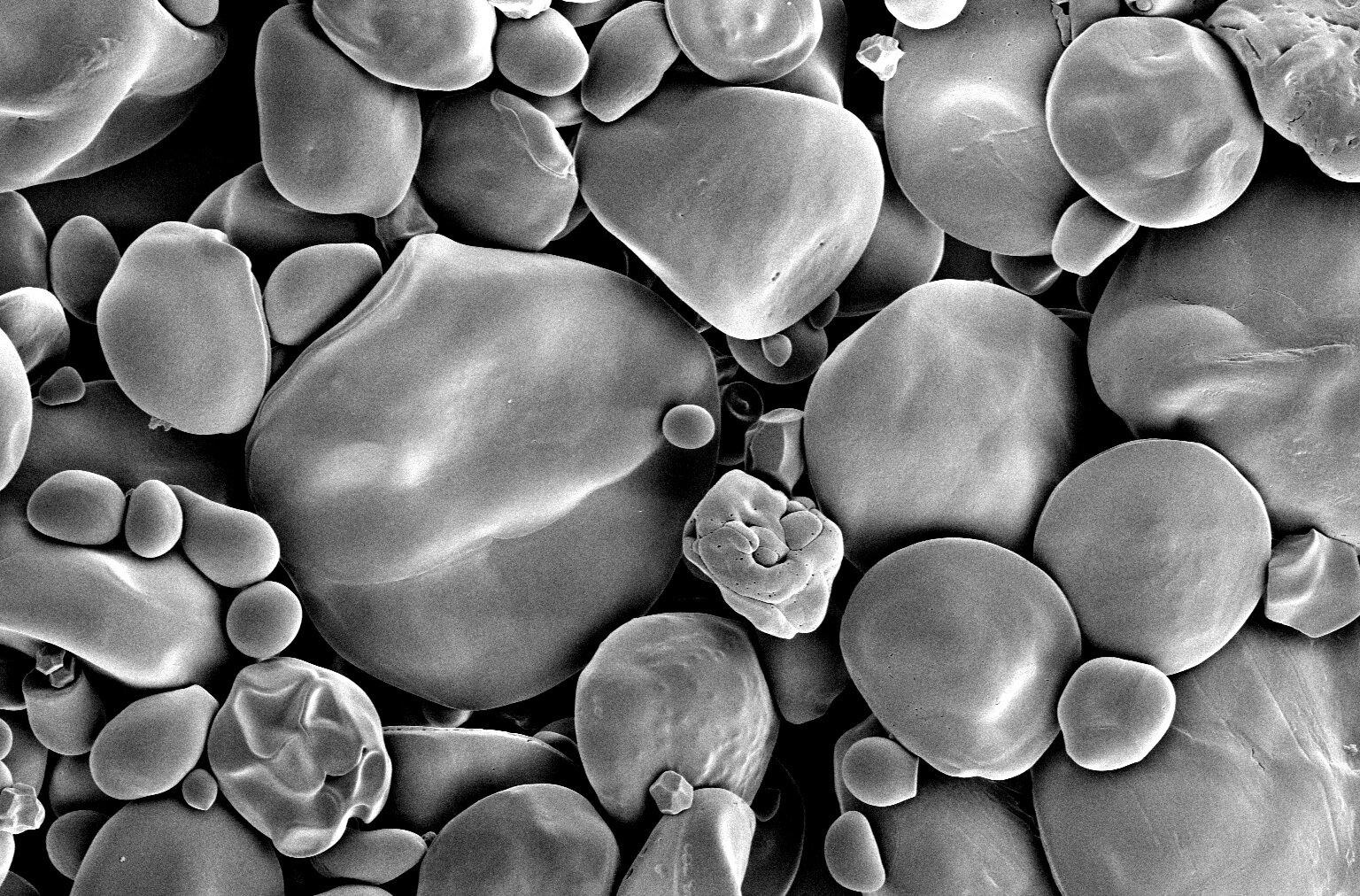
Researchers have produced durum wheat with starch granules far larger than those normally found in cereal crops, a result that could affect food digestion research and several starch-using industries. The John Innes Centre said the work gives scientists a way to change a key physical property of wheat starch that had been difficult to control.
The study, by Rose McNelly and colleagues in the Seung group at the John Innes Centre, was published in Science Advances. The team focused on durum wheat, the type used for pasta, and developed plants whose large A-type starch granules reached up to 50 micrometers, according to scanning electron microscopy carried out at the center.
Typical A-type wheat starch granules are about 20 micrometers, according to the John Innes Centre. In the experimental plants, more than half of the granules measured 30 micrometers, compared with 6% in regular wheat starch.
How the team made larger granules
Wheat starch usually contains two main granule types: larger, flatter A-type granules and smaller, rounder B-type granules. The John Innes Centre said the size of those granules matters because larger particles have less surface area for digestive enzymes to attack.
The researchers found two factors that restrict granule growth in wheat grains, according to the study: the size of the amyloplast, the cellular compartment where starch is stored, and the number of granules that begin forming and compete for available material. The team bred plants that combined mutations affecting both factors, giving starch granules more room to grow and reducing competition from newly initiated granules.
The John Innes Centre said the plants were made with a TILLING mutant population, a breeding resource that allowed researchers to identify mutations in two genes linked to amyloplast size and granule initiation. The team then bred double-mutant plants carrying both traits.
McNelly, the study’s first author, said the team expected bigger granules if both limits were removed, but the final size exceeded their expectations. She said the particle size analyzer had to be adjusted to measure the full range of the new granules.
Possible food and industry uses
The John Innes Centre said larger granules may be relevant to foods such as pasta and bread because starch with larger particles is expected to digest more slowly. Starch that resists digestion in the upper gastrointestinal tract is known as resistant starch, a dietary fiber that is processed lower in the gut.
According to the center, resistant starch can support the gut microbiome and avoid sharp blood sugar rises associated with regular starches; it also said there is some evidence that larger granules can improve food texture. Those effects have not yet been shown for food made from the new wheat plants.
The group plans to work with the Quadram Institute to make pasta from the material and test in human trials whether the engineered starch resists digestion, according to the John Innes Centre. Fred Warren, a Quadram Institute group leader and paper co-author, said researchers do not yet know how changing granule size within one cereal crop will affect digestion or the gut microbiome.
The John Innes Centre said larger granules could also help industrial users of starch, including flour milling, papermaking, pharmaceuticals, cosmetics, textiles, biochemicals and packaging. The center said bigger starch granules can be easier to separate and can affect binding and thickening properties.
The findings mainly apply to cereals such as wheat and barley, according to the John Innes Centre, because they contain the combination of A-type and B-type starch granules studied by the team. The researchers said the proof of concept could also be applied to bread wheat.
This story draws on original reporting from Phys.org.