
Fungal genome editor reveals new molecules with early anticancer activity
University of Pennsylvania researchers say fPE7max revived dormant fungal gene clusters and exposed compounds that may help drug discovery.
By Priya Raghavan · Science Reporter
3 min read
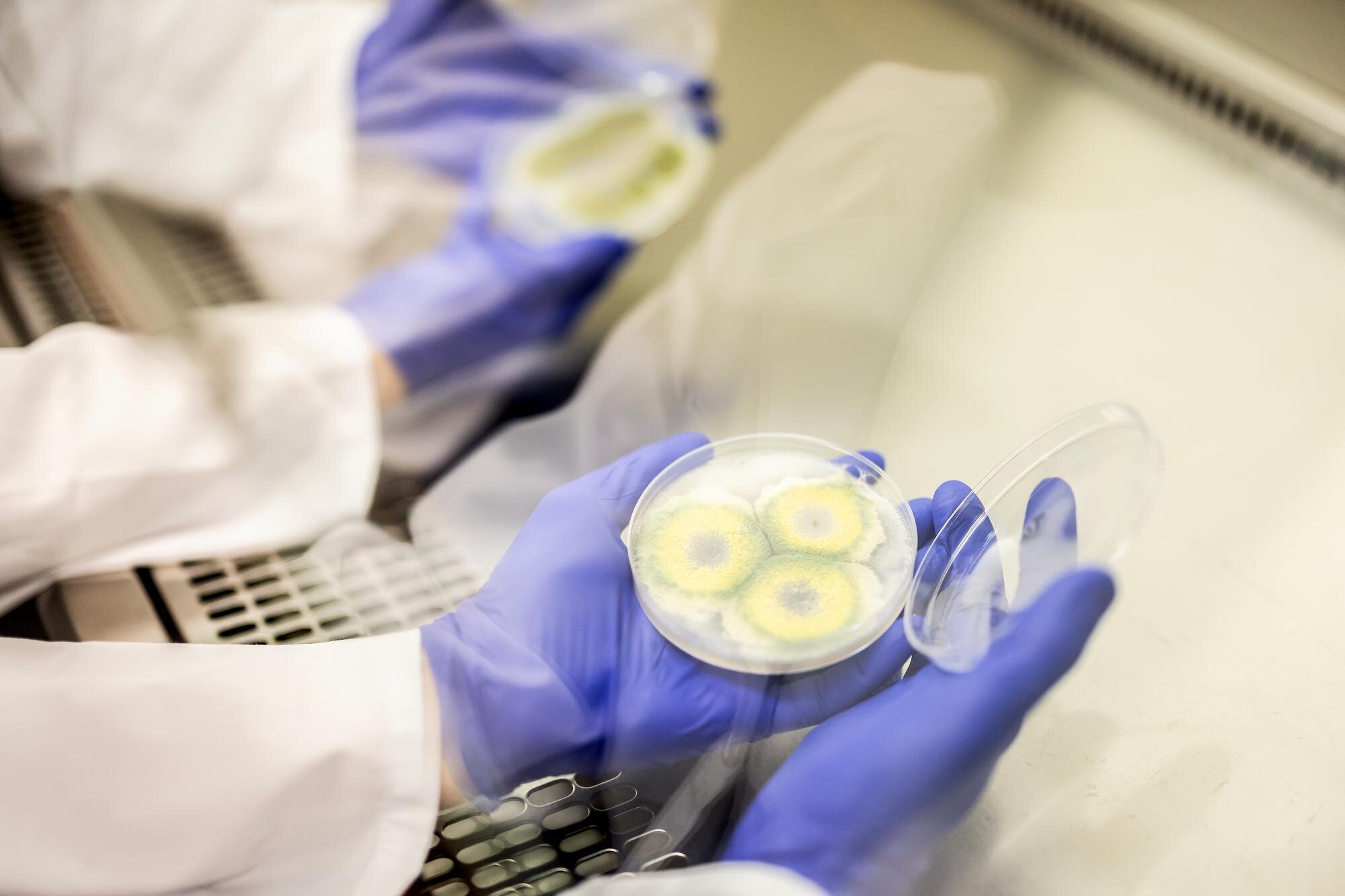
A University of Pennsylvania team has built a genome-editing tool for filamentous fungi and used it to uncover molecules with early signs of anticancer activity. The work matters because fungi have produced major medicines, but many of their drug-making pathways stay inactive under standard laboratory conditions, according to the researchers.
The platform, called fPE7max, is described in a peer-reviewed paper in Nature Biotechnology. The team said the tool lets scientists make precise edits in molds such as Aspergillus and Penicillium, the fungal group that includes the source of penicillin.
Xue “Sherry” Gao, a chemical and biomolecular engineer at Penn’s School of Engineering and Applied Science, said fungi have received less genomic attention than animals and crops despite their role in medicine. Gao pointed to penicillin and statins as examples of fungal chemistry that has shaped modern treatment.
The problem, Gao said, is that fungi grown in sterile lab settings often shut down gene pathways they use in the wild to compete with bacteria. Those dormant pathways can contain instructions for making biologically active compounds, but researchers need better tools to activate them.
How the tool works
The Penn team said CRISPR-Cas9, a widely used gene-editing system, can be too imprecise for filamentous fungi and may create unintended mutations. The researchers instead adapted prime editing, a newer approach that changes DNA without cutting both strands of the double helix.
Adapting prime editing to fungi required changes, according to the study. Prime editing uses guide RNA to direct the editor to a DNA target and carry replacement instructions, but long RNA instructions can degrade before edits are completed.
The researchers added a protein called fLa to help protect those RNA instructions, according to the Penn team. They also added a protein intended to temporarily dampen the fungus’s own DNA repair response, giving new edits a better chance to remain in place.
The resulting system reached editing efficiency approaching 90%, according to the researchers. The team used it to alter regulatory sequences tied to laeA, a master gene that controls broad networks of biosynthetic pathways in fungi.
New compounds found
By removing molecular blocks that restrain laeA translation, the researchers said they reactivated silent gene clusters in several fungal species. That experiment led them to isolate 18 complex molecules, according to first author Chunxiao Sun, a postdoctoral researcher in Gao’s lab.
Sun said eight of the molecules had chemical structures not previously known to science. Three showed promising anticancer properties in early testing, and one new molecule showed selective toxicity against human breast, hepatic and leukemia cancer cells, according to the Penn account of the study.
The researchers described the findings as proof that genome editing can help expose hidden fungal chemistry. Gao said the work suggests useful therapeutic candidates may already exist in nature but remain inaccessible until the relevant fungal genes are switched on.
The Penn team plans to apply fPE7max to a broader set of fungal species, according to the university. The researchers said their goal is to move from searching wild fungi for useful molecules toward a more systematic way to optimize fungal natural products for drug discovery.
This story draws on original reporting from Phys.org.