
Circular plastics shift slowed by system conflicts, study finds
University of Eastern Finland researchers say recycling, reuse and reduction efforts lose force when regulation, markets and technology pull in different directions.
By Priya Raghavan · Science Reporter
2 min read
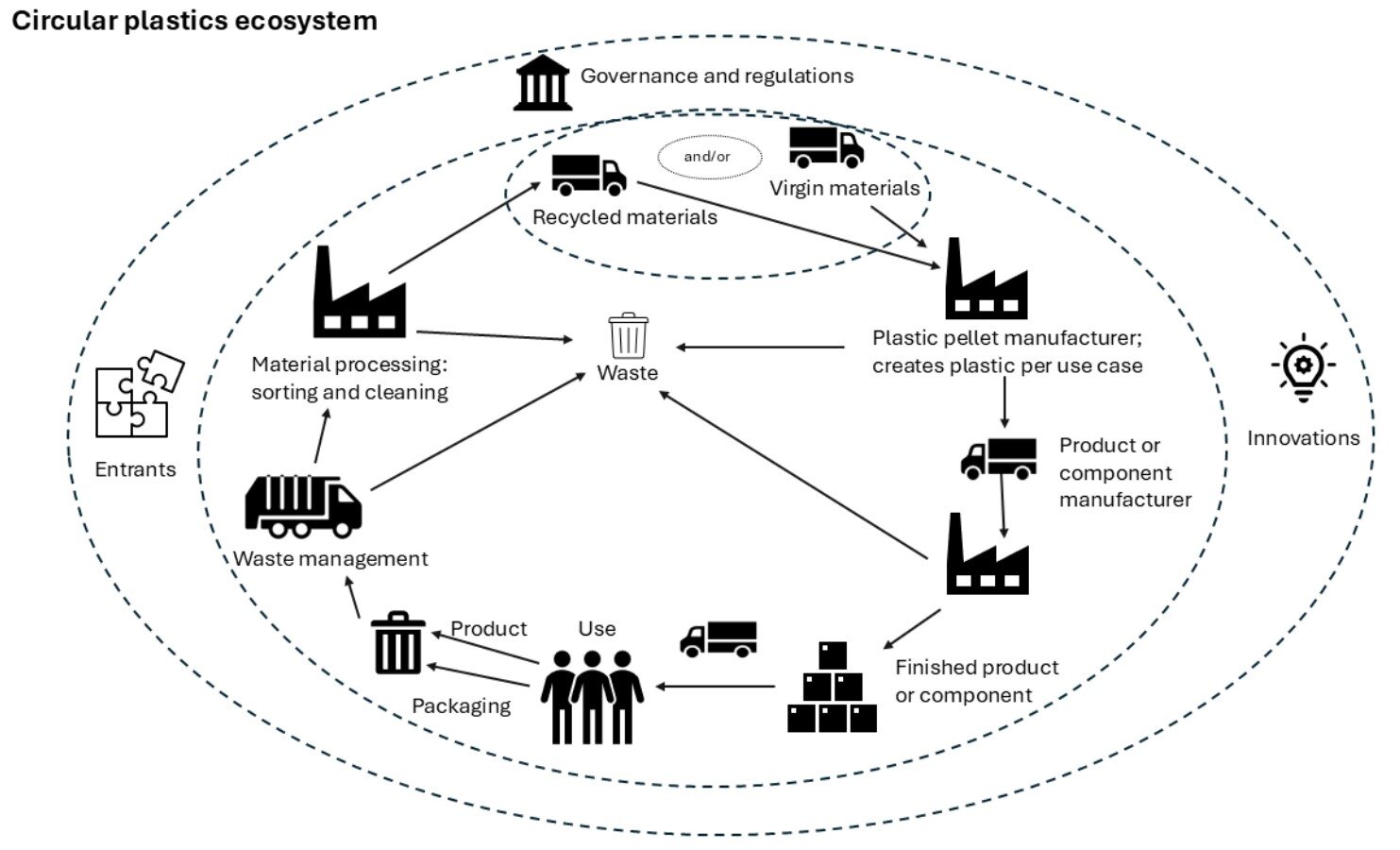
A University of Eastern Finland study says the move toward a circular plastics economy is being slowed by conflicts built into the systems meant to support it. The findings matter for companies and policymakers trying to cut plastics-related environmental impacts, because the researchers argue that isolated fixes are failing to produce broad change.
The study, published in the Journal of Circular Economy, examined circular plastics ecosystems using a qualitative case study approach. According to the university, the researchers found that regulation, technology, market structures, consumer behavior and collaboration are tightly connected, but often push against one another.
The research team describes one outcome as the “recycling for nothing paradox.” According to the study, investments in recycling, reuse and reduction can lose impact when different parts of the plastics ecosystem are poorly aligned.
Kristina Leppälä, a postdoctoral researcher at the Business School’s Research Centre for Sustainable Circular Economy at the University of Eastern Finland, said the findings show that separate interventions are not enough. “Advancing a circular plastics economy requires addressing the system as a whole, especially the contradictions between its key actors and mechanisms,” Leppälä said.
Conflicting pressures
The university said the study points to several system-level tensions holding back circularity. These include layered and sometimes conflicting regulation, disputed technology choices, fragmented markets and weak collaboration among participants.
According to the researchers, those tensions shape whether circular plastics efforts lead to meaningful results. A recycling program, for example, may be weakened if market incentives, consumer behavior or regulatory demands do not support the same goal.
The study does not argue that recycling, reuse or reduction lack value. Instead, according to the University of Eastern Finland, it says their effect can be diluted when companies, policymakers, consumers and other actors operate under conflicting rules, incentives or expectations.
Implications for policy and business
The university said the results offer guidance for companies, policymakers and researchers working on sustainable plastics systems. The study suggests that progress depends on addressing the relationships between regulations, technologies, markets and collaboration, rather than treating each barrier separately.
The paper, “Systemic Interdependencies of Circular Plastics Ecosystems,” was authored by Ville-Veikko Piispanen and colleagues and published in 2026 in the Journal of Circular Economy. The University of Eastern Finland said the work was funded by Business Finland.
This story draws on original reporting from Phys.org.