
Territorial sustainability doughnut model tests rural land-use progress
Researchers used a Colombian case study to show why village-level land gains can stall when regional power and tenure problems persist.
By Lucas Ferreira · Science & Environment Writer
3 min read
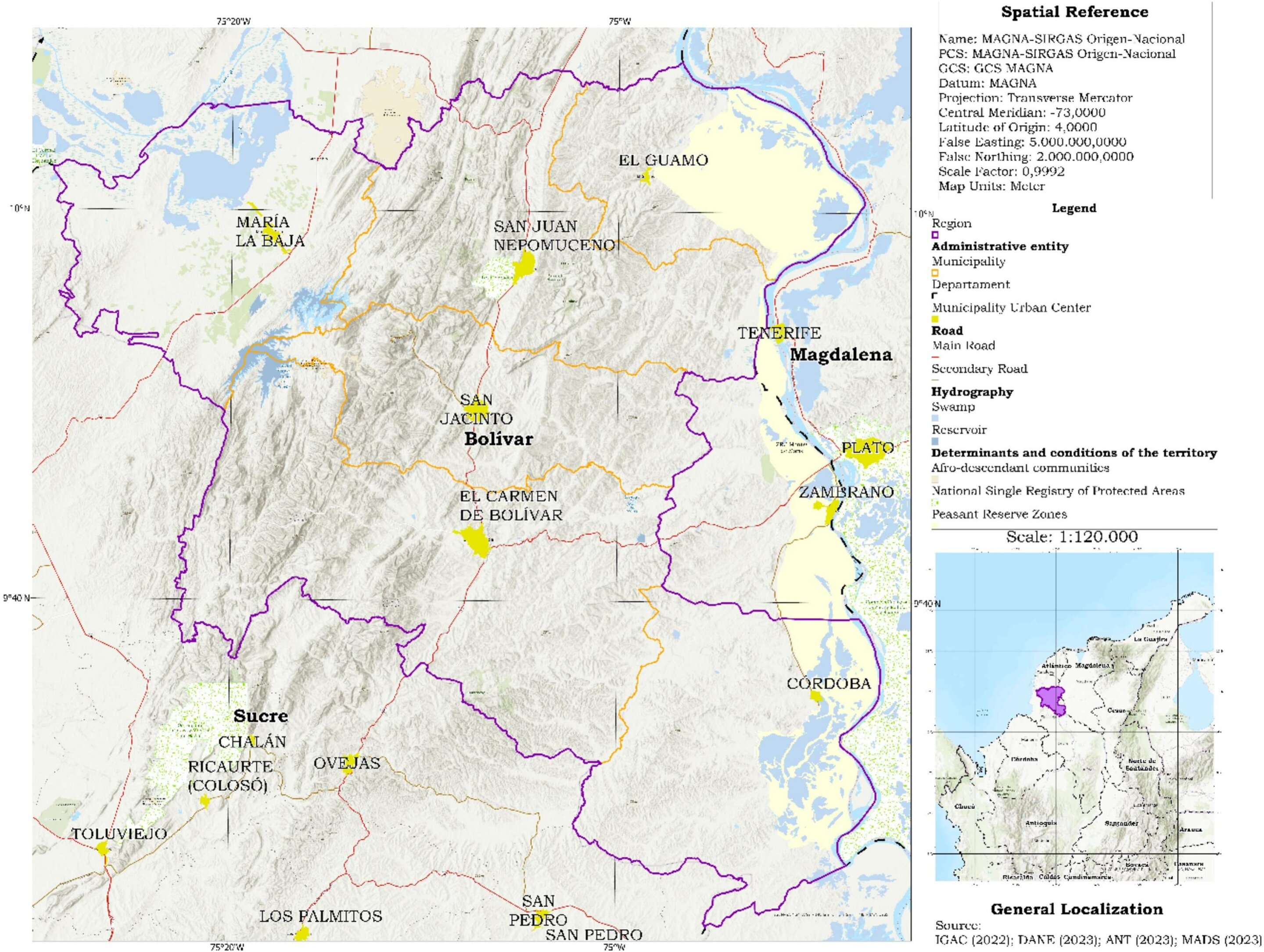
A new territorial sustainability doughnut model aims to show why sustainable land use can advance in one village while faltering across a wider region. Researchers from Justus Liebig University Giessen and the Universidad Nacional de Colombia in Bogotá say land-use change alone misses legal, ecological and social conditions that decide whether progress lasts.
The study, published in Global Environmental Change, applies the model to Montes de María, a region in Colombia shaped by armed conflict. The team examined data from 2010 to 2023 and drew on interviews with experts and residents, according to the University of Giessen.
What is the territorial sustainability doughnut model?
The model adapts Kate Raworth’s Doughnut Economics, which frames human well-being and environmental limits as boundaries for a safe operating space. In this version, called the Territorial Sustainability Doughnut Model, the researchers turn that concept into a tool for studying rural land-use systems.
According to the university, the framework brings together land-use suitability, ecosystem service trends and social information across local, community and regional levels. It combines satellite-based land-use data with measures of ecological performance and information about residents’ living conditions.
The goal is not to produce a single score or predict future land use. André Große-Stoltenberg of JLU’s Department of Landscape Ecology and Landscape Planning said the model is meant to show where land use, ecosystem services and social conditions have to be evaluated together.
What did the Colombia case study find?
In Montes de María, the researchers found that sustainability gains were uneven. Some village communities, known as veredas, made notable progress, including recovery of natural ecosystems, the University of Giessen said.
Those local gains did not add up to a regional shift. Miguel Ramírez, the study’s lead author from the Universidad Nacional de Colombia, said sustainability remains vulnerable when regional problems such as insecure land tenure and unequal structures continue.
The study identified several barriers to wider change:
- Planning agendas that conflict with one another.
- Limited capacity of the state to support or enforce change.
- Expansion of large monocultures, including oil palm.
- Land tenure insecurity and unequal regional structures.
The fieldwork also found practical efforts that supported better outcomes. The researchers pointed to restoration led by communities and land-use agreements negotiated locally as positive approaches in the region.
Why does the model matter for land-use planning?
The research argues that ecological repair can fail when social and political conditions block broader adoption. A village may restore ecosystems or improve land practices, but regional institutions, ownership patterns and development pressures can limit the effect.
For planners, the model offers a way to compare evidence that is often reviewed separately. The authors say that is especially relevant in areas undergoing post-conflict restructuring, where land rights, public authority and ecosystem recovery are closely linked.
The paper, “The territorial sustainability doughnut: A multiscale framework for assessing land use change, ecosystem services, and social dynamics,” was published in the journal’s special issue on transformative change for global biodiversity. Its DOI is 10.1016/j.gloenvcha.2026.103214.
This story draws on original reporting from Phys.org.