
Swiss glaciers set to lose ice mass after early snow depletion
ETH Zurich says Switzerland’s glaciers will enter net mass loss from June 29 as low snow cover, Saharan dust and a heat wave accelerate melting.
By Tom Brennan · Health & Medicine Correspondent
3 min read
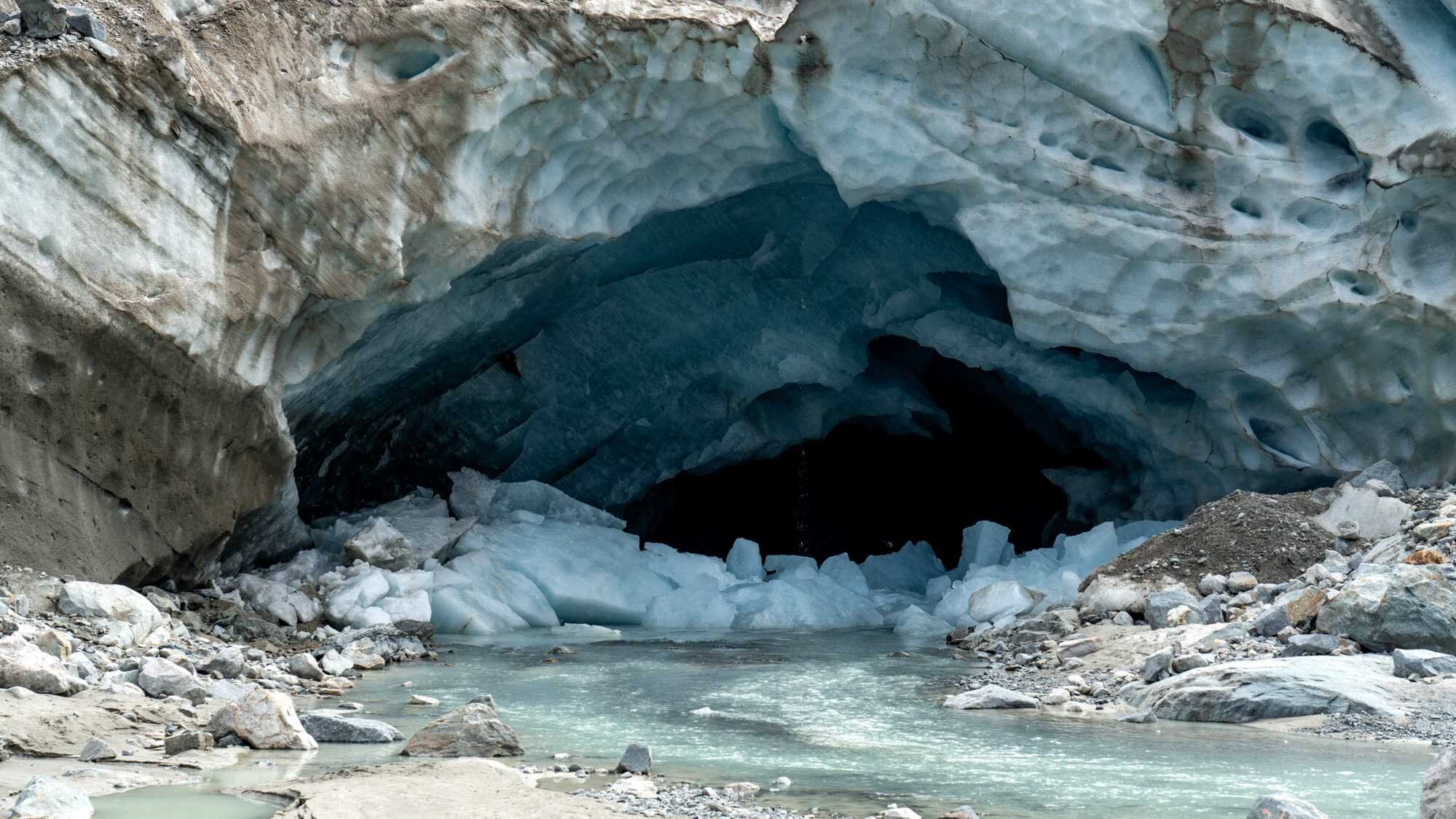
Switzerland’s glaciers are set to use up their seasonal snow reserves by June 29, leaving further melt to cut directly into glacier ice, according to ETH Zurich. The early threshold signals another severe year for Alpine ice after recent summers stripped away large areas of glacier cover.
ETH Zurich describes the date as “Glacier Loss Day,” the point when melting in lower parts of glaciers has offset any remaining snow that could add mass higher up. From then on, each liter of meltwater represents a net loss from the glacier system, according to the institute.
The conditions leading into summer have been poor for glaciers, ETH Zurich reported. Snow cover in April was at record lows in some places and no better than average for a few individual glaciers. Saharan dust reached Switzerland in March, darkening snow surfaces and helping them absorb more heat, while the country is now experiencing a heat wave.
The 2026 date is close to the record-setting year of 2022, when Glacier Loss Day arrived on June 26, according to ETH Zurich. That year followed a low-snow winter and three heat waves, and Switzerland recorded its warmest year since measurements began in 1864. ETH Zurich said only the summer heat wave of 2003 brought higher summer temperatures.
Swiss glaciers lost about 6% of their mass in 2022, the fastest annual loss recorded, ETH Zurich said. Data shown by GLAMOS, the Swiss glacier monitoring network, indicated on June 23 that glaciers were melting at about twice the average rate recorded from 2010 to 2020 and were approaching the end-of-June levels seen in 2022.
Less ice can mean less meltwater
Glacier melt can help support rivers during hot, dry spells, ETH Zurich said, because it offsets low water levels and rising water temperatures while enough glacier area remains. New research suggests that this buffer may already be weakening in some extreme years.
Researchers at the Swiss Federal Institute for Forest, Snow and Landscape Research, or WSL, found that glacier meltwater contributed less to runoff in most studied catchments from June through August 2022 than during the same period in 2003. That was the case even though glacier ice loss was greater in 2022, according to the study published in Hydrology and Earth System Sciences.
ETH Zurich said the finding reflects the long decline in glacier area. Between the extreme years of 2003 and 2022, about 200 square kilometers of Swiss glacier ice disappeared, an area nearly as large as the canton of Zug.
Matthias Huss, a glaciologist at ETH Zurich and WSL, said the shrinking ice cover is already visible in runoff patterns, according to ETH Zurich. He also said the lower meltwater volume seen in 2022 compared with 2003 remains an isolated case for now, because very high melt rates since 2022 are still offsetting the effect of smaller glaciers.
That balance will not last indefinitely, Huss warned through ETH Zurich. If ice masses continue to shrink, even extreme melt rates will no longer make up for the loss of glacier area, reducing the amount of water glaciers can supply in hot, dry summers.
This story draws on original reporting from Phys.org.