
More choices changed how macaques cooperated in food tests
A Utrecht University study found that long-tailed macaques shared cooperation tasks more widely when researchers offered multiple devices.
By Tom Brennan · Health & Medicine Correspondent
3 min read
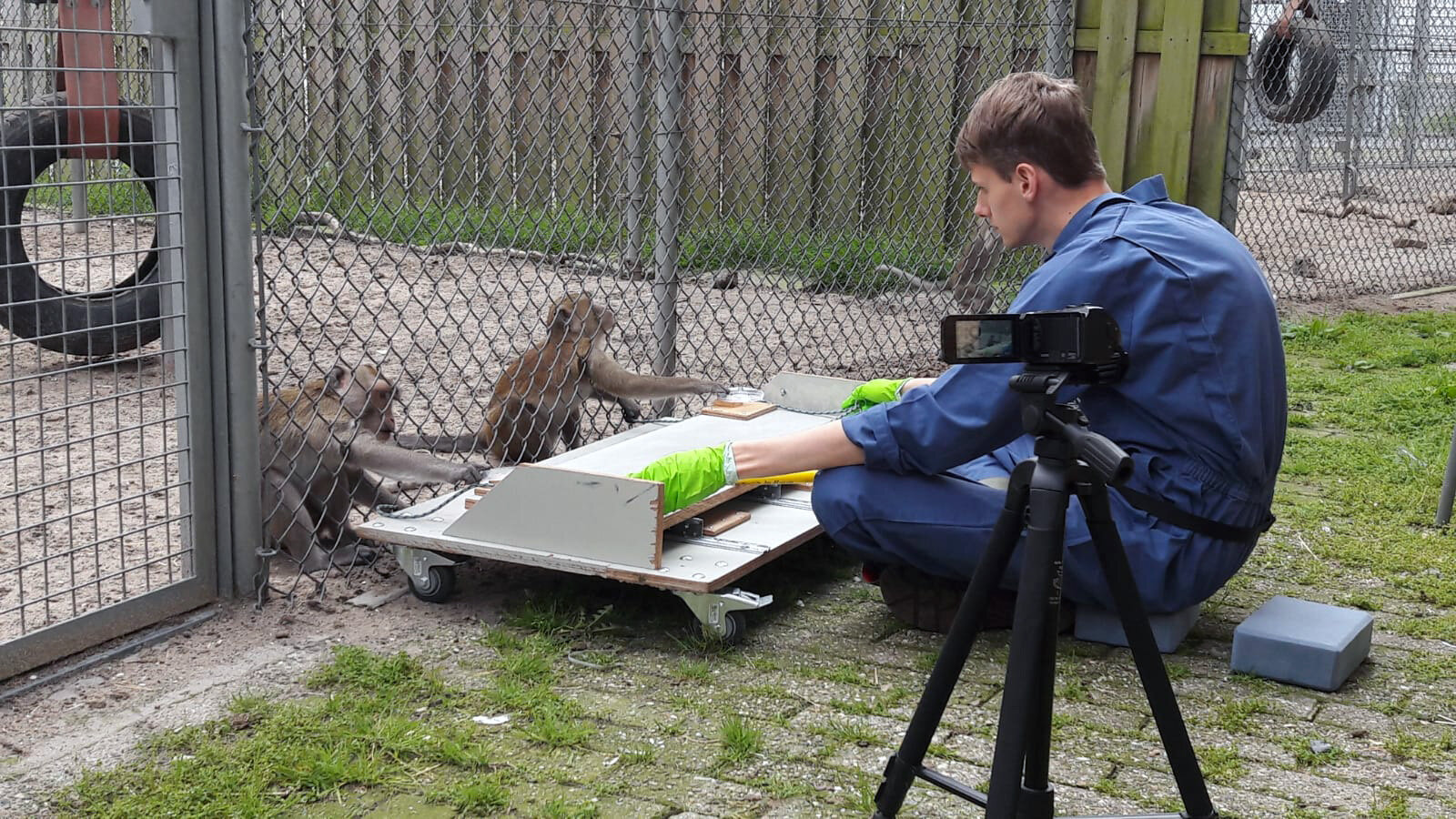
Long-tailed macaques behaved differently in cooperation experiments when they had several chances to work together rather than one, according to Utrecht University researchers. The finding matters because many animal behavior studies use a single task site, which the researchers say can shape which animals participate and which partnerships appear to matter.
The study, published in Animal Behaviour, tested a common setup in behavioral science: two animals must pull ropes at the same time to receive food. Utrecht University said such experiments often place one apparatus in front of a group, creating a single opportunity for cooperation.
Primatologist Liesbeth Sterck, who led the research, said that arrangement may resemble rare cases in nature, such as animals cooperating around one prey item. But Utrecht University said many primates more often feed in places where several food sources are available at once, such as trees or shrubs.
One device favored two young males
Sterck’s team studied a group of long-tailed macaques and varied the number of cooperation devices available to them. In some trials the monkeys had one device; in others, they had three or five, according to Utrecht University.
When the group had access to one device, two adolescent males dominated the task, Utrecht University reported. Those two males accounted for most of the successful cooperation used to obtain food.
The pattern shifted when the researchers offered three or five devices. Cooperation spread more evenly across the group, and the two males still took part but no longer controlled most of the opportunities, according to the university.
Utrecht University said the two males also began cooperating with other group members once more devices were available. The researchers interpreted that as evidence that the number of task locations can affect partner choice as well as participation.
Experiment design can alter social behavior
Sterck said researchers should be careful when drawing broad conclusions from single-location tests. In her view, those experiments show how animals act when one opportunity is available, while a different pattern may emerge when the animals can choose among several places to cooperate, Utrecht University reported.
The researchers described the effect as a change in social dynamics caused by the experimental setting. With one device, animals may face more competition over access; with multiple devices, they can avoid others, watch others or join different partners, according to Utrecht University’s summary of the study.
Jeroen Zewald, who conducted the study as a biology student at Utrecht University, compared the result to cooperative hunting. Utrecht University said his explanation was that partner choice becomes more sensitive when only one reward is available, while abundant opportunities reduce the pressure to choose a particular partner.
Wider implications for animal studies
The authors said the findings could apply beyond cooperation research. Utrecht University noted that experiments on social learning and animal culture also often rely on one apparatus or one location, which may restrict which animals can observe, learn or take part.
The study does not say earlier cooperation experiments were wrong, according to Sterck. It suggests that their results may reflect the limits of the setup as well as the animals’ social preferences.
The paper is titled “Monopolization and cooperation: number of locations affects cooperation and partner preference in long-tailed macaques.” It was authored by Jeroen S. Zewald and colleagues and published in Animal Behaviour with DOI 10.1016/j.anbehav.2026.123632.
This story draws on original reporting from Phys.org.