
Sweat bee queen pheromones help daughters decide whether to stay
Smithsonian-led researchers found chemical signals from Megalopta genalis queens help daughters decide whether to help or start nests.
By Priya Raghavan · Science Reporter
3 min read
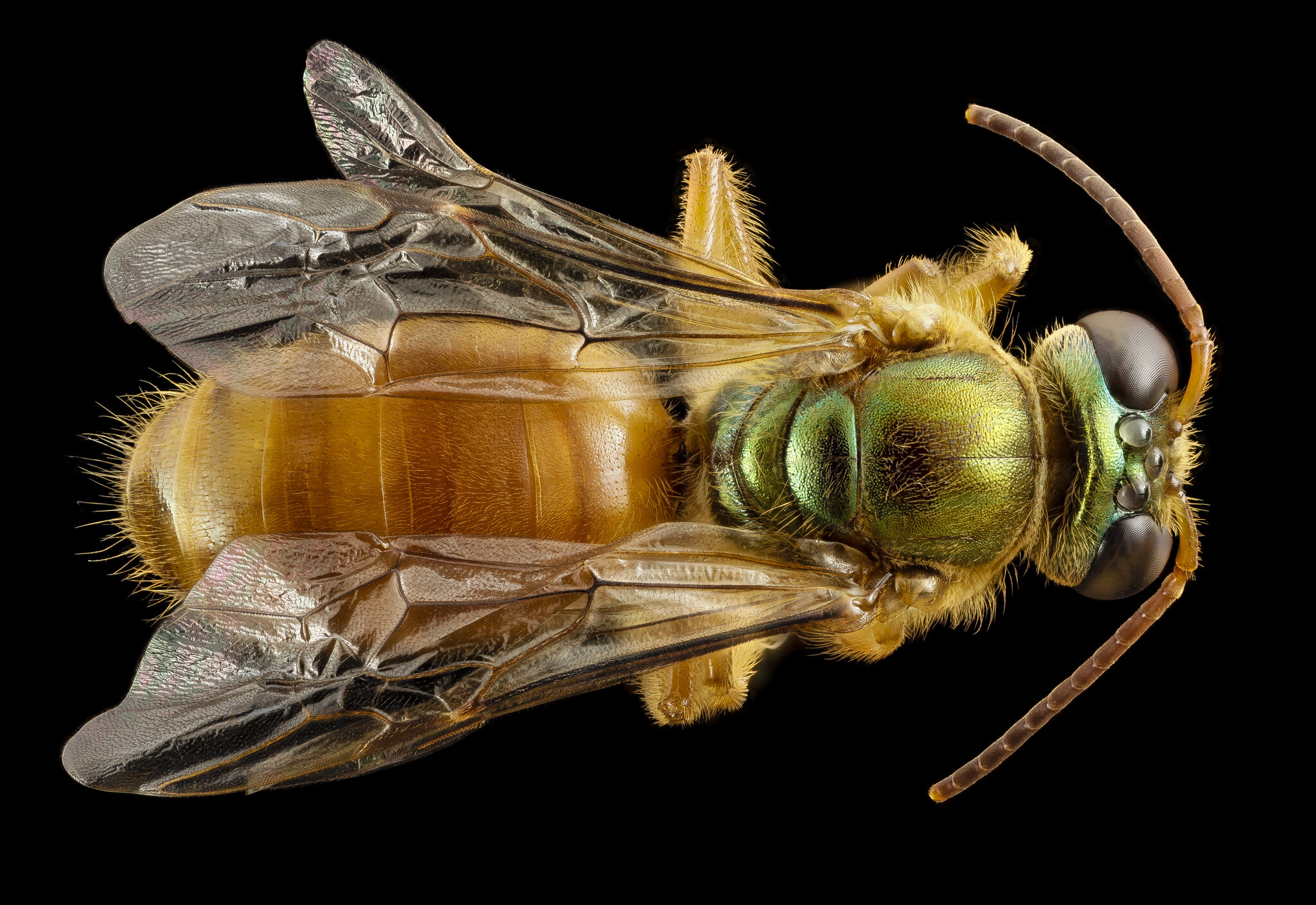
Researchers have identified sweat bee queen pheromones that help daughters decide whether to remain in the family nest or leave to reproduce elsewhere. The Smithsonian Tropical Research Institute said the finding offers evidence for how chemical communication can support early forms of cooperation in insect societies.
The study, published in Proceedings of the Royal Society B, focused on Megalopta genalis, the broad-cheeked nocturnal sweat bee. The work was led by Callum Kingwell, a postdoctoral fellow at the Smithsonian Tropical Research Institute and Princeton University, with STRI staff scientist Bill Wcislo and colleagues.
Female offspring in this species face several possible paths after they mature, according to STRI. Some remain with their mother as nonreproductive helpers, some leave to found nests of their own, and some may take over the queen’s position.
Pheromones are chemical signals animals use to communicate with others of the same species. In this case, the researchers found that chemicals associated with the queen are linked to whether daughters invest in helping their mother produce more offspring.
How do sweat bee queen pheromones affect daughters?
STRI said the team found two effects. At a key stage in development, queen pheromone levels increased and suppressed ovarian development in daughters.
The same chemical signals also appeared to carry information about the queen’s reproductive condition, according to the study. When queens had higher pheromone levels, daughters were more likely to stay in the nest and help rather than reproduce independently.
The researchers said that pattern supports the idea that daughters weigh whether cooperation is likely to pay off genetically. If the queen is in good reproductive condition, helping her raise more offspring may help pass on shared genes.
How the researchers studied free-living bees
The team studied bees on Barro Colorado Island in the Panama Canal over multiple years, according to STRI. Researchers placed hundreds of artificial nests in the bees’ natural habitat, marked individual bees and used video recordings to track whether daughters worked in the nest, left or attempted to replace the queen.
To study the insects’ chemistry, the researchers analyzed waxy compounds on the bees’ bodies. STRI said the team used gas chromatography and mass spectrometry, methods that separate, identify and measure chemical compounds.
Kingwell said a notable part of the work was that the chemical analyses were carried out on Barro Colorado Island and involved repeated sampling of live bees. He said that allowed the researchers to follow chemical signaling in the same free-living individuals across their lives.
Why the finding matters
Wcislo said chemical signals of this kind may help stabilize young insect societies long enough for more complex social behavior to develop over evolutionary time. He said the study identifies what the researchers believe is the first queen pheromone found in a flexibly social insect.
Kingwell said the research speaks to a broader question about how cooperation evolves. According to STRI, the work suggests that chemical communication can help animals decide when helping relatives is a better option than breeding on their own.
The paper is titled “A queen pheromone signals the benefits of cooperation in a flexibly social insect.” It was published in Proceedings of the Royal Society B in 2026.
This story draws on original reporting from Phys.org.