
Spain wildfire records show three worst fires since 1961 came in two years
Government and EGIF data show fires in Ávila, Ourense and Guadalajara are Spain’s largest recorded wildfires since 1961.
By Tom Brennan · Health & Medicine Correspondent
3 min read
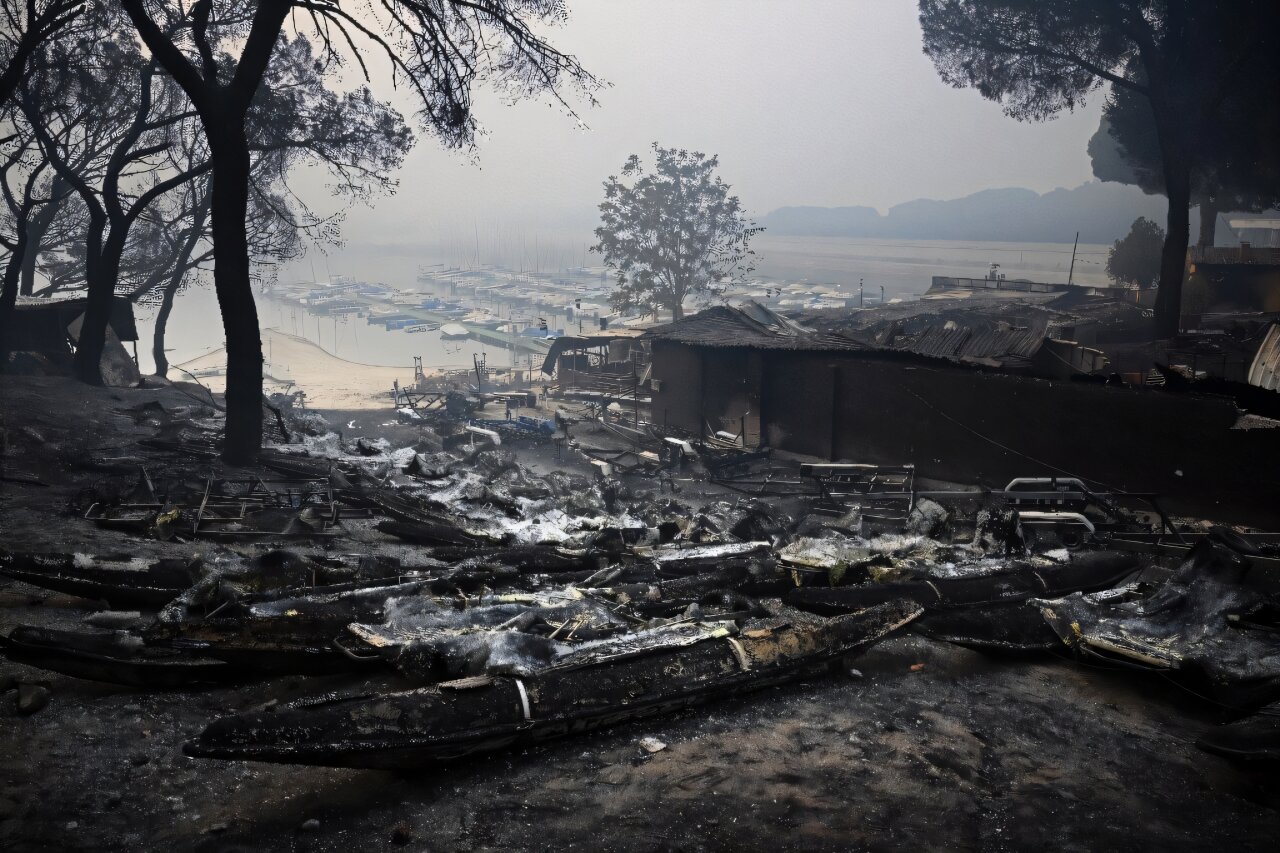
Spain wildfire records now show the country’s three largest fires since 1961 have all occurred in the past two years, according to data from the General Statistics on Forest Fires, known as EGIF. The finding follows a blaze in the Ávila region northwest of Madrid that the Spanish government said burned about 50,000 hectares, or 193 square miles, making it the largest wildfire in Spain’s modern record.
Spain lifted evacuation orders on Tuesday, July 28, 2026, for more than a dozen towns in Madrid and Ávila, allowing thousands of residents who had been forced out by the fires to go home. Firefighters were still working to contain fires across both regions after a week of damage, according to government information cited by AFP.
What are Spain's worst wildfires since 1961?
The largest recorded wildfire is now the July 2026 fire in Burgohondo, Ávila, with roughly 50,000 hectares burned, according to the Spanish government. EGIF records, which date to 1961, show the next two largest were the August 2025 Larouco fire in Ourense and the July 2026 La Mierla fire in Guadalajara.
The Larouco fire began on Aug. 13, 2025, in the northwestern province of Ourense. Provisional 2025 figures from Spain’s Ministry for the Ecological Transition, known as Miteco, put the burned area at 37,765 hectares, or 146 square miles, of forest land.
That fire came during a severe wildfire season across Spain. According to Miteco figures cited by AFP, fires burned nearly 400,000 hectares nationwide in 2025 and four people died.
The third-largest recorded fire began in La Mierla, in Guadalajara province, shortly before the Ávila blaze. It burned about 32,000 hectares, or 124 square miles, in a dry, thinly populated part of Castilla-La Mancha, AFP reported.
More than a week after that fire started on July 24, fire prevention and suppression services told AFP it had entered a “stabilization phase” and was progressing favorably. A stabilized fire is one that is no longer spreading in the same uncontrolled way, though crews may still need to work before declaring it contained or extinguished.
How do earlier Spanish fires compare?
Before the 2025 and 2026 fires moved to the top of the list, several earlier blazes stood among Spain’s most destructive recorded fires by area. The Losacio fire in Zamora, which began on July 17, 2022, burned 31,473 hectares, or 122 square miles, including land that was not forested, according to a consolidated Miteco report.
Losacio was one of two major fires that hit the Sierra de la Culebra that summer. Together they burned more than 65,000 hectares, about one-fifth of Spain’s total burned area that year, and caused four deaths, according to Miteco figures reported by AFP.
In Valencia, the Cortes de Pallas fire was detected on June 28, 2012. EGIF data put its total burned area at 30,691 hectares, including 28,879 hectares of forest and 1,812 hectares of nonforested land.
AFP reported that two fires in the same area of the Valencian Community burned about 54,000 hectares in 2012 and killed a helicopter pilot. If only forest area is counted, the 2004 Minas de Riotinto fire in southern Spain burned more forest than Cortes de Pallas, destroying 29,867 hectares of forest and 29,946 hectares overall; that fire killed two people and led to the evacuation of 1,000 residents.
This story draws on original reporting from Phys.org.