
Soil bacteria lower their signal threshold when phosphorus runs short
Caltech researchers found phosphorus scarcity can make Pseudomonas synxantha respond to chemical signals at lower cell densities.
By Priya Raghavan · Science Reporter
3 min read
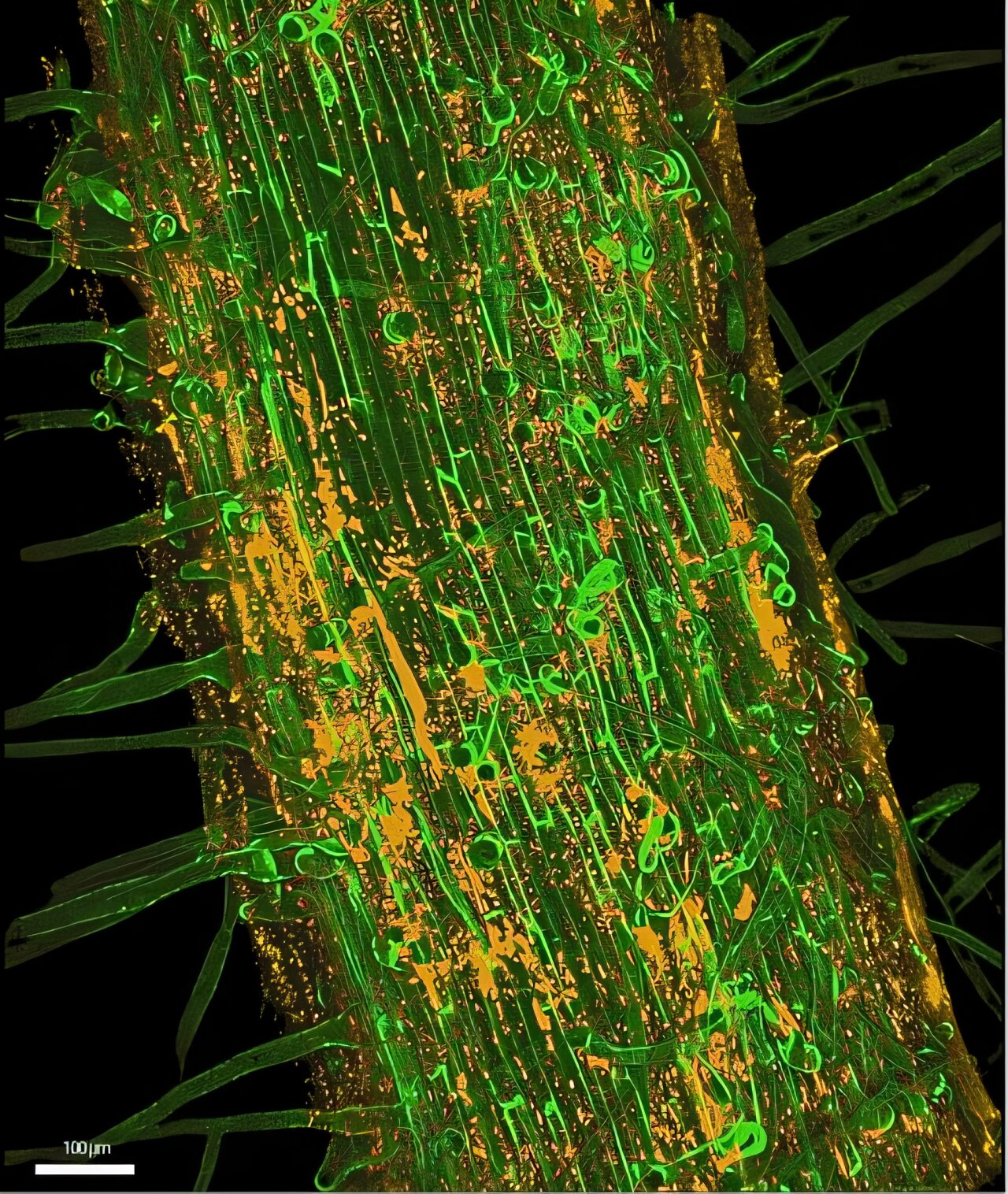
Soil bacteria can change how they coordinate group behavior when a key nutrient is scarce, according to a Caltech-led study published June 19 in Current Biology. The finding helps explain how microbes may behave around plant roots, where nutrients and water are unevenly distributed and phosphorus can be hard to access.
The research focused on Pseudomonas synxantha, a soil-associated bacterium that can produce phenazines, compounds that help cells obtain nutrients, compete with neighbors and survive stressful conditions. Caltech said the team studied the bacteria in laboratory systems designed to better resemble soil environments.
Bacteria use a communication process known as quorum sensing, in which cells release signaling molecules into their surroundings. When those signals build up to a threshold level, bacteria can switch on coordinated behaviors often linked to crowded conditions.
The Caltech team found that phosphorus stress changed that threshold. When bioavailable phosphorus was limited, P. synxantha activated quorum-sensing responses at lower cell densities and lower signal concentrations, allowing the bacteria to produce phenazines without needing a crowded environment.
Phosphorus is an important nutrient for microbes and plants, but Caltech said it is often limited in soils. Even when present, it can be locked in chemical forms that organisms cannot easily use, making phosphorus scarcity a realistic condition for studying soil microbes.
Dianne Newman, the Gordon M. Binder/Amgen Professor of Biology and Geobiology at Caltech, said her laboratory had previously seen that low bioavailable phosphorus increased phenazine production, but the connection to quorum sensing had been unclear.
“Recently, we have gotten interested in understanding how phenazines affect microbial communities in soils—the natural habitat for phenazine-producing bacteria,” Newman said. “Previously, we had observed that phenazine production is stimulated when bioavailable phosphorus is scarce, but we didn't understand how this worked through mechanisms of quorum sensing.”
Why soil-like conditions matter
Postdoctoral scholar Reinaldo Alcalde, the paper’s first author, said many details of bacterial communication have been learned from simplified laboratory studies. Soil, by contrast, presents a more complicated mix of physical and chemical conditions.
“But soils are physically and chemically complex,” Alcalde said. “By adding that context back in, we can better understand how bacteria behave where they actually live.”
The work is relevant because natural bacterial populations in soil are often less dense than those grown in laboratory cultures, according to Caltech. Around plant roots, microbes encounter patchy supplies of water and nutrients, so a lower response threshold could change when bacteria spend resources on collective behavior.
Alcalde said the study shows that environmental conditions can adjust the rules bacteria use to respond to signals. “When a key nutrient is scarce, bacteria can become more responsive to chemical signals and change the rules for when they invest in collective behaviors,” he said.
Tools for watching roots and microbes
The research also drew on imaging work in Caltech’s microbial and engineering laboratories. In 2024, Alcalde worked with biophotonics specialist Oumeng Zhang, then a postdoctoral scholar in the laboratory of engineering professor Changhuei Yang, to build a light-sheet fluorescence microscope designed for live 3D imaging of root systems.
Caltech said the microscope was tailored to observe interactions between roots and microbes in real time in opaque, soil-like settings. Newman’s laboratory plans to continue studying the links between microbes and their metabolites in root systems.
The paper, titled “Phosphorus stress and spatial confinement lower the quorum-sensing activation threshold for phenazine production in Pseudomonas synxantha,” was authored by Alcalde, Zhang, Newman, Yang and other researchers at Caltech, with Dmitri Mavrodi of the U.S. Department of Agriculture also listed as a co-author.
This story draws on original reporting from Phys.org.