
Root microbes linked to heat response in maize and sorghum
NC State researchers say microbes near crop roots may be tied to how maize and sorghum respond when temperatures rise.
By Priya Raghavan · Science Reporter
2 min read
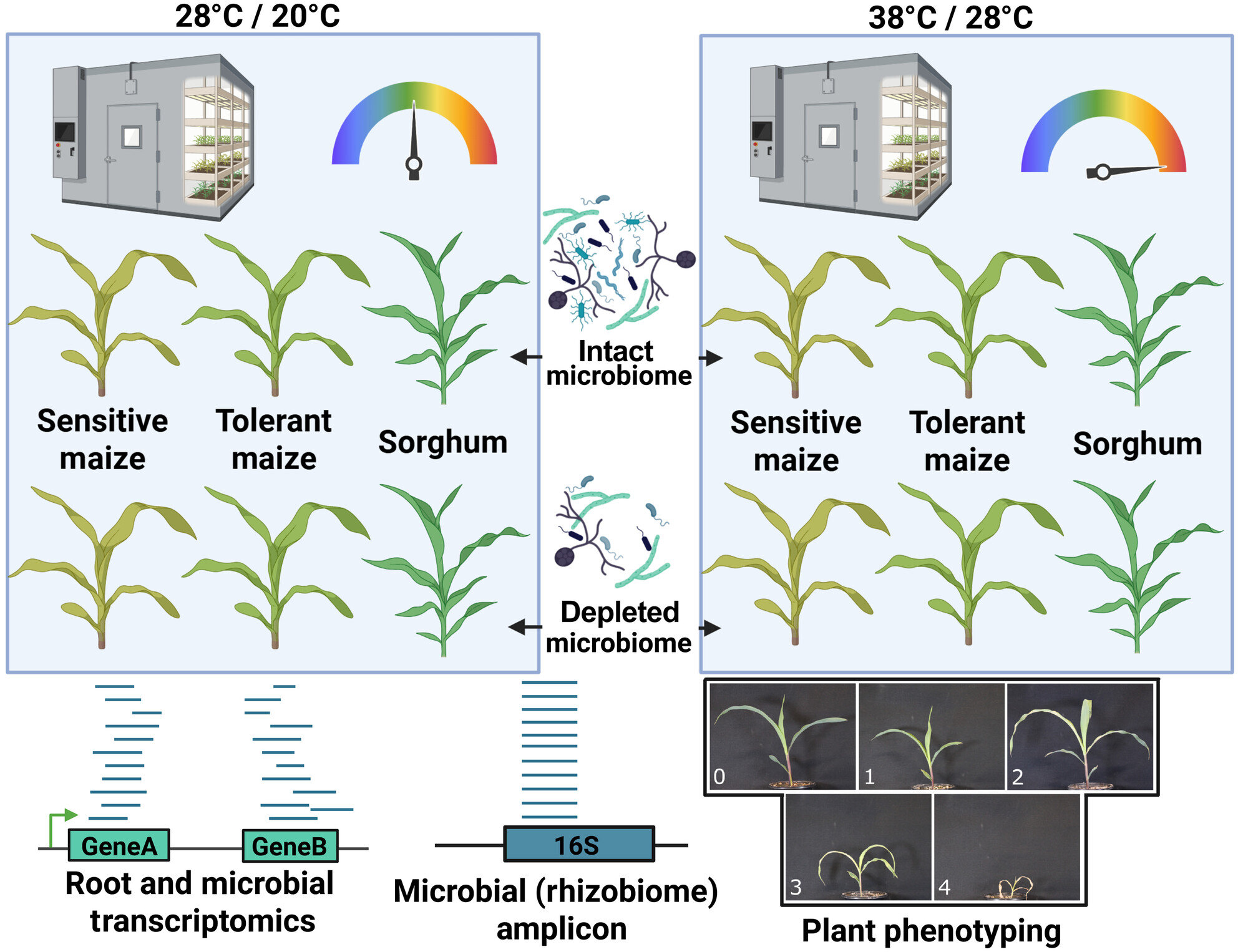
Microbes living near the roots of maize and sorghum may be involved in how the crops respond to heat stress, according to research from North Carolina State University. The finding matters because it points to the rhizosphere microbiome as a possible factor in plant responses to higher temperatures, alongside plant genetics and the surrounding environment.
The study, published in New Phytologist, examined microbial function in the rhizosphere, the zone close to the surface of plant roots. NC State said the work focused on maize and sorghum plants grown under both optimal and heat-stressed conditions.
Researchers reported that both the plants’ genotype and temperature conditions were associated with shifts in microbial function. That suggests the microbes around roots may be part of the system plants use when responding to heat, according to the NC State team.
A new frame for plant-microbe studies
Scientists often study adaptation by looking at how genes and environment interact to shape traits, a relationship known as genotype-by-environment interactions, or GxE. The NC State researchers added the rhizosphere microbiome to that model and described the expanded approach as genotype-by-environment-by-rhizosphere microbiome interactions, or GERM.
The paper is titled “Investigating GERMs: how genotype, environment, and rhizosphere microbiome interactions underlie heat response in maize and sorghum.” Its authors include Nate Korth, who NC State identified as the lead author and a postdoctoral fellow in the university’s Department of Crop and Soil Sciences.
Korth said the findings could indicate that microbes help activate plant genetic responses to environmental stress. He said the researchers think heat may signal the plant to switch on genes that would otherwise remain inactive, and that the data show a relationship between the host plant and the microbes living on it.
NC State said the work does not yet show which side of the plant-microbe relationship initiates the response. Korth described the unresolved question as a “chicken-and-egg” problem: plant genetic activity may alter the microbiome, or microbial signals may prompt the plant’s genetic response.
Potential applications remain open
The researchers said further work could examine whether the rhizosphere microbiome can be influenced to provide specific benefits to plants. Korth said that line of research could explore practical applications of the new findings.
The publication details list the paper as “Nate Korth et al, Investigating GERMs: how genotype, environment, and rhizosphere microbiome interactions underlie heat response in maize and sorghum,” published in New Phytologist in 2026 with DOI 10.1111/nph.71297.
North Carolina State University provided the research summary. Science X said the report was fact-checked, based on a peer-reviewed publication, proofread and drawn from a trusted source.
This story draws on original reporting from Phys.org.