
Quantum study links amplification to non-Hermitian geometry
Researchers say a geometric factor can determine when quantum signal growth depends only on a system’s starting and ending states.
By Priya Raghavan · Science Reporter
3 min read
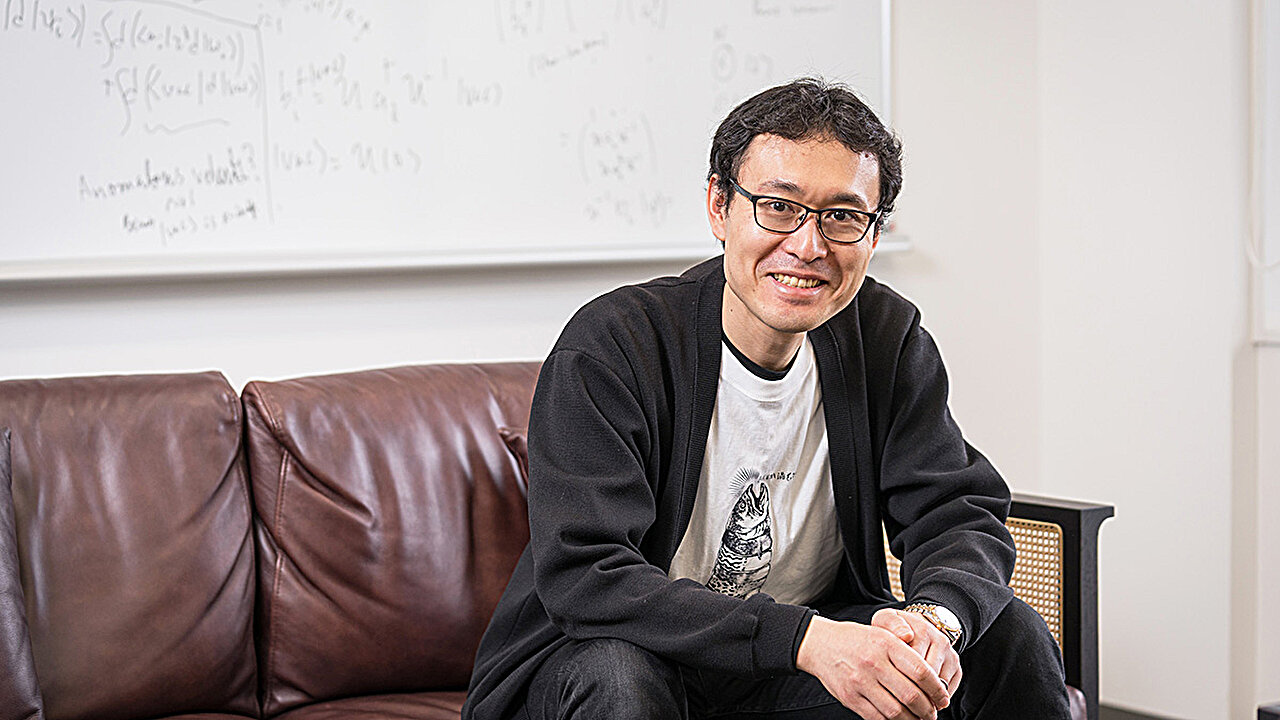
A theoretical study has identified when signal amplification in certain quantum systems can be predicted from only the beginning and ending settings. Tohoku University said the result clarifies a geometric effect that appears in non-Hermitian quantum mechanics, where systems may gain or lose energy through interaction with their surroundings.
The work by Tomoki Ozawa of Tohoku University’s Advanced Institute for Materials Research and Henning Schomerus of Lancaster University was published in Physical Review Research, according to Tohoku University. The study examined adiabatic amplification, a process in which signal intensity builds as system parameters are changed slowly.
Geometry has long been used to describe quantum states, with applications that include electrical conductivity and superconductivity, according to Tohoku University. Researchers have also been extending those tools to non-Hermitian quantum mechanics, including versions of the Berry phase, a geometric quantity used in conventional quantum theory.
Tohoku University said many geometric features specific to non-Hermitian systems remain unclear. Ozawa said the project aimed to separate effects that are genuinely tied to non-Hermitian physics from those already known in ordinary quantum mechanics.
Petermann factor tied to amplification
Ozawa and Schomerus used non-Hermitian Berry phase theory to study the geometric part of adiabatic amplification, according to the university. Their analysis found conditions under which that amplification does not depend on the path taken through parameter space.
The researchers linked the effect to the Petermann factor, which Tohoku University described as a static geometric measure of how non-orthogonal a system’s eigenstates are. The university said the study shows that this factor controls the geometric contribution to amplification under adiabatic conditions.
According to Ozawa, certain symmetries can make the amplification path-independent. In systems with reciprocity, where signals move symmetrically in opposite directions, the amplification depends only on the ratio between the Petermann factors at the initial and final points, he said.
The team tested the prediction with numerical simulations of two physically realistic models, Tohoku University said. The university said the findings could also offer a way to infer the Petermann factor experimentally by measuring amplification behavior, a quantity it described as important but difficult to access directly.
Work developed during short visit
Tohoku University said the collaboration formed during Schomerus’s visit to AIMR through the GI3 program. Ozawa said the researchers began with only a broad interest in non-Hermitian physics, then developed the project through frequent in-person discussions.
According to Ozawa, Schomerus arrived in July 2024, left in August and the paper was submitted in September. He said the experience reinforced the value of researchers working near one another and talking regularly.
The researchers plan to extend the framework to more complex parameter spaces and to non-adiabatic processes involving non-Hermitian topological phase transitions, Tohoku University said. The goal, according to the university, is a fuller account of how geometry works in quantum systems that exchange energy with their environment.
This story draws on original reporting from Phys.org.