
NASA trained Artemis II crew to make lunar geology observations
Before flying around the moon, the Artemis II astronauts practiced field geology so they could describe lunar terrain in real time.
By Lucas Ferreira · Science & Environment Writer
3 min read
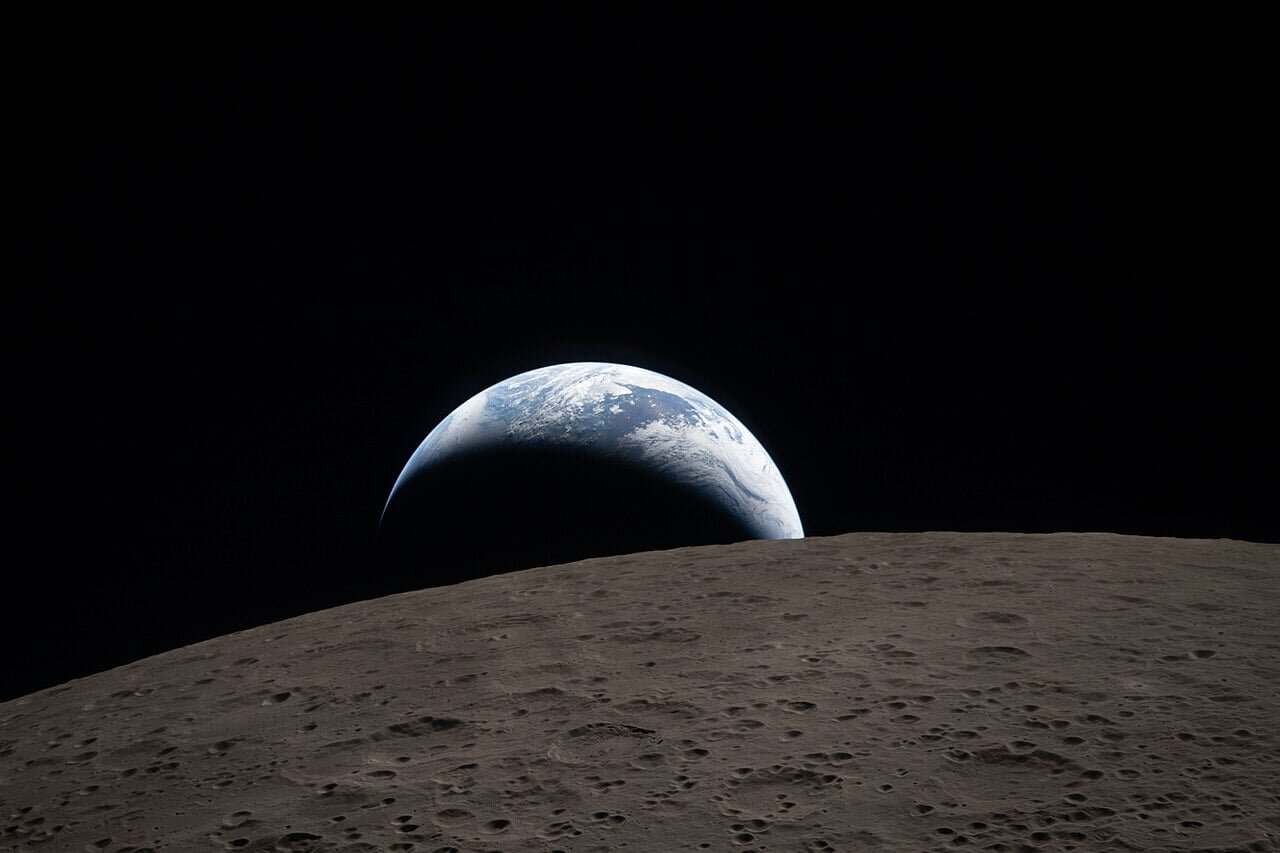
NASA prepared the Artemis II crew to act as trained lunar observers during their flight around the moon, according to Universe Today. The work mattered because the mission did not land, making the astronauts’ eyes, descriptions and photographs central to its science return.
Universe Today reported that Reid Wiseman, Victor Glover, Christina Koch and Canadian Space Agency astronaut Jeremy Hansen flew around the far side of the moon in April, becoming the first people in more than 50 years to make that trip. Artemis II launched on April 1, 2026, and lasted 10 days, looping beyond the moon before returning to Earth.
The mission was designed as a flyby rather than a landing, according to the report. From inside the spacecraft, the crew passed over far-side terrain that no human had directly viewed before and was expected to describe surface color, texture, shadows and landforms as they saw them.
Training drew on Apollo-era methods
NASA’s lunar science team built the preparation around lessons from Apollo, Universe Today reported. The astronauts spent a week studying lunar geologic history, including the roles of impacts, old volcanic activity and tectonic change in shaping the moon’s surface.
The classroom work was followed by field training on Earth. In northern Labrador, the crew examined rocks altered by violent impacts, including shattered and melted material. In Iceland’s volcanic highlands, they studied lava flows and loose ash that served as stand-ins for the moon’s broken, dusty surface, according to Universe Today.
The training also focused on language and procedure. Universe Today reported that the astronauts practiced describing what they saw, received individual coaching, completed assignments and rehearsed observing from a small spacecraft while coordinating with flight controllers on the ground.
Camera work formed another part of the preparation. The crew practiced with their equipment until camera settings became familiar, according to the report, because photographs and spoken observations had to support each other during the fast-moving lunar pass.
Observations during the flight
Universe Today said the training showed up in the astronauts’ in-flight descriptions. Hansen, while observing the Aristarchus Plateau, described brownish material from crater rays lying over darker volcanic plains and noted a faint greenish tint on the plateau itself.
The Artemis II crew also took thousands of images during the mission, according to Universe Today. NASA imagery from the flight included an Earthrise view and a close-up of Vavilov Crater on the rim of the larger Hertzsprung basin.
The crew watched the moon move across the sun and suggested names for two craters, Universe Today reported. The account framed those activities as part of a broader test of how future lunar crews can contribute to science through trained observation, not just photography.
NASA’s longer-term goal is to prepare astronauts who can make scientific judgments quickly on the lunar surface, according to Universe Today. That skill will be needed when later Artemis crews work near the moon’s south pole, where astronauts will have to distinguish scientifically useful rocks and terrain features during limited time outside the spacecraft.
This story draws on original reporting from Phys.org.