
Panini World Cup stickers surge before FIFA rights shift to Topps
The 2026 World Cup album has 980 stickers, sold-out shops and a looming handoff of FIFA collectibles rights after 2030.
By Sofia Marchetti · World Affairs Correspondent
3 min read
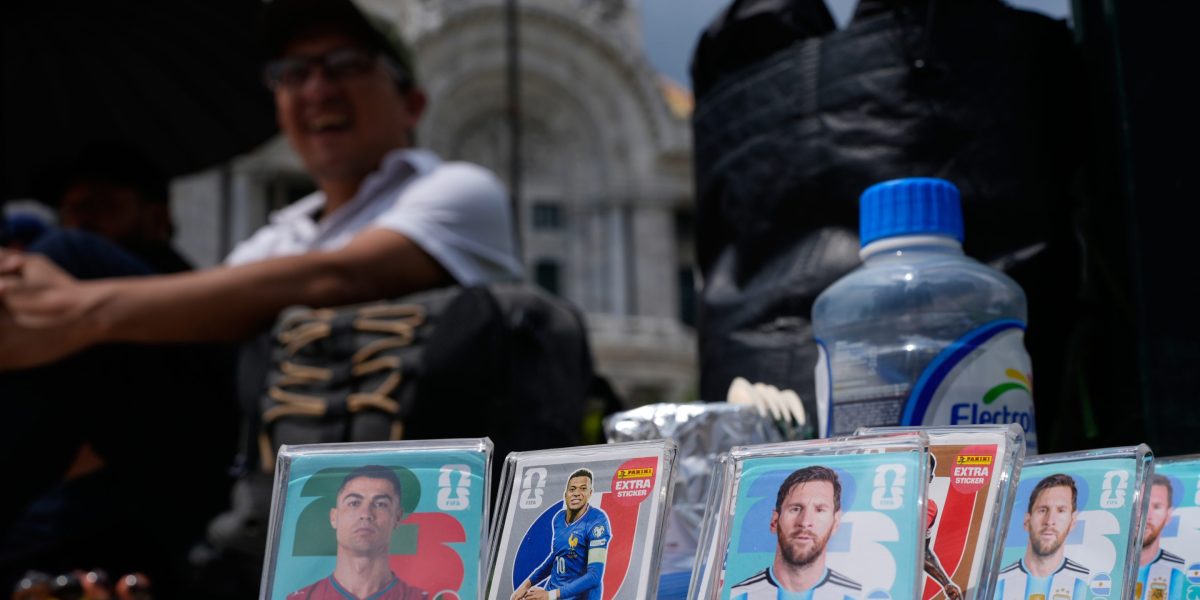
Panini’s World Cup sticker album is drawing heavy demand during the expanded 2026 tournament, with some retailers selling out and reordering stock. The rush comes as a decades-old collecting ritual faces a scheduled rights change after the 2030 World Cup, when Fanatics-owned Topps is set to take over FIFA collectibles.
The Associated Press reported that this year’s album is Panini’s biggest World Cup edition, with 980 different stickers tied in part to the tournament’s expansion to 48 teams. Jason Howarth, senior vice president of marketing and athlete relations for Panini America, told AP that Panini had made more than 2 billion packs before the tournament began; each pack contains seven stickers.
Panini’s World Cup stickers date to 1970, according to AP, when four Italian brothers paid $1,000 for the rights to produce player and team images. The format has since become a global habit: fans buy packs, fill albums and trade duplicates with other collectors.
Retailers report sellouts and reorders
Adam Martin, one of the owners of Dave and Adam’s Card World, told AP that his stores in New York and Europe sold far more stickers than expected. Martin said the company believed an order placed months earlier would cover demand, but it had to reorder twice.
Martin also described taking boxes of stickers and albums to a Formula 1 race in May, intending to share them with friends’ children. He told AP that many people at the event asked where they could get them, a sign that the product reaches beyond traditional sports-card collectors.
The album remains relatively accessible by collectibles standards. AP reported that packs cost about $2, or 1.50 euros, though individual older stickers can be worth far more. Early World Cup stickers of Lionel Messi and Cristiano Ronaldo, for example, can sell for hundreds of dollars, according to AP.
Scarce variants add a high-end market
Panini added another layer to the market during the Qatar World Cup, when it began producing rarer versions with special borders, AP reported. Red, purple and orange-bordered stickers have become sought after, while black-bordered one-of-one stickers depict a single unique copy of certain players.
Some industry experts believe a black-bordered Messi sticker could bring $200,000 at auction, according to AP. Howarth told AP that Panini has been watching social media to see who finds the black one-of-one stickers of players such as Neymar, Messi and Ronaldo.
The chase sits alongside the older trading culture. AP reported that shops hold swap meets, Panini has run a trading truck at Rockefeller Center in New York, and about 8,000 collectors recently gathered at a stadium in Santiago, Chile, to trade stickers.
Sammi Kaewsawang, a content creator from Long Beach, California, told AP he spent about 7 hours and 47 minutes placing all 980 stickers into an album. He said trading stickers connected him with fans of different ages and became as memorable as completing the book.
A rights change after 2030
Panini’s run is not ending immediately. AP reported that the company will still have the 2030 World Cup in Morocco, Portugal and Spain, but FIFA collectibles rights will then move to Fanatics’ Topps brand.
Matt Blazey, an England-based collectibles creator, told AP that many collectors outside the United States see Panini as part of childhood and view the loss of the license as painful. Martin told AP he expects Fanatics to make strong World Cup products, while adding that Panini’s cultural reach may be difficult to match.
This story draws on original reporting from Fortune.