
Insect borings change reading of Spain’s Lo Hueco dinosaur site
A study says marks in titanosaur bones and armor show carcasses lay exposed before burial, challenging an earlier interpretation of the site.
By Lucas Ferreira · Science & Environment Writer
3 min read
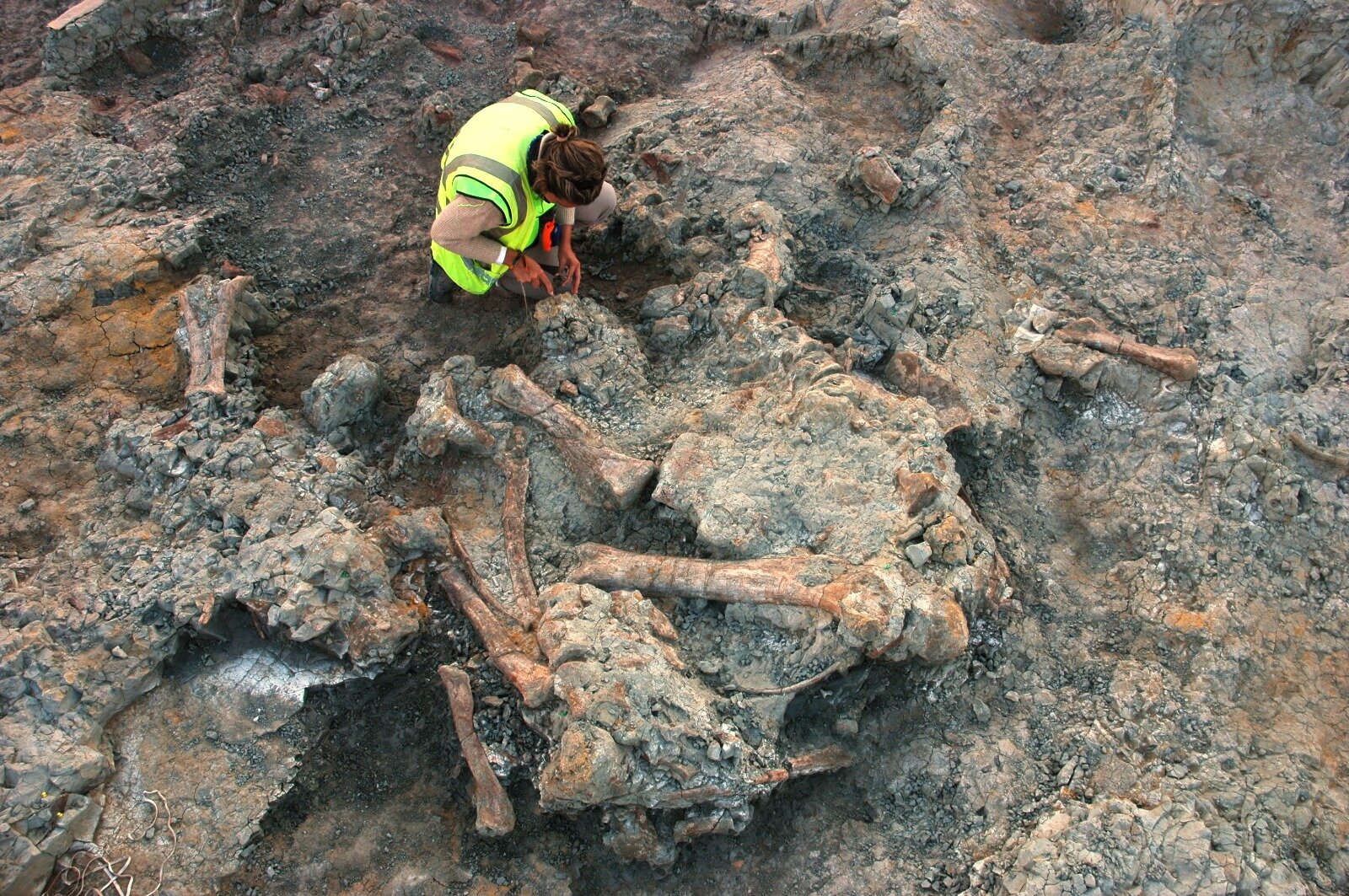
Marks bored into 70-million-year-old titanosaur fossils from Spain’s Lo Hueco site point to a longer interval between death and burial than researchers had thought. The University of Barcelona said the finding changes how paleontologists interpret one of Europe’s major Late Cretaceous dinosaur deposits.
The study, published in Earth-Science Reviews, identified bioerosion structures in titanosaur bones and, for the first time at Lo Hueco, in pieces of dermal armor known as osteoderms. Bioerosion structures are traces left by organisms after an animal dies, and the team links the marks to insect activity on exposed carcasses.
The work was led by Zain Belaústegui of the University of Barcelona’s Faculty of Earth Sciences and Biodiversity Research Institute, according to the university. Researchers from the National University of Distance Education and forensic entomologists from the University of Alcalá also took part.
Evidence from bones and armor
Lo Hueco, in Fuentes, Cuenca, preserves isolated bones as well as relatively complete skeletons of large titanosaur sauropods, the University of Barcelona said. Previous interpretations had suggested rapid burial of the dinosaur remains.
The new analysis points the other way. Belaústegui said studying insect damage in different skeletal tissues, including bones, horns and osteoderms, can clarify the taphonomic history of remains, whether they are isolated pieces or articulated skeletons.
According to the study, the abundance of borings indicates that some carcasses stayed accessible long enough for scavenging and decomposer insects to excavate the hard tissues. Belaústegui said the evidence rules out a rapid-burial model for the main fossil-bearing levels known as G1 and G2.
The researchers identified the marks as belonging to the ichnogenus Cubiculum, the University of Barcelona said. That group includes hemispherical or pouch-shaped boreholes that have been tied, through modern comparisons, to the activity of dermestid beetles.
Modern beetles as a guide
The team compared the fossil traces with structures made by larvae of the modern beetle Dermestes frischii. Experiments cited by the researchers show similar borings can form in at least 240 hours, with longer formation times possible in natural conditions.
Belaústegui said such insect traces can reveal how long a carcass was exposed before sediment covered it. He also said the more taphonomic information researchers recover, the more they can infer about the environmental setting in which the fossils accumulated.
The University of Barcelona said the findings support a revised reconstruction of Lo Hueco’s Late Cretaceous ecology and sedimentary conditions. Rather than a deposit formed only by rapid entombment, the site now appears to record a period in which large vertebrate carcasses could support scavengers, necrophages and saprophages before final burial.
The paper also reviewed more than 140 studies on insect bioerosion in bone, covering examples from the Middle Triassic to the Holocene. According to the University of Barcelona, only one of those references concerned the Iberian Peninsula, underscoring the value of the Lo Hueco evidence for future work on continental fossil sites.
This story draws on original reporting from Phys.org.