
Q-2DMS mass spectrometry reaches benchtop instruments
Warwick and Verdel report 2DMS on a commercial Q-TOF, making complex mixture analysis possible without specialist hardware.
By Lucas Ferreira · Science & Environment Writer
3 min read
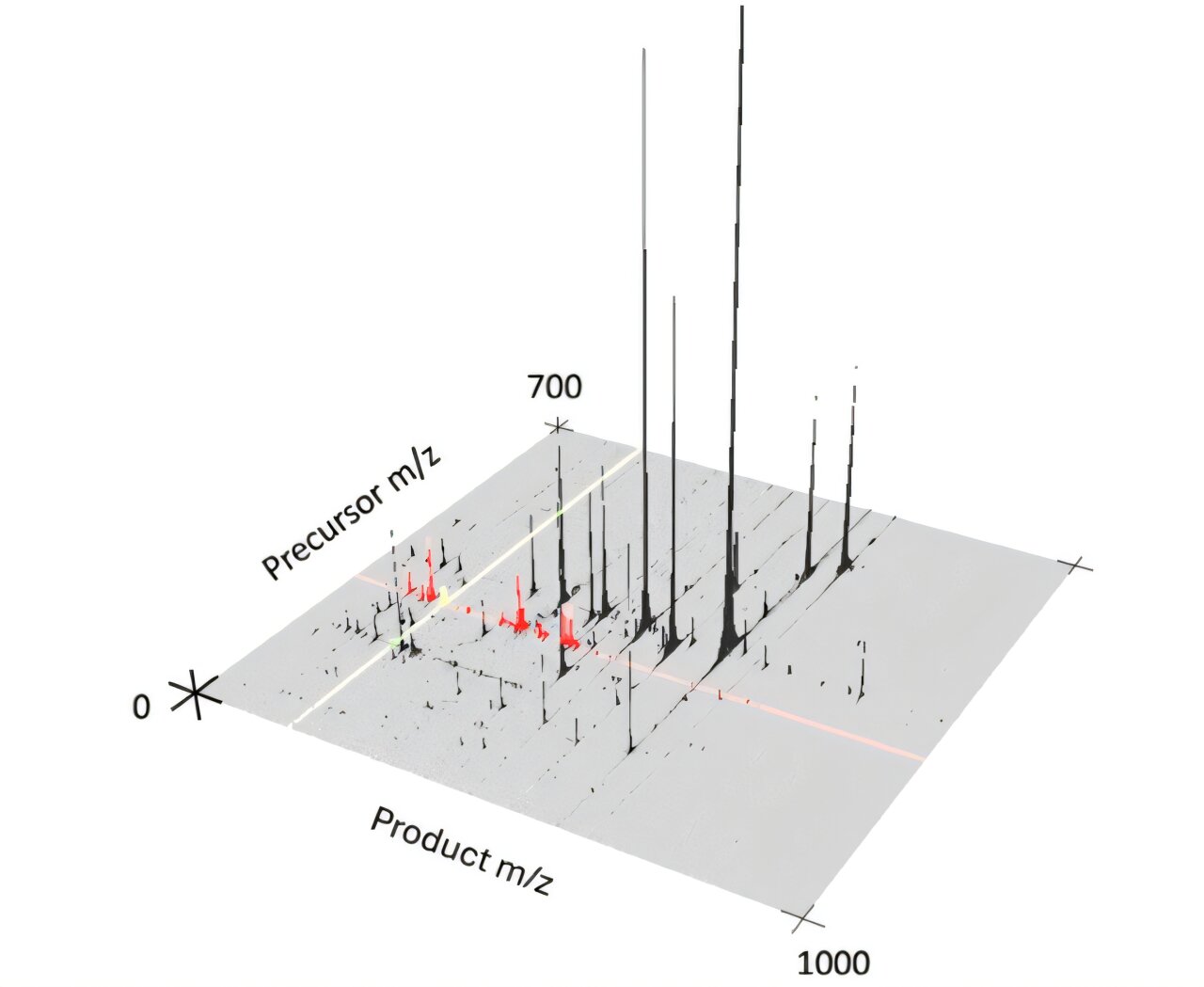
Researchers at the University of Warwick and Verdel Instruments say they have demonstrated Q-2DMS mass spectrometry on a benchtop instrument, a step that could bring a specialist analytical technique into routine lab use. The work matters because two-dimensional mass spectrometry can extract more information from complex samples without relying on expensive, dedicated hardware.
The team reported the result in a peer-reviewed paper in Analytical Chemistry. According to the University of Warwick, the study is the first demonstration of two-dimensional mass spectrometry on a commercially available quadrupole time-of-flight, or Q-TOF, analyzer using an upgrade kit.
Mass spectrometry is used to identify and study molecules by measuring mass-to-charge ratios. In many workflows, laboratories first reduce the complexity of a sample through chromatography, selective acquisition methods or data-processing steps, but Warwick said those steps can discard information before a measurement is interpreted.
What is Q-2DMS mass spectrometry?
Q-2DMS is the name the Warwick and Verdel team gives to a two-dimensional mass spectrometry method adapted for a Q-TOF instrument. The method assigns each analyte a frequency signature tied to its mass-to-charge ratio, so when molecules fragment during analysis, mathematical decoding can match fragment ions back to their parent analytes.
That process turns overlapping signals from a mixture into separate mass spectra, according to the researchers. Warwick said the approach can generate high-resolution tandem mass spectrometry data from complex mixtures without chromatographic separation or mass filtering.
The paper reports that the method preserved up to ten times more usable spectral information when the team analyzed closely related compounds or compounds with nearly the same mass. The researchers describe that gain as important because conventional filtering and separation can remove signals that may later prove useful.
Tim Wilson, chief executive of Verdel Instruments, said the field has recognized the value of 2DMS for years, but access has been limited by the need for specialist equipment. He said Verdel’s technology allows 2DMS to run on widely available benchtop instruments.
Warwick said the technique could be used in several areas where laboratories need to identify unexpected or difficult-to-separate compounds:
- Health care, including the faster identification of unexpected drug metabolites.
- Environmental safety, including direct detection of emerging contaminants such as PFAS without pre-separation.
- Drug control, including rapid characterization of new synthetic drugs and designer compounds.
- Drug development, including the discovery of unanticipated reaction products and impurities.
Shum Prakash, business development manager at Warwick Innovations, said the Q-2DMS system gives researchers high-resolution readouts and a complete record of each sample, allowing later reanalysis of data even if the original sample has degraded.
The paper, titled “Chromatography-Free Analysis of Mixtures Using a Two-Dimensional Mass Spectrometry (2DMS)-Enabled Quadrupole Time-of-Flight (QToF) Analyzer,” lists Steven Wright and colleagues as authors. Peter O’Connor, a University of Warwick chemistry professor and senior author, said broader access to the method could let scientists ask questions that were previously out of reach.
This story draws on original reporting from Phys.org.