
Plastid ion channels link calcium signals to plant defense, LMU study finds
LMU researchers report that PEC1/2 channels help chloroplasts strengthen defenses after repeat stress in Arabidopsis.
By Tom Brennan · Health & Medicine Correspondent
2 min read
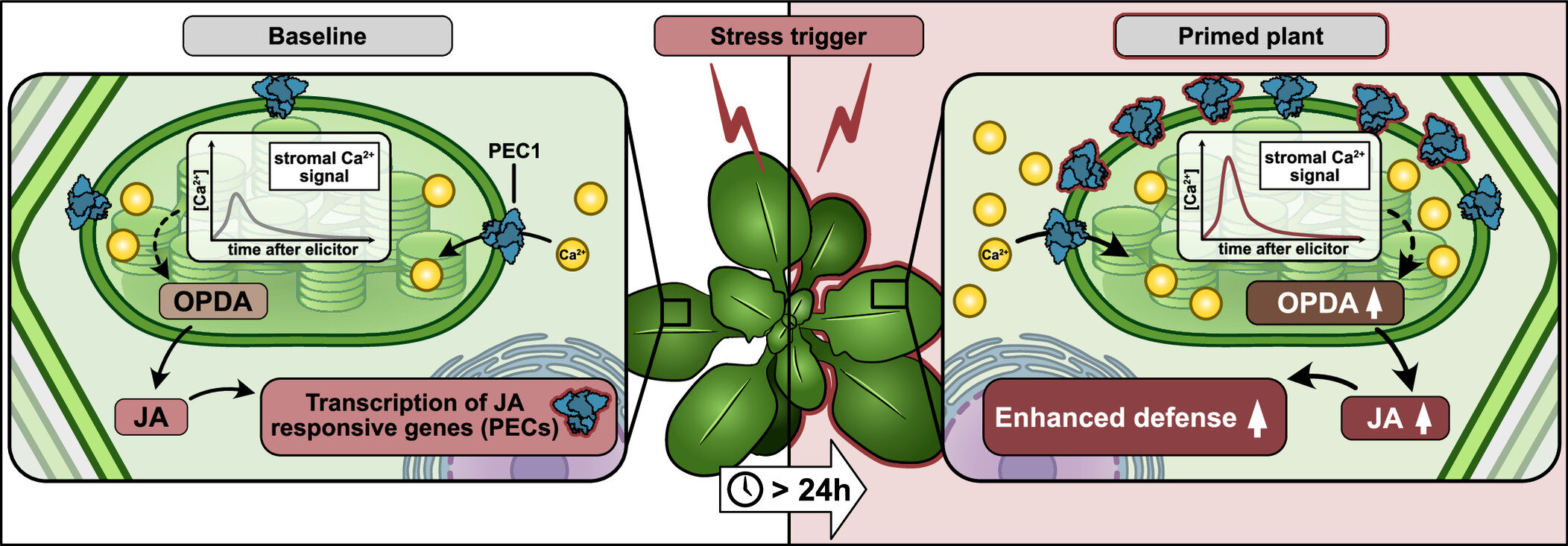
Plastid ion channels plant stress research from Ludwig Maximilian University of Munich has identified PEC1 and PEC2 as links between rapid calcium signals and jasmonic-acid-driven defenses in plants. The finding matters because it outlines how a first attack may prepare a plant for a stronger response to later stress, although the experiments were conducted in the model plant Arabidopsis thaliana.
The study, led by Hans-Henning Kunz and Christian Grimm and published in Proceedings of the National Academy of Sciences, examined channels in the envelope surrounding chloroplasts. Chloroplasts are the cell structures best known for photosynthesis, but they also take part in signaling during attacks by herbivores and pathogens, according to LMU.
How do plastid ion channels help plants respond to stress?
Plants generate calcium waves within seconds of an injury. At the same time, chloroplasts begin making jasmonic acid, a plant hormone that leads through several steps to activation of defense genes in the cell nucleus, LMU said.
The researchers reported that plastid envelope cation channels, called PECs, allow rapid movement of positively charged ions into chloroplasts. Their results place the channels between the early calcium signal and jasmonic-acid-mediated defense, addressing a mechanism that had been unclear.
The team used electrophysiological measurements on isolated chloroplasts from Arabidopsis to record the ion movements directly. LMU said this was the first direct recording of the rapid cation fluxes in this experimental setting.
What happens after a second stress event?
Jasmonic-acid synthesis triggered by herbivores or pathogens increased production of PEC channels within hours, the researchers reported. PEC levels then remained raised for several days.
That timing supports a form of stress priming: with persistent or recurring stress, the higher channel levels can produce a stronger calcium signal in the chloroplast. The study associates that signal with further jasmonic-acid synthesis and a faster, longer-lasting defensive response.
In the reported experiments, the researchers found increased resistance to the fungus Botrytis cinerea. The result is limited to the study system and does not establish a treatment, breeding strategy, yield benefit or field-scale effect in crop plants.
Why the result adds to a wider research gap
Ion transport proteins in chloroplast envelope and thylakoid membranes help maintain ion balance, a 2024 review in New Phytologist said. That review also concluded that researchers still lacked a complete system-wide account of ion transport in chloroplasts.
The PEC1/2 results add a specific defense-signaling role to that unfinished picture. Further work would be needed to determine whether the mechanism operates in crops or can be used to improve resistance outside controlled research conditions.
This story draws on original reporting from Phys.org.