
Oil beetle larvae bees study finds flower scent trick
Researchers say European oil beetle larvae make floral odors that lure wild bees, helping the parasites reach bee nests.
By Lucas Ferreira · Science & Environment Writer
3 min read
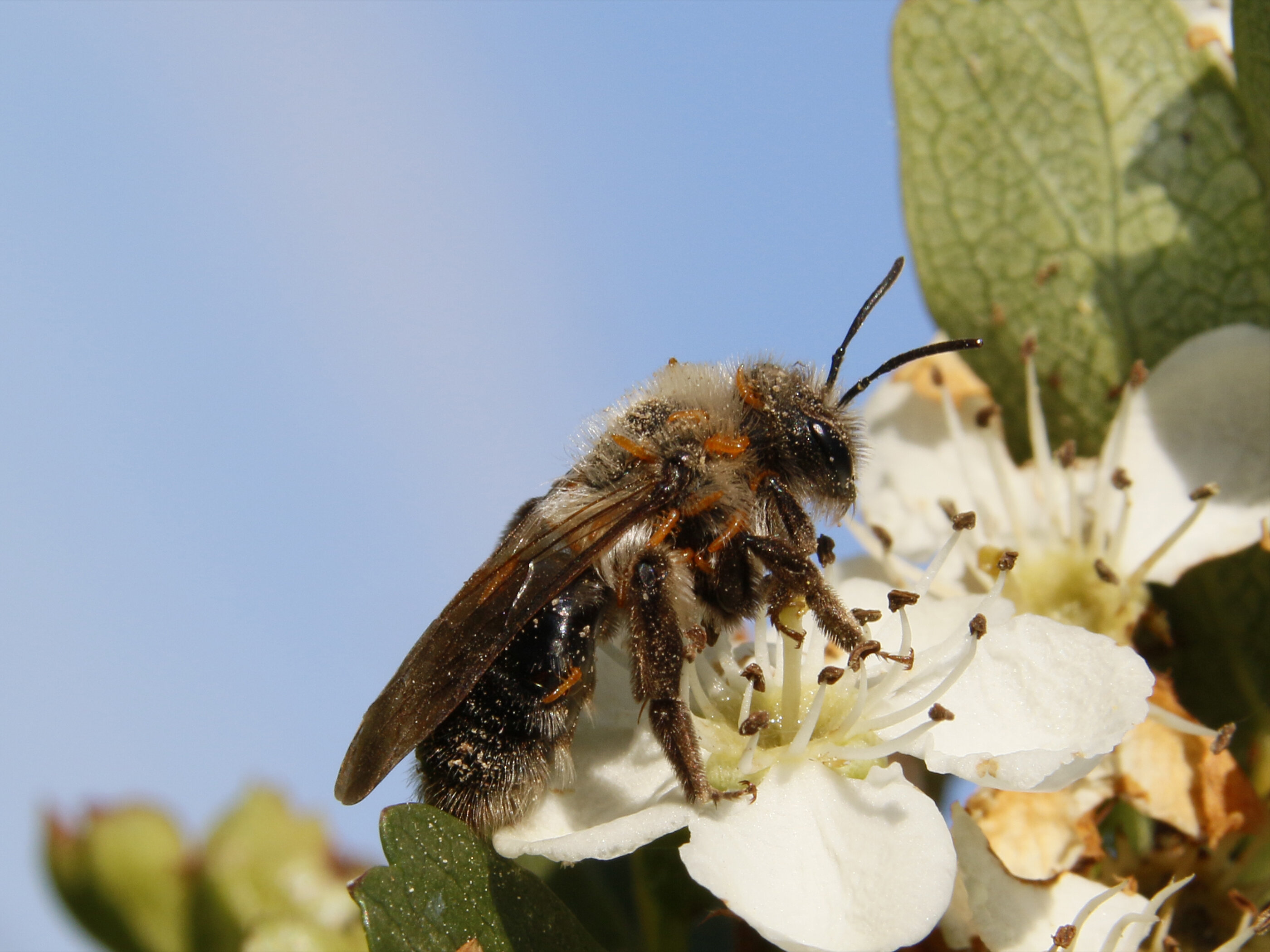
Oil beetle larvae bees encounter in spring may be following a chemical trap, according to researchers in Germany who found that European oil beetle larvae imitate flower scents to draw in wild bees. The study matters because it identifies what the authors describe as the first documented case of an animal producing plant-like odors to manipulate another animal.
The work, by researchers at the Max Planck Institute for Chemical Ecology and Friedrich Schiller University in Jena, was published in the Proceedings of the National Academy of Sciences. The team studied larvae of the European oil beetle, Meloe proscarabaeus, a parasitic blister beetle whose young must reach solitary bee nests to survive.
How do oil beetle larvae trick bees?
The larvae release a mixture of volatile chemicals that resembles the scent of flowers, the researchers reported. Those compounds are monoterpenoids, a class of fragrances emitted by many flowering plants, including blossoms such as plum and cherry that bloom when the larvae are waiting for bees.
Oil beetle larvae gather on plants, including blades of grass, where they can be picked up by visiting bees. Once carried into a nest, the larvae feed on the bee’s eggs and stored food meant for the bee’s offspring, according to the Max Planck Society.
The life cycle is risky for the beetles. The Max Planck Society said individual larvae have a very low chance of survival, which is why female oil beetles produce several thousand eggs.
What did the experiments show?
The researchers collected oil beetles near Jena in early spring, allowed them to mate and lay eggs, and then analyzed the chemicals released after the larvae hatched about three weeks later. Their chemical tests found 17 different monoterpenoids emitted by the larvae.
In behavioral tests using an olfactometer, bees chose the odor from larvae over control samples even when they could not see the larvae, the researchers reported. That result showed the attraction depended mainly on scent rather than appearance.
The team also tested isolated monoterpenoids outdoors by applying them to cotton swabs. Andrena sand bees often flew toward the swab tips, which the researchers said showed that the floral chemicals alone could attract possible hosts.
Do the larvae borrow the scent from plants?
The study found that the larvae make the scent compounds themselves. The researchers said they did not detect the flower-like monoterpenoids in beetle eggs or adult beetles, ruling out the simplest explanations that the chemicals came from the mother or were already present before hatching.
Genetic analyses pointed to two cytochrome P450 enzymes in the larvae, CYP347BT1 and CYP345BZ1, that help form precursors for the floral odor compounds. The authors said those enzymes are central to the larvae’s chemical deception.
The project followed earlier work on a related North American oil beetle, Meloe franciscanus, which attracts a specific host bee by imitating bee sex pheromones. Tobias Köllner, a study leader at Max Planck, said the European species appeared to use a different strategy because it exploits flower-like odors that can interest a broader set of wild bees.
Lead author Ryan Alam said the finding broadens scientists’ understanding of mimicry by showing a parasite using plant-style chemical signals to manipulate other organisms. Sarah O’Connor, who heads the Max Planck department involved in the work, said the team next plans to study the full biosynthetic pathway and related beetle species to see how widespread the strategy is and how it evolved.
This story draws on original reporting from Phys.org.