
Nitrate pollution cleanup study questions push to make ammonia
Researchers say many nitrate-to-ammonia studies test lab conditions that may not match real cleanup needs, after reviewing 411 papers.
By Lucas Ferreira · Science & Environment Writer
3 min read
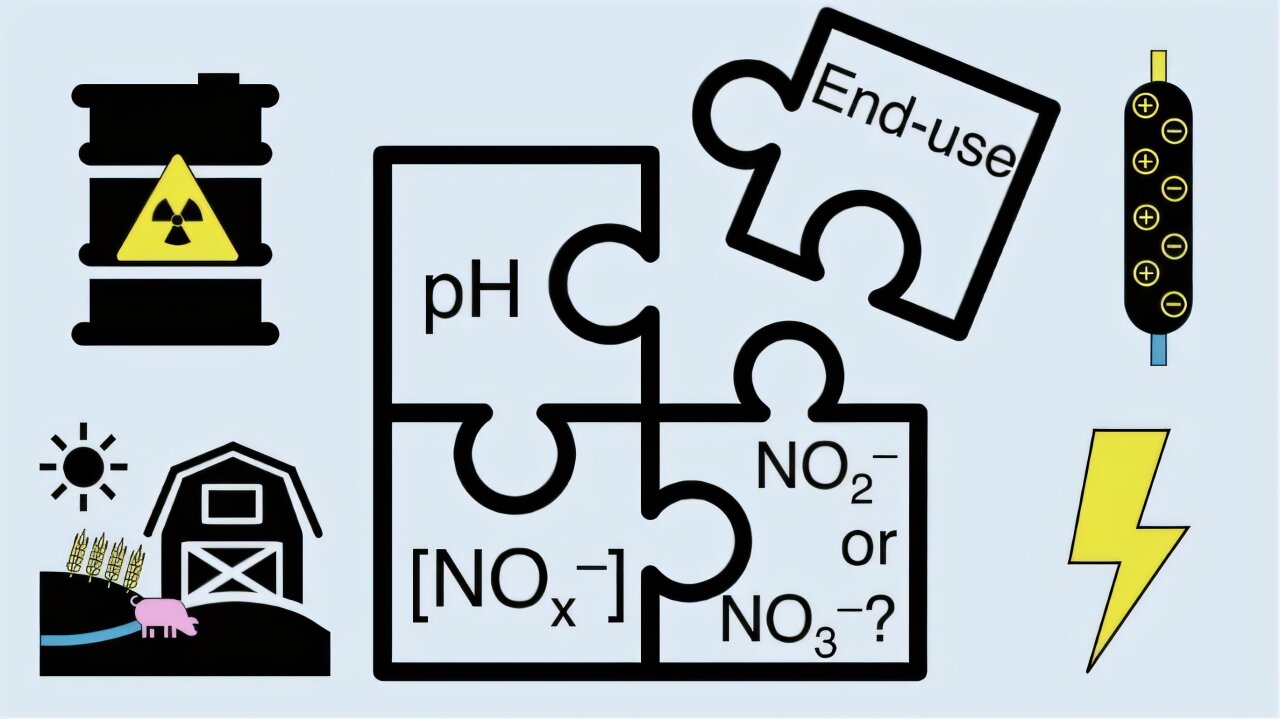
A new critique of nitrate pollution cleanup research argues that scientists should not assume polluted water must yield a marketable product to justify treatment. Researchers from the ARC Centre of Excellence for Carbon Science and Innovation say the value of cleaner waterways can be enough, even when nitrate is not turned into ammonia.
The perspective, led by University of Sydney doctoral candidate Alexander Frisina and published in Communications Chemistry, examined how researchers study the conversion of nitrate and nitrite into ammonia. The team reviewed 411 papers and found that about 60% used experimental conditions the authors considered of limited relevance to practical cleanup uses.
Nitrate pollution is tied to nitrogen fertilizers that support crop production but can wash from farms into rivers, streams and groundwater. The ARC Centre said that runoff can contribute to environmental problems, including harmful algal blooms.
Does nitrate pollution cleanup need to make ammonia?
Much of the research field has focused on electrochemical reduction, a process that uses electricity and catalysts to convert nitrogen oxyanions such as nitrate and nitrite into other nitrogen compounds. Ammonia attracts interest because it is used in products including fertilizer and drinking-water disinfectants.
Frisina said he noticed a recurring argument while reading hundreds of papers for his doctoral work: polluted nitrate could be captured and changed into ammonia, producing something useful while treating water. “It kind of felt circular,” he said, describing papers that repeated and cited the same premise.
The researchers do not argue that the studies were badly done. According to the perspective, many experiments were useful for understanding catalysts and reaction chemistry, but the team says applied research should start with a real use case before selecting laboratory conditions.
Co-author Dr. Alexander Yuen, a COE-CSI chief investigator, said the distinction matters because fundamental and applied research serve different purposes. “We’re not saying that one is better than the other,” Yuen said. “Fundamental knowledge takes longer to translate into useful real-world things, but that doesn’t mean you shouldn’t do it.”
Why fertilizer runoff complicates the ammonia case
The paper uses agriculture to show why the economic logic may be weaker than it first appears. Fertilizer nitrogen can become nitrate and move into waterways; researchers have proposed recovering it and converting it into ammonia for use in fertilizer production.
Frisina noted that plants already use nitrate as a nutrient. If recovered ammonia is later turned back into nitrate in the fertilizer cycle, the extra chemical step may not be needed, he said.
The researchers also argue that extracting ammonia from very dilute nitrate pollution would likely require more processing and cost more than producing or buying fertilizer. In that setting, they say reducing wasteful fertilizer use could be cheaper for farmers and better for the environment.
When ammonia production may still make sense
The authors say ammonia recovery could be useful in specific cases, including water treatment, where ammonia has properties relevant to disinfection. Their broader point is that cleanup technologies should be judged against the problem they are meant to solve, rather than by whether they create a saleable chemical.
Yuen said converting nitrogen pollution into inert nitrogen gas may also be a reasonable outcome in many cases. “The nitrogen that comes out of that process is inert,” he said. “You don’t have to worry about it anymore.”
The team does not expect researchers to abandon existing catalyst projects. According to the paper, the goal is to push future work to begin with realistic water chemistry and a clear end use, so laboratory advances have a better chance of becoming useful cleanup tools.
This story draws on original reporting from Phys.org.