
NASA CADRE rover mission will test lunar teams that make their own decisions
NASA plans to send three rovers to the Moon in late 2026 to test whether they can map terrain and adapt without real-time control from Earth.
By Tom Brennan · Health & Medicine Correspondent
3 min read
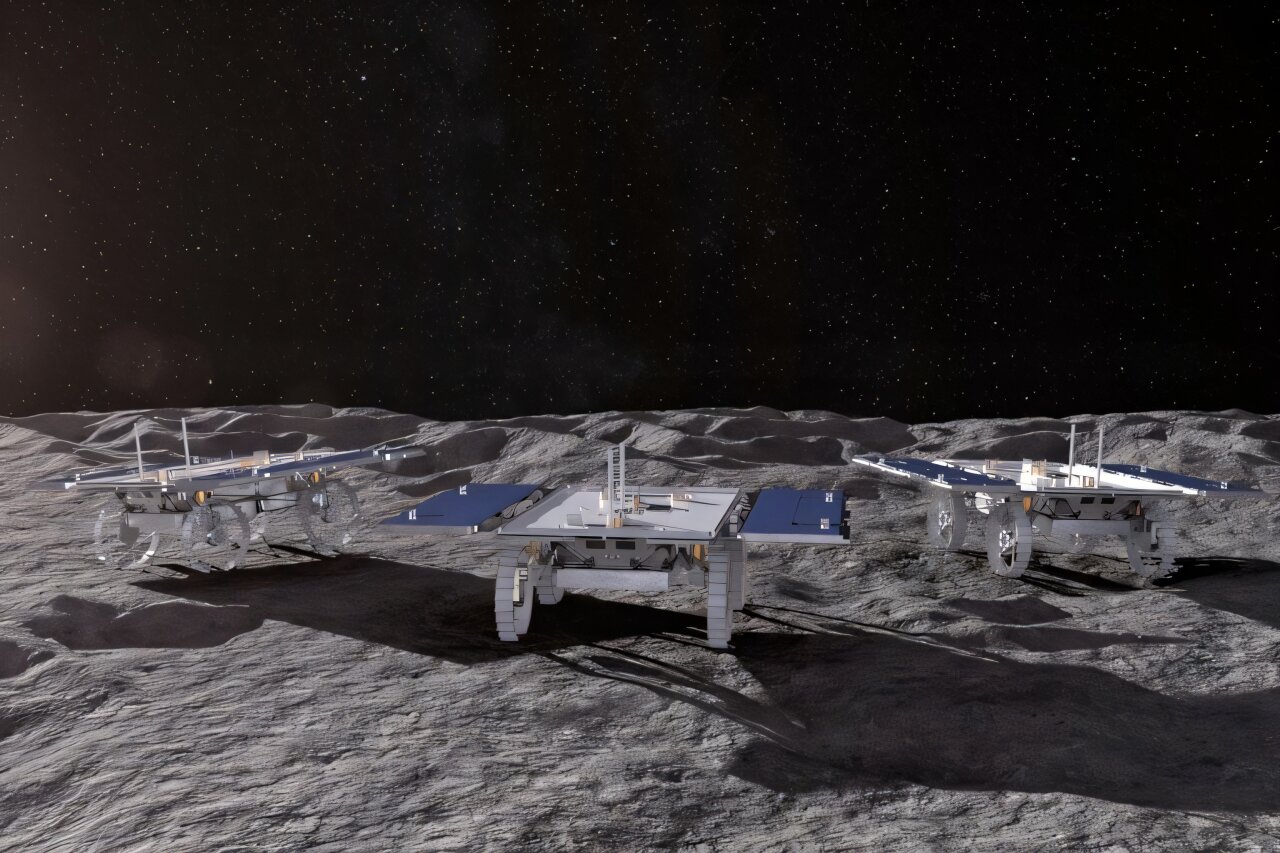
NASA’s planned CADRE rover mission will send three small vehicles to the Moon to test whether they can explore as a coordinated, self-directed group. The experiment matters because rovers working near the lunar poles may lose contact with Earth and cannot afford to burn limited battery power while awaiting instructions, according to The Conversation.
The Cooperative Autonomous Distributed Robotic Exploration mission is scheduled to travel on the IM-3 launch planned for late 2026 and land on the Earth-facing side of the Moon, The Conversation reports. The three rovers are intended to map an area for about two weeks without controllers directing each movement from Earth.
What will NASA’s CADRE rover mission test?
CADRE is designed to test onboard cooperation rather than human-like reasoning. The vehicles are meant to choose a leader, divide work among themselves and revise the group plan if one rover’s charge runs low, according to The Conversation.
If it works as planned, the mission would be NASA’s first operation of multiple rovers beyond Earth as a single autonomous system, the publication says. Engineers at NASA’s Jet Propulsion Laboratory have already conducted ground tests in which the CADRE rovers replanned routes together after encountering unexpected obstacles, according to The Conversation.
Why remote control is difficult at the lunar South Pole
Future work near the Moon’s south pole could put rovers in terrain where crater rims block their line of sight to relay satellites. A rover descending into a shadowed crater could lose communications for the duration of its trip, The Conversation reports.
That interruption is also an energy problem. Solar-powered rovers can recharge only in sunlight; lunar night lasts roughly two Earth weeks, and polar areas have only limited locations that remain illuminated for long periods. A parked rover continues to draw from its battery even when it is waiting for new commands, according to The Conversation.
Autonomy could allow a team to keep working during a blackout by selecting reachable tasks and reallocating duties around its remaining power. A group also reduces the risk that one stuck rover or failed instrument ends the entire exploration effort, The Conversation says.
What challenges will autonomous rovers still face?
CADRE will not settle whether robots can support months-long polar operations. The supplied reporting says no robotic team has yet operated for that long, under those conditions and so far from assistance.
South-pole missions must also handle abrupt shifts from glare to deep shadow, navigate without a GPS constellation, and operate in permanently shadowed regions where temperatures can fall below minus 274 degrees Fahrenheit, according to The Conversation. Electrically charged, jagged lunar dust can wear moving parts and coat camera lenses used for navigation; keeping dust out of rover mechanisms remains an unsolved problem, the report says.
CADRE’s two-week demonstration is therefore a test of coordinated decision-making under constraints, rather than proof that sustained lunar operations are ready.
This story draws on original reporting from Phys.org.