
Microwave frying french fries could cut oil while keeping crunch
Illinois researchers say combining microwave and conventional frying may make fries cook faster and absorb less oil.
By Tom Brennan · Health & Medicine Correspondent
3 min read
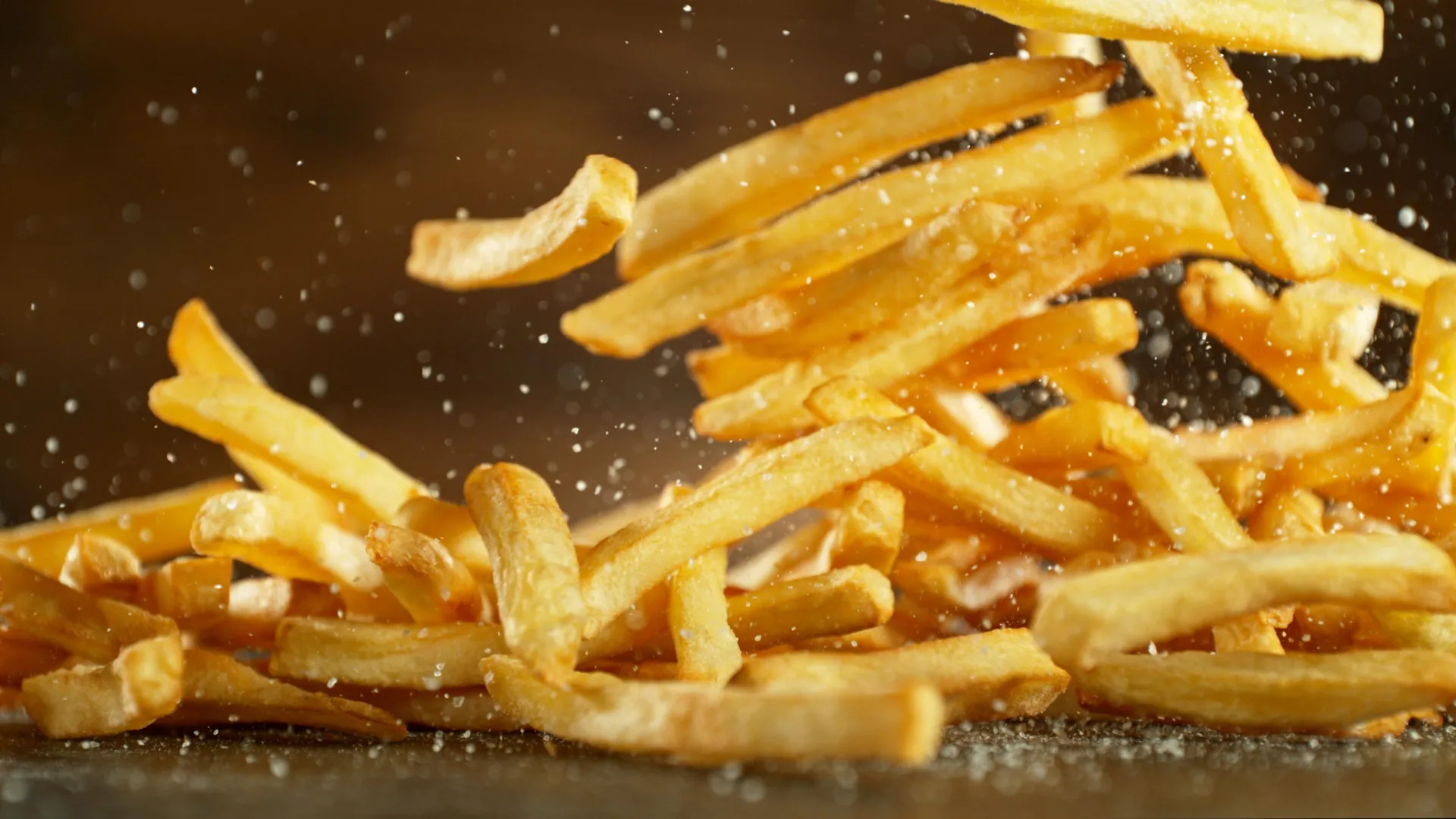
Microwave frying french fries could reduce how much oil they absorb while preserving the crisp texture people expect, according to University of Illinois Urbana-Champaign researchers. The work matters because fried potatoes can take up substantial oil during cooking, adding fat and calories to a food already linked in high-fat diets to health concerns such as obesity and hypertension.
Pawan Singh Takhar, a food engineering professor in the university’s Department of Food Science and Human Nutrition, and doctoral student Yash Shah reported the findings in two studies on how french fries change during microwave-assisted frying. The research examined whether microwave energy can limit oil uptake without leaving fries soft.
The team’s answer was a hybrid method: use microwave heating to drive water out faster and help keep oil from entering, then rely on conventional frying to create browning and crunch. The University of Illinois College of Agricultural, Consumer and Environmental Sciences said the approach could also shorten cooking time.
How does microwave frying make french fries absorb less oil?
In conventional frying, potatoes heat mainly from the outside inward. As water inside the potato turns to vapor and escapes, pores open; when pressure inside the food drops, oil can be pulled into those spaces.
Microwave energy heats water molecules throughout the potato more directly. According to Takhar, that produces more vapor inside the fry and shifts internal pressure toward the positive side, making it harder for oil to move in.
The researchers found that up to 90% of frying happens while the food is under negative pressure, a condition that favors oil absorption. Their work suggests that keeping pressure positive for longer could reduce the amount of oil a fry takes up.
What the researchers tested
For one study, the Illinois team worked with researchers at Washington State University, which had developed a microwave fryer that operates at 2.45 gigahertz and 5.8 gigahertz. The lower frequency is similar to that used in a household microwave oven.
The team prepared potato strips by rinsing, peeling, cutting, blanching and salting them, then frying them in soybean oil heated to 180 degrees Celsius. During and after frying, the researchers measured temperature, pressure, volume, texture, moisture and oil content.
The group also used mathematical modeling to study changes that are difficult to measure directly throughout the cooking process. The models compared microwave frying at both frequencies with conventional frying.
Why a hybrid fryer may be needed
Microwave frying moved moisture out of the potatoes more quickly, reduced cooking time and lowered oil absorption, according to the studies. Used by itself, however, microwave frying did not produce the desired texture; the fries tended to stay soft.
Takhar’s team therefore proposed combining microwave and conventional heating in one system. In that setup, the conventional fryer would provide the surface texture and flavor associated with fried foods, while microwave energy would reduce oil intake and speed cooking.
The researchers said continuous fryers used in large food-processing plants could be adapted with microwave generators. They also said the components are widely available and relatively inexpensive, which could make commercial use practical.
The studies were published in the Journal of Food Science and Current Research in Food Science. The work was funded by the USDA National Institute of Food and Agriculture.
This story draws on original reporting from ScienceDaily.