
Mating changes how cholesterol affects male fruit fly lifespan
A PNAS study found male fruit flies need dietary cholesterol for reproduction, but may live longer without it when they do not mate.
By Priya Raghavan · Science Reporter
3 min read
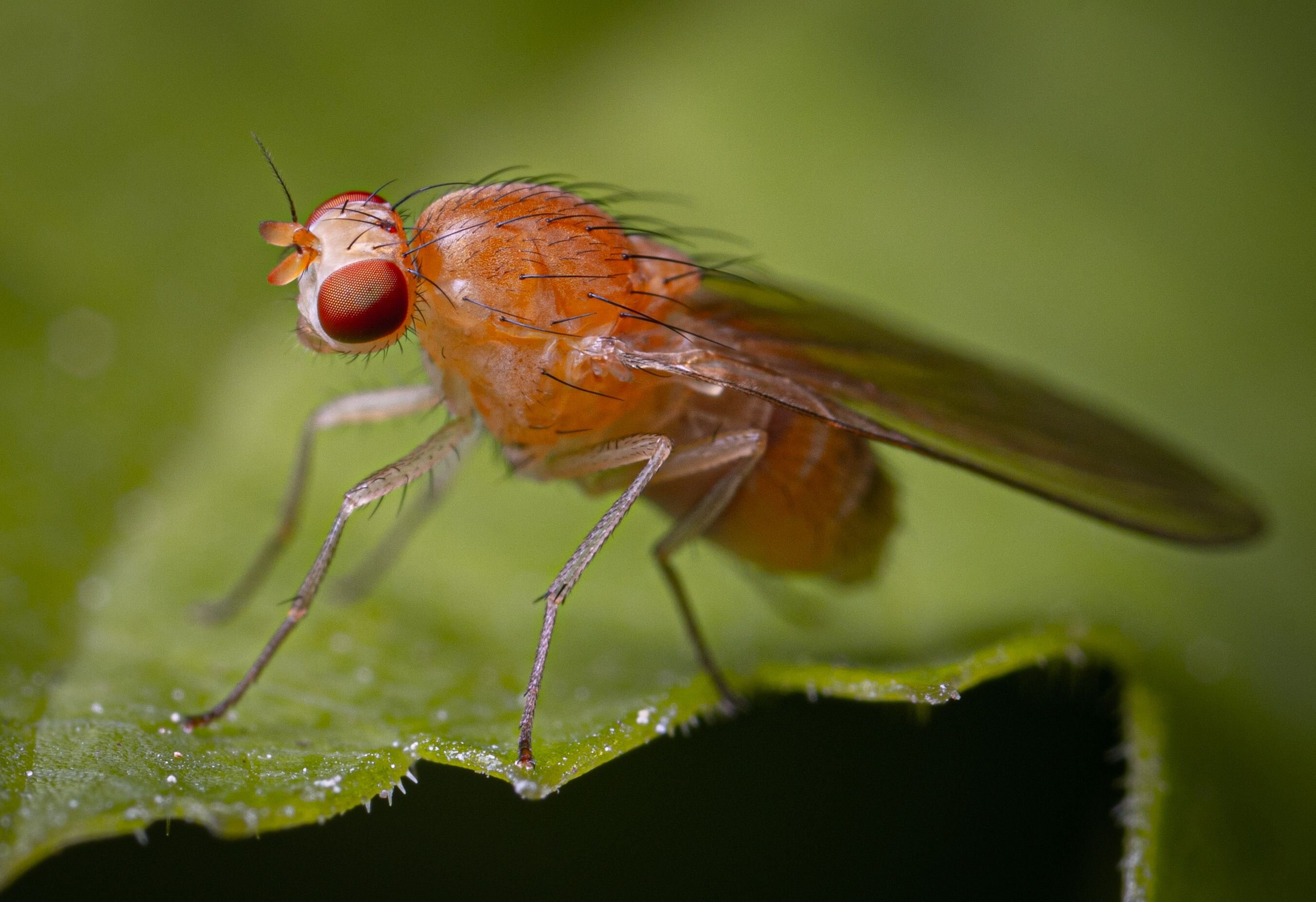
Male fruit flies may need different diets depending on whether they are mating, according to research led by the University of Liverpool. The findings matter because they show that reproduction can change how a specific nutrient affects aging and fertility.
The study, published in the Proceedings of the National Academy of Sciences, examined how diet and reproductive activity shape lifespan and reproductive performance in male Drosophila melanogaster. The University of Liverpool said the work was carried out by an international team led from its Department of Evolution, Ecology and Behavior.
Researchers found that cholesterol had sharply different effects depending on the males’ access to mating. According to the university, male flies needed cholesterol to sustain reproductive activity when they were able to mate, while males that were not reproducing often survived longer on diets without cholesterol.
The team said the result points to a nutritional cost of reproduction in males. Researchers suspect mating males may lose cholesterol through sperm and seminal fluid, which could reduce their reserves and shorten lifespan, according to the University of Liverpool.
Reproduction changed the dietary result
The findings challenge earlier work suggesting cholesterol did not influence male lifespan, the university said. In this study, researchers allowed males to mate during experiments, which they said exposed effects that could be missed when reproduction is limited or absent.
Lead author Dr. Andy McCracken of the University of Liverpool said the study complicates the idea of one best diet for males. He said the optimal diet may depend on reproductive state, a pattern already shown in females.
McCracken also said aging studies in males need to account for reproduction more carefully. According to the university, he argued that experiments should allow animals to express the biology researchers are trying to measure.
The study also reported a trade-off between lifespan and reproductive aging. The University of Liverpool said males lived longer on diets with relatively more protein and less carbohydrate, while reproductive aging appeared healthier on lower-protein, higher-carbohydrate diets.
Fruit flies offer a model for aging research
The University of Liverpool said fruit flies are widely used in aging research because their biology responds strongly to dietary changes. By altering fly diets, researchers aim to identify mechanisms linking nutrition, reproduction and lifespan.
The team cautioned against applying the findings directly to people. Unlike fruit flies, humans can make cholesterol internally, so their dietary cholesterol needs differ, according to the university.
Even with that limit, the researchers said the study shows how a non-energy nutrient can alter the balance between survival and reproduction. The University of Liverpool said the work may help explain why lifespan and reproductive success can come into conflict within a species.
The paper, titled “Mating-dependent lifespan cost of sterol depletion in male Drosophila melanogaster,” lists Andrew W. McCracken and colleagues as authors. The study was published in PNAS with the DOI 10.1073/pnas.2533735123.
The research team plans to study how cholesterol is used during reproduction, according to the University of Liverpool. Questions include whether it becomes part of sperm and seminal fluid or is converted into hormones.
This story draws on original reporting from Phys.org.