
Heat waves tied to 42% of Western wildfire burn area, study finds
Researchers found that a small share of hot-season days accounted for a large share of burned acreage in the Western United States.
By Lucas Ferreira · Science & Environment Writer
3 min read
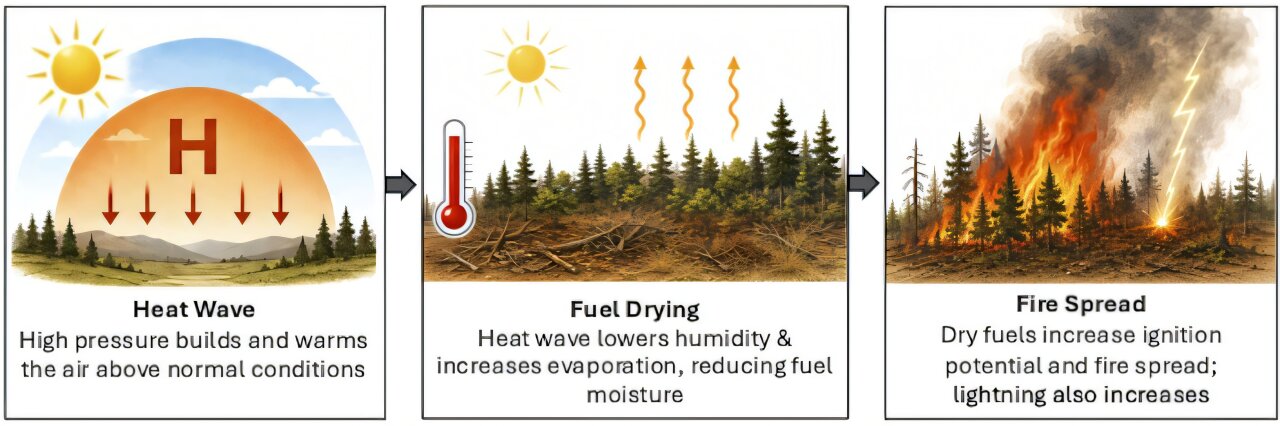
Heat waves are linked to a large share of wildfire damage in the Western United States, according to a new study in Science Advances. The finding matters for fire planning because researchers say extreme heat raises fire danger during the event and can leave fuels primed to burn after temperatures ease.
The study, led by Dmitri A. Kalashnikov with co-authors Cong Yin, Madhulika Gurazada and Mukesh Kumar, examined wildfire activity across the West from 2001 through 2024. The researchers defined a heat wave as at least three straight days when temperatures ranked in the warmest 10% of warm-season days.
Under that definition, heat waves made up 12% to 15% of warm-season days, the authors reported in The Conversation. Yet 42% of the total area burned by wildfires occurred during heat waves or shortly afterward, according to the study.
Burning rose sharply during heat waves
The researchers found that daily burned area was more than 50% higher during heat waves than during the cooler days immediately before them across many parts of the West. In some regions, the increase reached as high as 300%, according to the study.
The authors said heat waves worsen fire conditions in several ways. Hotter air increases the atmosphere’s demand for moisture, which pulls water from soil and vegetation and leaves fuels drier and easier to ignite.
Heat waves also reduce nighttime humidity, according to the researchers. That can keep fires active for more hours overnight, when cooler and wetter conditions often help slow fire behavior.
The study also found increases in cloud-to-ground lightning during and after heat waves in many Western areas, including dry lightning. The researchers said dry lightning is especially dangerous because rain from the storm can evaporate before reaching the ground, allowing lightning strikes to start fires without enough precipitation to suppress them.
Forest fire risk has grown with hotter summers
The authors said the link between heat waves and wildfire has become more significant as heat waves become more common with rising global temperatures driven by greenhouse gas emissions. Since 2001, heat wave days across Western U.S. forests have nearly doubled, according to the study.
Over the same period, the amount of forest area burned rose 2.5 times, the researchers reported. They estimated that cumulative burned forest area would have been 37% smaller without the increase in heat wave days since 2001.
The relationship was strongest in forests, according to the study. The authors did not find the same long-term pattern in grasslands and shrublands, where total burned area has not increased and where available vegetation plays a larger role than heat alone.
The researchers also said Western summers are trending hotter and drier, with relative humidity during heat waves declining in recent decades, especially in forested parts of California, Oregon and Washington. They said those drier heat waves appear to be especially effective at increasing wildfire activity.
Fire forecasts already use conditions such as wind, humidity and fuel dryness, the authors said. Their findings suggest heat waves should receive more attention in wildfire outlooks because extreme heat can help drive ignition, spread and continued growth after the hottest days have passed.
This story draws on original reporting from Phys.org.