
Researchers capture long-sought step that helps start DNA copying
A Crick team imaged a fleeting protein assembly that helps switch on DNA replication, addressing a question that has stood for three decades.
By Tom Brennan · Health & Medicine Correspondent
3 min read
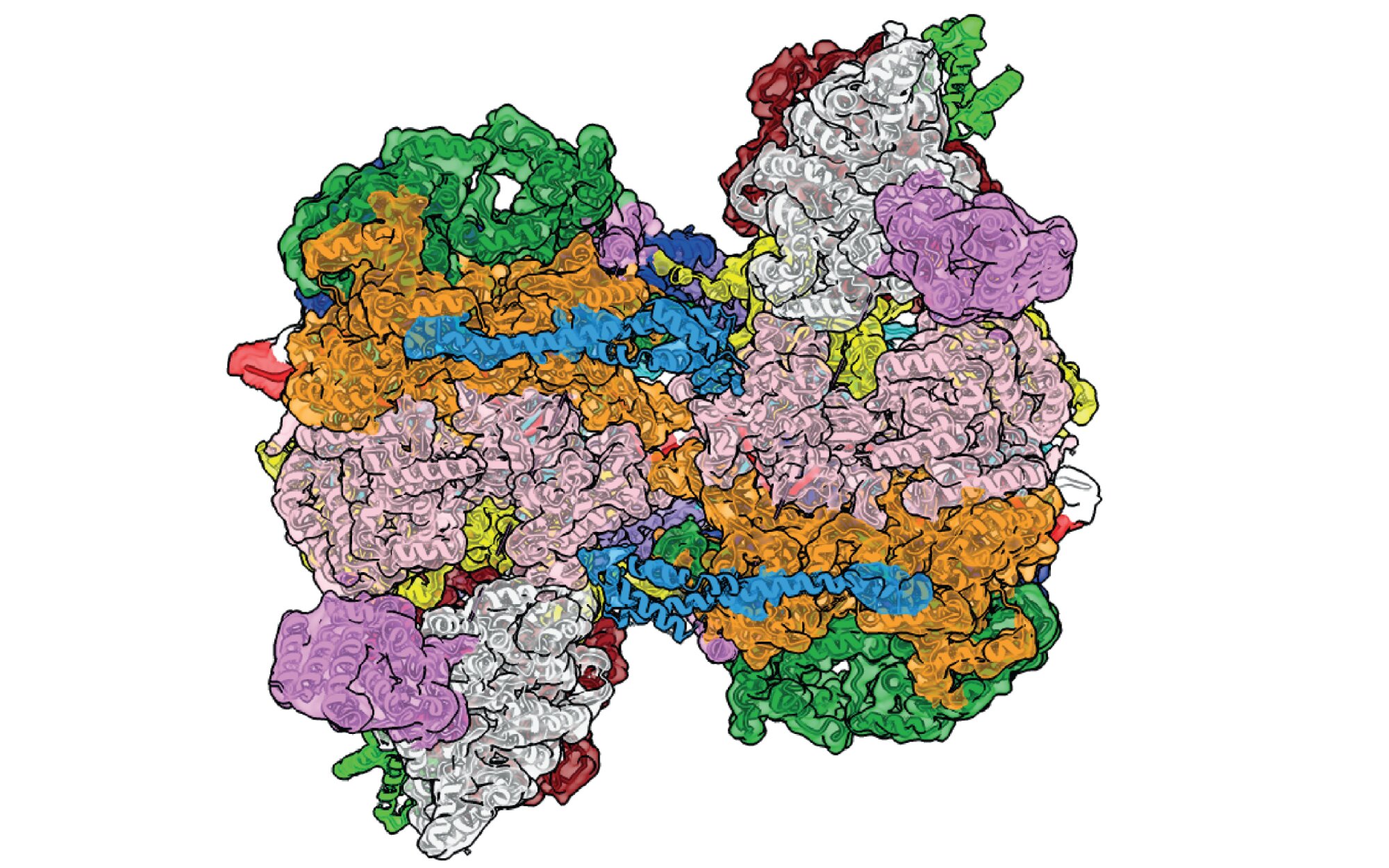
Researchers at the Francis Crick Institute have produced the first structural image of a short-lived protein assembly that helps start DNA replication. The work matters because cells must copy their DNA once, and only once, before chromosomes are passed on during cell division.
The findings, reported in Nature, describe the pre-initiation complex, a stage that biochemical and genetic studies had pointed to for about 30 years but had not directly captured. The Crick team says the complex helps explain how the replicative helicase, the enzyme that opens the DNA double helix, is activated at the correct time.
According to Alessandro Costa, who leads the Crick’s Macromolecular Machines Laboratory, cells reduce risk by separating the loading of helicase onto DNA from the later step that turns it on. That separation helps prevent DNA from being unwound in the wrong place or at the wrong moment, a safeguard relevant to chromosome stability and cancer avoidance, the institute said.
A fleeting complex caught in yeast proteins
Thomas Pühringer, a researcher in Costa’s laboratory, recreated the sequence of replication steps using yeast proteins in a test tube, the Crick said. The work used a biochemical system developed by John Diffley and colleagues at the institute.
Pühringer then used cryo-electron microscopy to image the pre-initiation complex. The institute said the task was difficult because the assembly exists only briefly before DNA replication proceeds.
The researchers also used AlphaFold, an AI-based tool, to help interpret parts of the complex that appeared at lower resolution because they were flexible. Costa said the experimental work helped the team frame the right questions for the AI system, which then helped clarify how the complex’s subunits fit together.
The Crick said the project took five years. Costa said the combination of biochemical experiments, imaging and AI shortened work that otherwise would have taken much longer.
Firing factors and a link to human replication
With the structure in hand, the team examined the roles of “firing factors,” proteins that help activate the replicative machinery. According to Pühringer, some of those proteins behaved as genetic studies had predicted, while others had more than one role.
One firing factor helped gather the necessary components at an early stage and later helped separate the two DNA strands, Pühringer said. He said the finding resolves a question about a firing factor shared by yeast and humans that had been thought to have different functions in the two systems.
The team’s interpretation, according to the Crick, is that yeast and humans begin DNA replication using similar strategies. The study is titled “Structure of the pre-initiation complex explains CMGE biogenesis” and was published in Nature with DOI 10.1038/s41586-026-10657-7.
Costa said the next challenge is to reconstruct the equivalent process in multicellular organisms, including animals and humans. The Crick said such work could improve understanding of how DNA replication errors contribute to cancer.
This story draws on original reporting from Phys.org.