
Marine anoxic carbon storage gets international research review
UC Santa Barbara-led researchers assessed whether oxygen-free ocean basins could store plant carbon at climate-relevant scale.
By Priya Raghavan · Science Reporter
3 min read
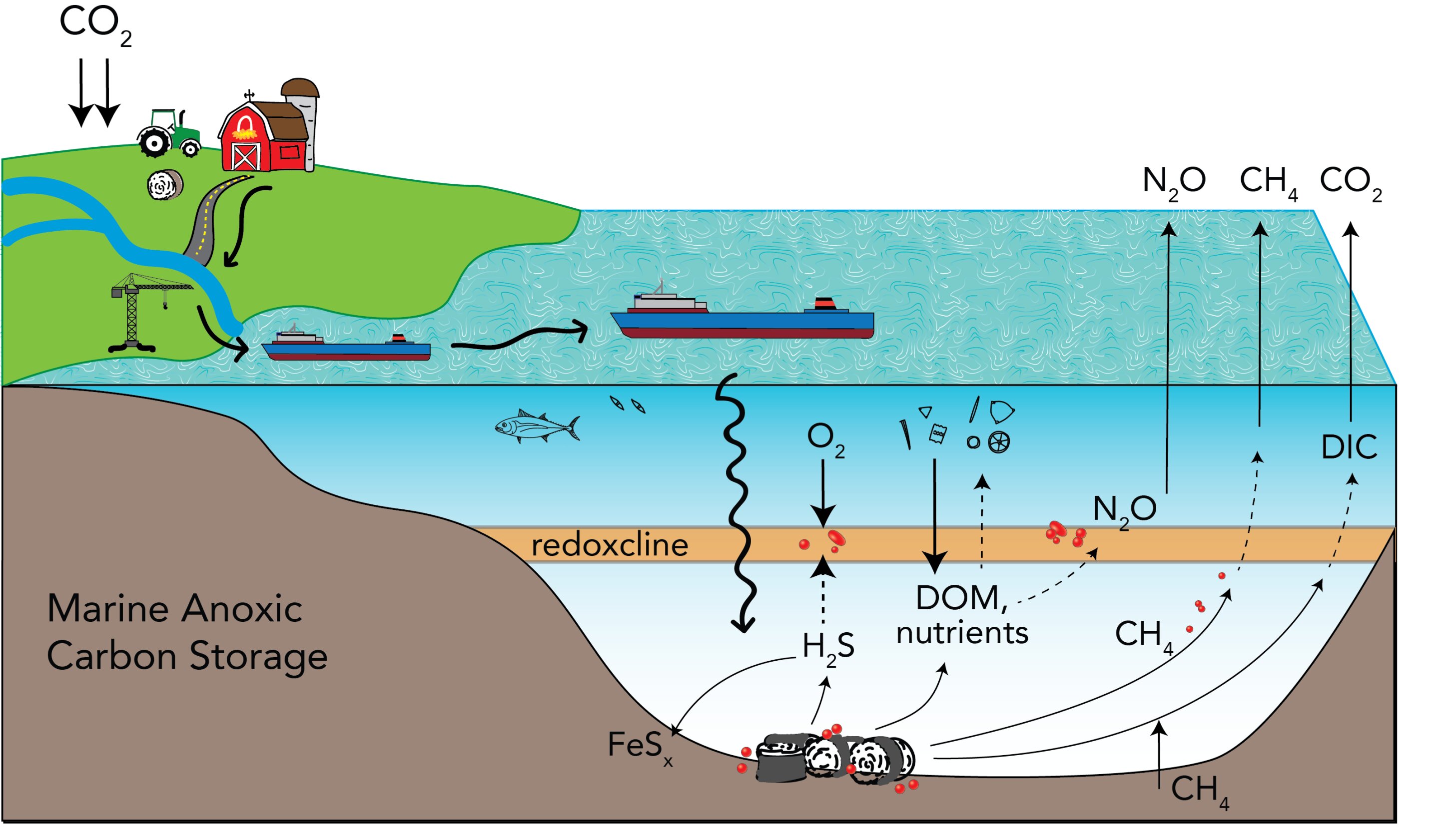
An international group led by UC Santa Barbara researchers has taken an early step toward evaluating marine anoxic carbon storage, a proposed way to lock plant carbon in oxygen-free parts of the ocean. The work matters because carbon removal ideas are drawing more scrutiny as scientists look for methods that could complement emissions cuts.
The workshop findings were published in Biogeosciences. UC Santa Barbara biogeochemist Morgan Raven said the problem is too large for one research group and requires input from scientists, policymakers and communities connected to possible storage sites.
What is marine anoxic carbon storage?
Marine anoxic carbon storage, or MACS, is the idea of sinking plant biomass into deep ocean basins where dissolved oxygen does not reach. In those settings, the chemistry can slow the decay of organic matter, potentially keeping carbon out of the atmosphere for hundreds or even thousands of years, according to the researchers.
Plants absorb carbon from the air as they grow, but much of that carbon returns to the atmosphere when plant material breaks down. Raven said the proposed method aims to interrupt part of that cycle by moving biomass into ocean environments where preservation is more likely.
The approach is distinct from proposals that would place material broadly on the seafloor. Raven’s group is focused on basins that already lack oxygen because of restricted circulation or sharp density differences, including cases caused by high salt concentrations.
Why anoxic basins are being considered
UC Santa Barbara said these oxygen-free areas do not support animal life, which may reduce some ecological concerns linked to burying biomass on the seafloor. The researchers also said anoxic chemistry can help preserve organic material, a process they compare to pickling.
Scientists still have concerns about effects on marine chemistry and the water column. The research team also flagged a basic question for any carbon storage plan: whether carbon placed at depth would remain there or later move upward.
Earlier work by Raven’s NOISE Lab identified anoxic marine basins as possible candidates for deep-sea carbon sequestration. In that work, the Black Sea stood out because of its size and isolation, while the Orca Basin in the Gulf of Mexico, other brine pools and anoxic sinks in river deltas were also listed as possible sites.
What did the researchers review?
The workshop was held in Bucharest and included local scientists, startup partners, policy specialists, nongovernmental organizations and other stakeholders, according to UC Santa Barbara. Participants reviewed candidate sites, risks, existing knowledge and gaps that would have to be addressed before any deployment.
The discussion also covered where the plant biomass might come from. The paper describes likely terrestrial sources such as agricultural waste or excess material from forest management, along with the emissions that would be produced by transporting that biomass.
Researchers also considered possible changes in water chemistry at different depths. For the Black Sea, they said modeling would be needed to understand how circulation could respond to shifts in rainfall and stratification.
The Biogeosciences paper concludes that MACS may be able to operate at the scale needed to contribute meaningfully to climate change mitigation, a benchmark tied to a 2022 U.S. National Academies goal for carbon dioxide removal. The authors also stress that key research questions must be answered before decisions can be made about whether and how to deploy the method at scale.
Raven described the workshop as the start of a wider collaboration. Based on current knowledge, she said the concept may work if expertise from multiple fields is combined, while emphasizing that many scientific, logistical and governance questions remain unresolved.
This story draws on original reporting from Phys.org.